
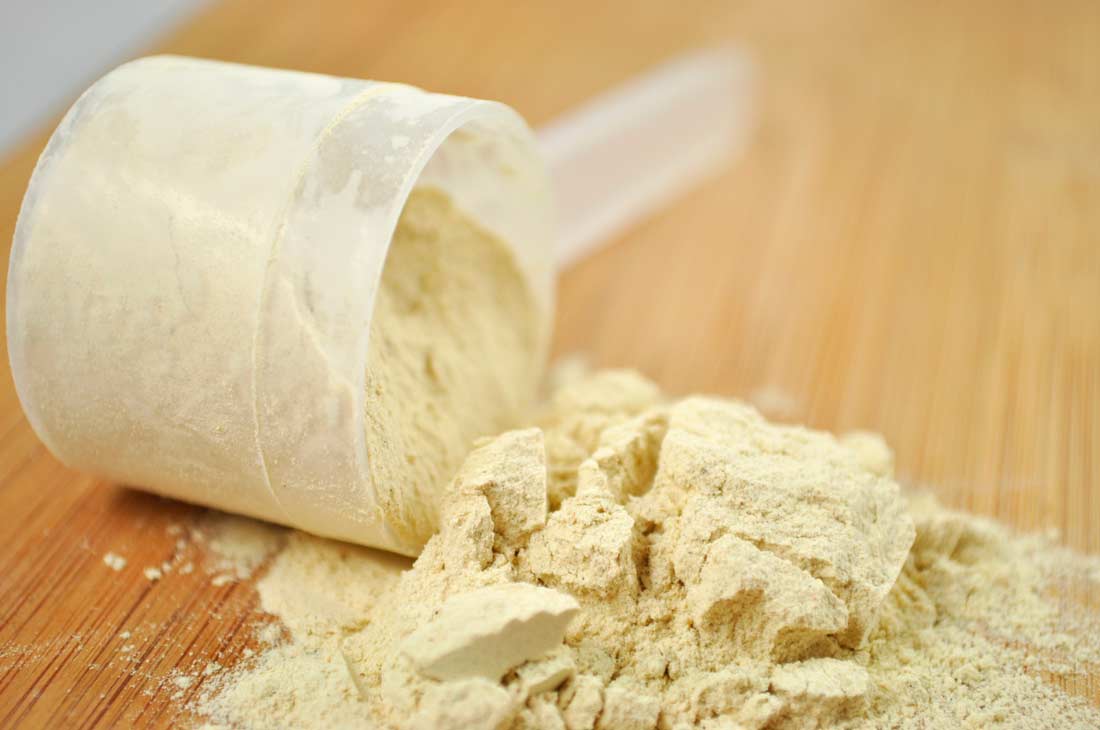
Bodybuilders know that big muscles are built with whey protein. But there’s a catch. For some people, whey protein also causes acne.
All the hours and hard work you put in at the gym to make yourself look good – and you are left with a face full of pimples.
Fortunately, there are protein supplements that are safer for those prone to getting acne. In this post, we’ll go over the science of why whey protein causes acne, and what you can do to mitigate the damage.
In a hurry? Replace your whey protein supplement with the one below.
How whey protein causes acne
Let’s start with a brief look at how whey causes acne. It comes down to a hormone known as insulin like growth factor 1 (IGF-1). IGF-1 is a growth hormone and thought to accelerate muscle growth, unfortunately it also accelerates acne.
- Studies have found a correlation between IGF-1 and sebum levels, so the higher the IGF-1 levels the more sebum the skin produces.
- IGF-1 reduces transcription factor FOXO1 in the skin cells. Acne-prone skin is already deficient in FOXO1, which is linked to all the major factors behind acne (androgen sensitivity, sebum production, excess skin cell growth, too much keratin). So this moves the needle to the wrong direction.
To put it shortly, IGF-1 puts hormonal acne into overdrive.
You know it’s bad when…
Nestle has a keen interest on this topic. Smart people as they are, they figured that if their products give people acne sales are likely to drop. So in a paper published in Nestle Nutrition Workshop Series they concluded with this.
The elimination of the whey protein-based insulinotropic mechanisms of milk will be the most important future challenge for nutrition research.
Melnik BC.
Evidence for acne-promoting effects of milk and other insulinotropic dairy products.
Nestle Nutr Workshop Ser Pediatr Program. 2011;67:131-45. Epub 2011 Feb 16.
In the paper they reviewed the ways milk aggravates acne and placed a special emphasis on insulin (and IGF-1) spiking effects of whey. The paper recommended that Nestle research ways to eliminate the insulin spiking effect of milk, because: “When the insulinemic index of milk has been adjusted to a level corresponding only to its carbohydrate moiety, we will look again into acne-free faces of less obese young people.” So cute.
There you have it, straight from the horse’s mouth, whey aggravates acne. This is already pretty damning evidence, but doesn’t directly address the use of whey protein powders.
Studies on the effect of whey protein on IGF-1 levels
Research on protein powders has focused more on the effect on muscle growth and strength, understandably. Unfortunately, that leaves us with only a handful of relevant studies to look at.
- One study put 19 untrained males into 10 week resistance training program. One group got protein supplement (PRO) with 20g of protein (14g whey and casein and 6g of free amino acids. The other group got a placebo supplement that contained 20g of dextrose (CHO). After 10 weeks the PRO group showed higher IGF-1 levels.
- This was confirmed by another study that found combined protein and carbohydrate supplement (42g PRO, 24g of CHO and 2g of FAT) increased IGF-1 levels more than 70g carbohydrate only (CHO) supplement. The supplement was taken twice a day. The study went on for 6 months and the IGF-1 graph shows the difference increased over time. Estimating from the graph IGF-1 levels were up by about 20% at the 6-month mark, compared to slight decline in the CHO group. The study didn’t specify the type of protein used, other than that it was Myoplex.
- Finally, we have this short-term study on experienced bodybuilders. The study just looked a single bout of 2-hour weight training session, and found no effect on IGF-1 levels with any supplement (PRO, CHO or CHO/PRO). Given that these are experienced bodybuilders they’ve probably already ‘maxed’ out their IGF-1 and thus the supplement showed no effect.
Those are the only studies that compare protein supplements to other supplements. Protein powders, in general, increase IGF-1 levels more than carbohydrate supplements. This is good for muscle growth but bad for acne.
There was also one study on postmenopausal women. Not exactly the best match when we talk about bodybuilders, but I’ll mention it because it eliminates the effect of resistance training as confounding variable. Those who took 30g of whey protein per day had 8% higher IGF-1 levels than those taking a placebo with identical caloric content.
Protein powders and mass building supplements in general
Quite a few studies looked at protein powders and mass building supplements in general. Usually they are a combination protein and carbohydrates and vitamins, free amino acids are sometimes added. These shakes are usually pretty heavy, and the caloric load alone is enough to spike insulin and IGF-1 levels. That’s why they are not relevant if we want to focus on whey protein.
But they are relevant if you want to know whether protein powders and mass building shakes in general can cause acne. Taking supplements increases IGF-1 and insulin levels after exercise more than exercise alone. Long-term, these supplements also increase baseline IGF-1 levels. Both of these effects are bad for acne, but good for muscle growth.
What about soy protein
Several studies have compared whey, casein and soy protein on muscle growth and strength, but none that I saw mentioned IGF-1 levels. Whey protein might stimulate muscle growth a bit better, but in the big picture the differences are quite small.
Soy protein has been studied in non-bodybuilding population, and it’s been shown to increase IGF-1 levels in both young and old men and in postmenopausal women.
So given all that we’ve covered so far I think it’s safe to say soy protein has similar effect on IGF-1 levels (and acne) than the other types of protein powders. However, protein powders that don’t have dairy or soy are likely to be the safest options for people with acne.
Also, due to phytoestrogen content, women with acne shouldn’t take anything with soy.
Not a problem for everybody
We can say that whey protein increases the risk of getting acne, but it’s obviously not going to give acne to everybody.
IGF-1/insulin pathway is just one way to get acne. For some people acne is more inflammatory and more tied to gut issues and food sensitivities. For these people whey protein may not cause any problems.
Here’s a (not comprehensive) checklist of things that put you into high-risk group as far as whey and other protein powders are concerned:
- You have oily skin. This means you either already have elevated insulin and IGF-1 levels or that your skin is very sensitive to these hormones.
- You are insulin resistant with elevated post-meal and fasting blood sugar levels.
- Your acne is aggravated by eating sugar and simple carbohydrates.
And keep in mind that you are not powerless in this struggle, see the oily skin remedies post for more.
Recommended protein powders for people with acne
Many people have asked me for protein powder recommendations. Here are a few that should be as safe as possible for acne-prone skin, but bear in mind what I wrote about protein powders in general above. All protein powders are somewhat bad for the skin, but the ones listed here should be less bad than the usual whey, casein, and soy-based powders.
Conclusions
Studies consistently show that protein powders work. They stimulate muscle growth and strength more than weight training alone. But this boost comes with a cost. Protein powders (especially whey) increase IGF-1 and insulin levels, both of which are linked to hormonal acne. Protein-rich supplements lead to higher increase than pure carbohydrate powders.
While there are no formal studies on whey protein on acne, it’s highly likely they cause acne at least to some people. Things that put you into high-risk group are: oily skin, insulin resistance, and acne that is aggravated by sugar and simple carbohydrates.
Unfortunately skin’s sensitivity to androgens and IGF-1 is determined by genetics, so there’s no simple way to fix this. Topical remedies can, to some degree, reduce sensitivity and mitigate the problem. But increasing muscle growth with protein powders and clear skin are inherently opposing goals, both depend on the same hormones.
So what do you think? Are protein powders worth the increased risk of acne? Or do you have your own story to tell?

Have tou read the abs diet book?
Kim, no, never heard of it. What about it?
Well the author promotes whey powder a lot in it after workoits and etc.. He also says you shld eat 6 meals a day spaced roughly 3 hrs apart and you should also eat within the first 30 min of rising, because ur body is ready to digest then..
I was just wondering your opinion on the matter?
Thanks
I’m assuming it’s a weight loss book? That sounds like quite standard WL advice. Eating smaller meals more frequently is good because it helps people to eat fewer calories, but other than that there’s no inherent magic in it. I also seriously doubt there’s anything special about eating within 30 minutes of rising. It just doesn’t make sense. Your body is ready to digest pretty much anytime.
Hi Seppo! A very interesting article, just what I needed. My daughter, 18 years old, trains very hard, is a swimmer, so 2 trainings a day is quite normal. Therefore food is extremely important and it is hard do be able to eat enough what the body needs. She started eating Whey-80 powder once a day about 2,5 months ago. She has had problems with acne about one year ago, went on Tetralysal 300 g which really worked well on her – everything disappeared and the results came really quickly, after a couple of weeks you could really see the improvements. She finished the whole treatment. About 2 months ago the acne-problems turned up again. About one year after the last start of medication. We went to the doctor, sure about the fact that it would help her also this time. After now more than 7 weeks nothing at all has happened. It has actually gone worse! Then I started to think about other reasons and came up with this protein-drink Whey-80. She has been very careful with not drinking milk-products about 3 hours before/after taking the pill. Can the intake of Whey-80 destroy the whole medication for her? How does it effect the tetralysal effect? Or am I quite wrong? I would very much appreciate an answer from you. /Worrying mum
Tjanäre Anna!
My Swedish is getting rusty, so I hope I spelled that correctly 🙂
Anyway, I’m sorry but this question is about something I don’t want to go into. I’m not qualified or known enough to talk about prescription drugs. This is something you have to ask from your doctor or the drug manufacturer.
There are other reasons as to why the antibiotic doesn’t work this time. It’s possible the bacteria has developed resistance to the antibiotic. Acne is quite complex condition and it’s possible something else has changed in your daughter’s body during the past year. I’m generally not a big fan of using systematic antibiotics to treat acne, I wrote about it here. Generally speaking they only bring short-term results with possibility for long-term harm.
Earlier I also wrote a post about how chlorine in swimming pools affects the skin. It harms the skin barrier function and can make the skin more vulnerable to acne. Since she’s swimming a lot it’s probably a good idea to use moisturizer or other creams that can help the skin barrier function.
This is really all I can say at this point. I have plenty of articles on this site that should give you more clues.
Hey Seppo, thanks a lot for sharing this article with us 😉
I’m 19, had 2 Isotretinoin cures till now(both of them more or less succesful) and have mild acne.
Ive been practicing Grappling and Strenght Training for about 6 years now. I am currently competing in Wrestling and Judo Tournaments. Supplementation on some days is a must for me. I need an intake of about 150g of protein per day and it’s often hard for me to get those 150g. Back when I was 16 I supplemented with a soy protein which caused a severe outbreak! Well, i have some questions:
1.) Would using whey protein without lactose help my complexion?
2.) Some people say pea or rice protein is better for people with bad skin-should I switch?
3.) Is a high protein intake(=more androgenic hormones) always resulting in worse acne?
Thanks again, much appreciated!
Let me get through your questions first and after that offer some suggestion.
1) I don’t think so. It might if you have trouble digesting lactose. If you have no problems with lactose then it’s more likely that whey protein drives up hormone levels and that has nothing to do with lactose (as far as I know).
2) It might help. If your performance doesn’t take a hit, it’s worth a try. While all protein drives up insulin levels, dairy products have extra hormones designed to make baby cows grow big. I’m not sure if those other hormones are present in whey protein supplements.
Soy is normally a good supplement, but some people are allergic to it. That’s probably the reason it broke you out.
3) Not necessarily. There rarely are black/white things when it comes to acne. Increased hormone levels usually increase sebum production and skin cell growth, especially if your skin is genetically susceptible to them.
That doesn’t automatically mean more acne. See the green tea posts here, and also the ones tagged with oily skin. In those posts I share some topical remedies that can reduce the effect hormones have on the skin.
Just drinking a few cups of green tea might be all that you need. It has some anti-androgen effects on the body. Worth a try, I think.
I don’t know what you are doing for your skin now, but a simple 2.5% benzoyl peroxide get applied once a day might also help.
I hope this answers your questions.
Hey Seppo,
thanks a lot for your advice on this page. You cant imagine how much your articles helped to improve my complexion… I made a couple of experiments and I would like to share my experience with protein rich products and their effect on my acne. For 2 months I ve been trying a couple of things in my diet, that is strict low carb.(Metabolic Diet by DiPasquale) The only carbs that I eat are veggies, blueberries and occasionally oatmeal. My total carbohydrate intake is arround 30-50g a day(yes I count the carbs). If anybody else who is into bodybuilding, powerlifting, grappling, boxing etc. (virtually any sport where you have to pay attention to your diet!) reads this, please take a closer look at my experience.
Milk protein: I ve tried Whey concentrate as well as isolate for a couple of days and instantly had an outbreak. The pimples disappeared a couple of days later though and left nice red marks. Now another supplement that gets a lot of attention especially as a slow pre sleep protein is Myocellar Casein. It did the exact same thing as whey. An almost instant outbreak (it took not even 20 hours). So I tried some “natural” dairy products as supplementation. I had cottage cheese, milk, different kinds of casual cheese as well as curd and wrote down my experience wth them. I used every product in their high and low fat variations, put them in other meals and noted the impact they had on my skin. I had a 3 day break between each dairy meal. What I realised was the following: Milk had the most severe impact on my acne. No matter if I was cooking my oats with it or just consuming it directly. What also did not make a difference was if it was 3,5% milk or low fat 0,5% milk, 1,5% curd or 50% curd. As a matter of fact all of the dairy products that I tested had a negative impact on my acne, no matter if they were high or low fat. I sort of made a “Worst of” list of how many pimples I got from each product:
No. 1 milk; No 2. Cottage cheese; No 3. Any kind of cheese; No 4. Curd
So it took me almost a month to get through with those products and I instantly banned them out of any of my recipes and meals.
Dairy is an important food in an ambitious athletes diet. It is also the most delicious protein powder. So how do you cover your protein intake? With meat and eggs alone? Like that it will take you about an hour to get your post workout meal or you will have to cook everything that you will eat during the day in the early morning. Don’t panic now I found a way that helps me to get my protein intake without the risk of acne. There are 2 more kinds of protein supplements on the market that offer the “complete” amount of amino acids that your body needs. Egg and Soy Protein. Seppo I made a huge mistake when i told you that Soy protein alone was the reason for my outbreak at age 16. I went through the products of the enterprise that produced the shake and found the villain that had made me suffer through so many painful days: A protein FUSION of Soy AND Whey ! After discovering this I immediatley bought a Soy isolate, hoping this time I would not break out. Heck I even bought it with neutral taste because I just wanted to get a clear result that would not depend on wether the chocolate flavor in the drink was bad for my skin or not! The result was amazing: Not one single pimple caused by soy protein supplementation. After going through 60grams a day for a week I increased the amount to 90g and even had days where I supplemented with 120 grams a day without any kind of outbreak! I ve been using this product for about 5 weeks constantly without getting any new zits. I am as happy as I have never been before because now I can finally consume enough protein to keep up my athletic performance AND clear up my skin ! 🙂 Since ever I started using this Soy Isolate as a supplement in combination with a low carb diet my skin got better and better day by day. I am not clean 100% (the scars will take some time to fade away) but there has been a huge improvement. I am so(!) thankful for all of the advice on this page that made me adapt my diet further. Thank you Seppo, you can’t imagine what it means to me. Concerning Egg protein powders: They are a lot(!) more expensive than casual whey powders(10-15$/kg), soy powders(15-20$/kg) or pea and rice powders(same price as soy). I did not see a single egg protein powder below 50 bucks. Yes Sir 50$… The taste of it is not for everybody and it is propably a lot cheaper to mix it with your soy protein powder 1:2. There are supplement companies that offer protein powders that already contain a mix of both. Soy-Egg powders arent cheap either (30$ for 1,5kg) but they taste a lot better. For egg protein I had exactly the same result as for soy. I ve been taking it for 2 weeks now and havent had any outbreaks so far.
Now for athletes that need their carbs on gamedays: Stick to carb cycling. It is a great way to stay lean all year arround. For a couple of reasonsI quit doing The Metabolic diet and started doing the Paleo diet this week with higher (50.100g) Carb intakes on intense workout days and low (max 30g!) on my rest days.The carbs I get still only come from veggies and fruits.
Seppo i know this was a long post and I hope you get to read this and leave a reply.
Thanks a lot, I have made the same process with a better diet concerning acne as with 30g of isotretinoin a day.
Greetings
Tony, thanks a lot for sharing your findings. I really appreciate it! As much as I’d like to only rely on scientific data the fact is that we don’t have enough studies to answer many questions. And what you are doing is the next best thing. Meticulously documented self-experimentation.
So thanks a lot for sharing your findings, I’m sure the other readers will appreciate it.
Just have to keep in mind that we are all individuals, so it’s possible, even likely, that some people will get different results.
I was wondering if you could do one more experiment. I’ve always wondered if yogurt has a different effect on acne than milk and other dairy products do. The studies that found a correlation between dairy products and acne didn’t find one between fermented dairy products and acne. Perhaps because the fermentation process eliminates about 75% of the IGF-1 in milk. So I was wondering if you could test yogurt for me. I assume that you aren’t making your own yogurt, so get some unflavored yogurt with ‘live active bacteria’, something like those Greek-style yogurts.
Hey Seppo,
I did the experiment as requested for 5 days and got myself some organic, pure greek yoghurt. I ate 100g in the morning and 100g in the evening while being under Ketosis(less than 30g Carbs per day). Well how did it go?
Just after the first day I had a very nasty outbreak. I continued with the experiment because I thought something else in my diet could have caused it(I ate at a restaurant the day before). Though after another 4 days of continuos happy breeding of the bacteria in my face there was no way that greek yoghurt is by any means good for my acne. I repeat: Greek yoghurt caused really bad outbreaks on my face and (to my own suprise) on my thighs.
The experiment lasted from Jan 15th – Jan 19th
Again I believe results may vary! Here is a very confusing example:
4 days after my experiment I was as good as clear and got ready for another try. Because many bulking diets support the consomption of peanut butter for extra calories and I am in my off season anyways I gave that stuff a try. So I bought a jar with 15g of carbs/100g peanut butter.
Suprisingly NOTHING happened. I’m still eating eat daily and I bet the plant oil in it is highly processed + the dextrose added to it does not make things better IN THEORY. As a matter of fact I am clear right now (except for the scars from past outbreaks) and I sometimes eat a whole freaking jar in one day.
I added plain peanuts to my diet as well and eat 100-200g every day thoughout the day. By doing this in combination with the peanut butter I can easily add another 1.000 – 2.000 kcals every day + at least 50grams of protein without having to choke down half a kilogramm of chicken and brocoli 😉
It really suprises and shocks me to see how great the difference between what’s bad for certain people and what ‘s bad for me is. Nuts and especially peanuts are known for the tremendous impact they have on acne, though I can eat them all day without breaking out. On the other hand there will definitely be some people who get in trouble after eating nuts but will not break out after having greek yoghurt.
so whoever reads this: RESULTS MAY VARY!
P.S.:
I ve decided to keep on testing products and sharing my personal experience for strength athletes until April this year (going to do a final Isotretinoin cure then)
So Seppo, if there is anything you want me to try, please just comment right here and I ll do whatever is possible to get my fingers on that stuff.
Again thank you so much for your support and your help with all of these free articles
Hi Tony,
Thanks a lot for doing this. I was secretly hoping that yogurt would have less of an effect on your skin, but alas my wishes were not granted 🙂 Regardless, good to get some data on this point.
I know that peanuts are among the most common food allergens, but beyond that I don’t think they would be so bad for your skin. Yes, they have quite a bit of omega 6 fats, but in context of healthy diet and adequate omega 3 intake I’m not sure even that’s a problem.
Anyway, I won’t bother you with any more experiments. I don’t want to inflict anymore acne on you. I think you’ve had your fair share already 🙂
Hey Tony, would you care to mention what is the name of the exact protein powder that doesn’t break you out? It would be TREMENDOUSLY helpful to me as I’m having the same issues with protein powders.
Thank you!
Wow, eye opening! I have been taking Whey Protein for the past 6 months and wouldn’t you know, I’ve had acne the whole time. For the life of me I’ve tried figuring out what my problem was; I’ve been eating very green & clean, drinking lots of water, excising regularly…doing everything right, or so I thought. I just couldn’t figure out why suddenly my skin in constantly broken out. I thought, maybe it’s from sweating all of the time, but I’ve worked out my whole life, why now the acne??
I’m actually so relieved to know that this is very likely the cause!
I have to admit I have had tremendous results gaining muscle with my whey protein. What would be your #1 suggestion to continue gaining muscle sans the acne???
Thanks again for the great article!
Ally, glad to hear I helped in resolving your acne puzzle!
Fast muscle gain and clear skin can be a bit incompatible goals. The reason being that they acne and muscle growth rely on same hormones. That said, soy protein powders shouldn’t have as bad of an effect on IGF-1 levels as whey protein does. But all protein powders can increase IGF-1 levels to some degree. It all depends on how much you can tolerate before getting acne.
There are other ways to mitigate damage. For example, drinking green tea can reduce the effect. Similarly lowering your carbohydrate intake should help with insulin and IGF-1 levels.
Hi Seppo,
I’m female, 29, and been doing intensive cardio for the last couple of months, hopefully to get rid some 15 pounds or so (Gosh!).
On the same time I started to take WPI (Whey Protein Isolate).
Then my face started to breakout like crazy.
I thought it was something on my other vitamins/supplements (I’m allergic to ascorbic acid), not the WPI.
I drink lots of water + 12oz soy milk, eat 1800cal twice a day, no alcohol, and I never smoke.
After I read your article, I know I have to stop using whey, and see how it goes in a week. I’ll go find a good green tea too.. 😉
Will report the result in a week.
Thanks so much for sharing with us! 🙂
Rose, good luck with your weight loss effort and please keep us posted on whether whey protein had any effect on your skin.
Hi Seppo, a great article, nice to see the scientific references in there. I also have an article on my website about whey and acne which I think your readers might find useful also, I hope you don’t mind if I post it here, thanks.
https://www.doctorpg.org/whey-and-acne.html
Thanks for your comment Dr. Griffin. Always happy to promote science-based advice. The article you wrote was very good. I remember that figure from Melnik’s paper, was just studying the paper a few days back.
WOW… SOOO glad I read this!!! Im 28 and over the past 6 months ive been exercising alot and taking 1 or 2 daily protein shakes – looking back it seems like when I started this fitness blitz and protein shake regime I have suffered the worst acne of my life!!! In the past 5 days I have stopped taking the WPI i usually have and switched to a Natural Soy protein product and I think my face is starting to clear! Its been under a week so maybe I will wait a bit longer but for now I think things are looking better!
It’s probably going to take 2 to 3 weeks to really see whether the change has any effect on your skin. Please keep us posted 🙂
HI this is pretty much a definitive answer to a long debated topic in the bodybuilding forums…
thank you for delivering this article not in a pure scientific manner, while still putting some researches to back the arguments.
I have a question though, will a protein blend like myofusion or syntha 6 cause acne as much as pure whey like ON or casein like Muscle milk?
Happy to hear I could clear some confusion. Sorry to say but I can’t help you with your question. I doubt there’s any such research available. You can get some idea by looking at the ingredients though. As far as I know whey protein is the most acnegenic of proteins, casein probably little bit less so. Other proteins do increase insulin and IGF-1 levels, but probably not as much as milk-derived proteins do. That said, there’s very little reliable information on this topic, so I could be wrong about this.
IT’S THE IODINE CONTENT.
Taking in excess iodine causes acne (in me!) —- look up a low iodine diet …. yep. WHEY PROTEIN. The fact that it raises testosterone is another factor but in my life getting out ALL HIGH IODINE foods cleared my skin for GOOD. This included WHEY & SOY & NORI/seaweed(some sushi)……..
IT”S THE HIGH IODINE CONTENT that does it. NOW you know!
Glad that you said ‘in your life’. I don’t dispute that iodine can cause acne for some people, but it’s not as common of a cause as people believe it to be. I wrote another post about iodine where I go over what little research there is for it.
So yes, iodine may be a factor, but far more often we can point the finger at insulin and IGF-1 hormones.
Im just returning to give more feedback. Its been a month or so sInce turning to Soy Protein Shakes (natures way) my acne has dramatically decreased – It isnt gone completely and I still get the odd one here and there but it is soooo much better!
My forehead use to be a bumpy mine field and that has completely smoothed down and is bump free… The pimples I get now are around generally on my jawline or the odd back/should spots. I still eat a bit of dairy and did a test to see how drinking milk instead of soy went… a few days after I got two big angry pimples on my chin and lower cheek I dont think it was a coincidence.
I would totally recommend anyone who has acne issues to give WPI the flick and try Soy instead!
Seppo – just a question – do you think removing ALL dairy from my diet would be of any benefit to completely clear my face and back? How long should I remove it before I see results? What about calcium side of things? Do you get much through soy milk? I have another issue with the Sugar in soy milk… It seems like everything is not good for me haha – Would Oat Milk be OK… That has the least amount of sugar in it (i think)
Kirsten, thanks for sharing your findings. This kind of information is very valuable since we don’t have scientific data to draw from.
Yes, I do think that you should remove all dairy. Whey protein (and cheese) probably causes acne more than other forms of dairy, but all dairy products do increase insulin and IGF-1 levels.
Fermented dairy products are the only possible exception. Things like yogurt, kefir and sour cream. There’s some reason to believe that they don’t cause acne as much as other dairy products do, but unfortunately I can’t be sure of this. Yogurt will increase insulin levels, but it has much less IGF-1 than non-fermented dairy products, and I think IGF-1 is the real culprit.
I don’t know about where you live, but here in Thailand it’s quite easy to find calcium fortified soy milks. I can even find some brands that have no or minimal sugar added.
Also, I wouldn’t freak too much about little added sugar. It’s good to avoid sugar, but I don’t see any benefit from getting too paranoid about it.
Would oat milk be ok? Hmmm.. ok for what? If it doesn’t have too much sugar or additives it’s probably not bad for your skin.
@KRISTEN
@SEPPO
Thank you so much for this Eye Opening Remarks, I am 22 years old, in Vegetable, all Fish, Fruit Diet, almost 1 1/2 year of NO SODA, NO MILK, NO DIARY. Drinking Omega-3 Kirkland and Using Nivea Facial Wash oil Control. Im in work-out for almost 4months. my question is MY SKIN IS STILL NOT GETTING CLEAR 🙁 I have this mild acne, small red bumps but everything had already changed, from my diet to my Hygiene, I wonder whats wrong about me. I have a oily skin, my question is aside from taking those SOYA PROTEIN. what else do you have in pocket? like facial product to somehow help me 🙁 ….Im really sooo frustrated and starting to think about Derma, but they said Dermatologist will just cost us a lot and not helpful. I hope you both of you could help me 🙂 BEST REGARDS AND GREAAAAT ARTICLE!
Gelo, all acne is caused by inflammation in the skin. The problem is figuring out where that inflammation comes from. Gut problems, stress, diet and external irritants are the common categories. It’s hard for me to say anything more than that without knowing anything about your situation. But read the articles on this site to dig deeper. Or you can get my book which goes in detail into all of these things and helps you to figure out what’s causing your acne and how to fix those issues.
Thank you very much for this article!! I believe your article is very specific and SPOT ON. I am 27 years old and had a sudden case of ADULT ACNE (only on my face) – which is just unusual.
I have had amazing skin my whole life. People used to compliment me everywhere I went and would wish they had skin like mine. I started working out very hard in 2011 through 2012, in which I physically transformed my body.
In June of 2013, my body was taking shape. I noticed a few pimples on the temples (next to the eyebrows) – they went away with some good hygiene (over counter face wash, benzoyl peroxide got it under control.) The next few weeks I had recurring pimples, my workout partner even noticed and mentioned the word ACNE. I was in denial, so I wouldn’t admit it was actually “acne” – my worst nightmare.
August through November 2013 – I became extremely embarrassed, refused to show my face by not going out as often, withdrew from my friends (social life bombed). I spent a lot of money on Tea Tree Soaps, Salicylic Acid cleansers, masks, 10% benzoyl peroxide. I continued going to the gym regularly – it was all I had left. I didn’t want my body and muscles to disappear so I worked out extra hard – almost every single day – I increased my size by drinking more whey protein (morning, noon, night) and I included pump drinks, BCAA’s during my workout, and included Amino Fuel pre workout and post workout. The acne was getting worst , and even though it would come and go away – it would come back even WORST the next time. I could even feel the onset of a breakout. A vicious cycle. I tried doing Niacin flushes (vitamin B-3) – it looked better the next day, but by the end of the week – acne was still just as bad.
December 2012 – my acne was at its worst – forehead, temples – it was a bad case of mild acne – it wasn’t pizza face but it also was extremely noticeable. My face felt tight, and the breakout on temples and some forehead was now permanent despite the cleansers. My gym partner recommended I see a dermatologist, who looked at my skin and recommended a comprehensive approach: Doxycycline Hyclate, Sumadan (Sulfur wash) and Ziana/Veltin topical gel (clindamycin phosphate) . I began Doxycycline Hyclate 100mg twice daily, which made me very sick (Nausea, vomit, diarrhea) and topical before bedtime. The sulfur wash definitely improved the appearance (but has an unpleasant odor). First week – some improvement. Second week – the acne broke out worst all over forehead and temples -they even hurt. I expected its going to get worst before it gets better. I could see in pictures my face even looked swollen – my smiling and expression looked awkward all around in Holiday photos. I also discontinued the pump drink I was taking.
January 2013- However, a month later – pimples on forehead still persisted altho some were drying up and vaguely disappearing beneath the surface. Some pimples felt very hard and ball-like (rounded) under the skin and hurt. The acne began to surface somewhere else on my face it hadn’t before – the upper to mid-cheek region. I asked the dermatologist if normal because the expensive medicines seemed to not be working and making it worst. He said give it time, it was only a month in. I was instructed to keep taking antibiotics and using topicals – which in some way shape or form was keeping it under control – but still not doing the trick. My face still felt very tight, and the pimples still very apparent. I became very disappointed, depressed.
THEN…I saw a family friend (who is a physician). His wife said that I should take the WHEY PROTEIN POWDER out of my diet after I expressed that I had tried every thing in the book! She said her son had a very similar problem, and that he took the WHEY PROTEIN POWDER out and just starting doing more natural foods with sources of protein instead, and his skin cleared up very quickly.
At first I was skeptical, but I am willing to try anything. I stopped taking WHEY PROTEIN POWDER and the Amino Fuel (which contains Whey Protein) about week and a half ago …. The acne on my forehead is now disappearing (I only have blemish spots now)!!! The temples have calmed down and do not hurt or sore anymore. I have just a few pimples on the upper cheek. The skin on my face does not feel swollen anymore – my mother even commented that my face looks different – she said that it used to look inflamed, but not any longer. When I look in the mirror, I am starting to see my face again. I am going to continue to not taking WHEY PROTEIN and hope that these results continue. I still continue antibiotics and use the topicals until I am clear, even though I feel they are unnecessary (a gut feeling!!). As far as supplementation – I continue to take BCAA’s to help my workouts.
I am concluding a few things: I may have a slight allergy to the Whey Protein as this article describes (I plan on seeing an allergist). Also, it could be the Whey Protein was stopping the antibiotics from absorbing. Regardless – at 27, an acne outbreak is rare when one has had perfect skin and isn’t genetically predisposed to acne – there has to be something I was taking that was creating this reaction in my body. During this time, I had not one pimple on my body, just those specific areas of my face. My mistake was that I kept adding things (cleansers, supplements, medicines) – all of which didn’t quite do it and were costly. It is when I took away something (the WHEY) that I now see lessened acne and less inflammation all around. I strongly believe my facial acne is a direct result of the WHEY PROTEIN POWDER intake in my diet.
Thanks for sharing your story J.J. I believe that many people in your situation go through something similar. And unfortunately some of what you’ve been doing are the exactly wrong things.
Isolating yourself is never a good idea. There’s research that shows loneliness puts a lot of stress on the body. It’s seen now as big of a risk factor as smoking in many diseases. Loneliness and stress combined can perpetuate your acne. So what started from whey proteins keeps going because of loneliness and psychological stress.
Another thing I’d like to comment is the use of cleanses and washes. There’s such a thing as doing too much, as you discovered. Putting too many medications on your face just irritates it and makes things worse. I just wrote an article related to this: Why You Should Not Be Afraid Of Benzoyl Peroxide – And My Experience In Quitting.
Anyway, glad to hear that your skin is getting better. Do let me know if you have questions.
This made me want to share my story.
I’m 29 years old and i’ve had acne problems as long as i can remember. I think i’ve tried everything at this point. It has almost become an obsession.
I’ve had been to a dermatologist many times over the years and not too much help. I’d get antibiotics, the acne disappeared then reappeared after the cure. About two years ago it had gotten really bad. My face, neck, back and chest had acne. I went to see a dermatologist again and he subscribed me Accutane. My skin was perfect for months even a couple of months after i finished the cure. About a year ago i started weigh training and focusing on a high protein intake. One of my main sources of protein was whey shakes. After about two weeks my acne started to reappear. After a couple of months it had gotten really bad again. I went on for a few months and focused on all the other positive things that were happening to my body, but after a while i got frustrated. I was getting muscular but also getting more acne.
In my frustration i started to do more research and combining it with things that had helped me in small amounts earlier. And at this moment i can happily say that i can find only one pimple on my entire body. Hope it lasts! 😉
This is what has helped me:
– Stayed far away from milk and dairy products! I switched to soya protein powder.
– Many cups of green tea every day
– Found a mild cleanser and a moisturizer that didn’t clog my pores
– Pantothenic acid (vitamin B5). Do a quick google on Pantothenic acid and acne. Many people are having great results.
Great article, fantastic site btw! 😉
Thanks for sharing your story Marius. You’ve come mostly to the same conclusions I’ve come. The only thing I would disagree with you is B5. A while back I wrote quite a long post about vitamin B5 for acne. I’m not convinced it does anything for acne, beyond the placebo effect (which in acne is very strong).
The ‘scientific’ paper that started it all was really, really bad. There’s no plausible mechanism by which B5 could affect acne. And the predictions Dr. Leung made in his hypothesis paper have been shown to be wrong. Almost every sentence in the paper is refuted by later studies.
So I think you could save some money by ditching the supplement.
As to doing a Google search on anything, it’s a very good way to fool yourself 🙂 The problem is that you can find information to support any argument. But if that information hasn’t been fact-checked then it’s hard to know what’s correct and what’s not.
Anyway, glad to hear your skin is doing well!
Thank you for taking time to respond.
I’m gone keep up with what i’m doing since its working but ditch B5 to see if there’s any difference.
The reason for me trying B5 in the first place was not based on any scientific study but just the pure amount of people having “results” in forums etc.
People should definitely be skeptical to stuff on the web but if it hadn’t been for google I would never have found the things that are really working either.
Hopefully B5 is just bogus so I can save some money 🙂
Happy to help 🙂
I’m by no means saying we shouldn’t use internet or Google to search for information. Just that being skeptical can save you from a lot of hassle and wasted money.
On the other hand, without sufficient background knowledge it’s really hard to tell fact from fiction. And the thing with user results is that that kind of information is inherently very unreliable. But sometimes it’s the only kind of information available. And you gotta work with what you got.
Acne is a cyclical condition that sometimes comes and goes without any seeming reason. So if it happens to calm down on its own shortly after taking B5 it’s natural to attribute those results to B5 – even though B5 probably had nothing to do with them. Also with user results one always have to keep in mind that they are not updated. So maybe the person got the results and in the excitement told the whole internet about it. 2 weeks later their acne came back, so the treatment didn’t really do anything, but the internet is still littered with ‘success stories’.
These are just some reasons scientific medicine is based on controlled trials and not on anecdotes.
Anyway, keep up the good work 🙂
I started eating protein smoothies for breakfast about four months ago. I switched protein powder brands about three weeks ago and my forehead and chin started breaking out almost immediately. I never thought it could be the powder. I guess I’ll go back to the original powder. Too bad to because I am seeing an increase in strength and tone. I would like to add that I am vegan, so both protein powders are whey-free. The one I’m currently using, which must be causing the acne, is a combination of cranberry, pea, and hemp proteins. The first protein powder was a combination of different sprout proteins, such as hemp, quinoa, lentil, etc.
Thanks for sharing your experience Tracy.
would you care to mention what brand these protein powders were? I have the same issue. It could also be the chocolate in the powder, as one of Seppos articles implies chocolate causes acne!
I bought some Whey protein and I got the ugliest acne on my face. I mean big huge bumps which is pretty unusual for me. I didn’t think it was related to the whey protein though. I stopped taking it for a few weeks then started up with my shakes again and here comes the nasty acne again. This time I reconized it had to be the whey protein causing this. I was thinking I was just allergic or sensitive to it. I didn’t realize this was a known problem. I really wanted to start taking it again so I thought I would do a search to see if anyone else has the same issue and now that I know I will definately not be consuming any whey. I love green smoothies and wanted to try it in my smoothies but maybe I will just boil and egg instead. It is not worth the acne it causes
HI Seppo!
I would like to try Soy Protein but I am worried that it might cause hormonal imbalance. I have read that soy protein has “estrogen-like” quality and might not be good for men. What do you think?
That’s mostly propaganda from the people who would have you meat and then some more meat. I don’t have anything against eating meat, in fact I quite enjoy it, but I like to keep my facts clean of bias. I wrote a post about soy, and in that post I went over the various concerns over soy and what does the science say about them.
My 15 year old son as only in the last couple of months started going to the gym and in the last month started taking protein shakes for muscle growth and repair. He was already suffering acne, but his acne as gone CRAZY! We didn’t know what was going on for his acne to go like this. Then suddenly I realised the only difference with his diet, which by the way we eat pretty healthy food, was the introduction of the protein drinks!!! After reading your article I feel better that it wasn’t only him that this happened to! I wish we had know this earlier, cause the acne has gone berserk and his self esteem as taken a big blow. We’ll see how it goes as I told him to throw the protein drink in the bin. Hopefully it goes away. What do you think of Roaccutane? We were thinking of this before he started on the protein shakes. Thank you again for your information.
Sorry to hear about your son, Sarah. It certainly seems like your son is not the only one getting sudden breakouts after whey protein. Based on the anecdotal evidence here, soy protein seems to have less of an effect on acne. Perhaps you can try that?
Your son is at a difficult age, and it’s hard to say what, if any, effect diet and lifestyle changes would have on his skin.
I wouldn’t rule out Roaccutane. Based on the studies I’ve seen, serious side-effects are extremely rare, and most people get just minor side-effects. That said, it’s a powerful drug, and all drug interventions carry a risk. I don’t have data on how often serious side-effects occur (like is it once a thousand or once a hundred thousand cases). This is something you have to discuss with a dermatologists and make a decision based on that.
Sarah, I just wanted to tell you that I have had the worst time with acne and have managed to get passed it by eliminating gluten and all milk/ dairy-products. Also, I have had tremendous results with Clear Action-products from Nu Skin. Just be patient though, give it at least three months. Good luck to your son!
I commented before stating that after stopping the Whey Protein my acne went away. Well to follow up, a few months later my acne is still gone, yay! BUT, I am very sensitive I realize to other dairy products, specifically Greek Yogurt. It makes me breakout badly.
In addition to this discovery, I have also made a good discovery, that is I use a protein supplement called RAW Protein made by Garden of Life and I don’t breakout using this product! It says it’s Sprouted Brown Rice protein. Works for me and does cause breakouts at all. Just thought I’d share cause I’ve noticed several people are looking for a supplement that won’t effect their skin. Hope this comment helps someone!
Thank you for taking the time to reply Seppo. Very much appreciated.
Naka Vital Greens plus adding drops of burdock and astralagus tinctures, Bio-Strath and Ergogenics NZ Whey helped me with acne. Milk thistle tincture broke me out though but it was my fault because I started on the maximum dosage, toxin overload in my liver. Dr. Ohhira professional probiotics helped me but it was difficult to maintain due to its cost and availability here in Canada. My only problem now is how to getting rid of the ugly scars.
Hey, what do you think about this kind of product:
https://www.iherb.com/Well-Wisdom-Vital-Whey-Natural-Cocoa-21-oz-600-g/10013
Its Non-Denatured Whey Protein. I have heard that many people get acne from milk products because these are denatured.
Im almost a professional athlete but Im also struggling against acne. Im trying to find some kind of balance between healthy skin and sport. Right now im using only BCAA.s and some rice protein.
I have to confess that I’m not familiar what happens to whey protein when it’s denaturated. Some sources mentioned that it gets broken down into its constituent amino acids. I seriously doubt that the denaturation process is what makes whey protein acnegenic, perhaps for some but I doubt this is the case for most people.
To me, it seems like the denaturation process doesn’t make whey protein anymore insulinogenic, denaturated or not it will still spike insulin and IGF-1 levels.
I hate to bring you bad news, but BCAAs may also be a factor in acne, especially if they contain leucine. Leucine activates the mammalian target of rapamycin (mTOR) protein. mTOR is sort of a master regulator behind acne (and probably also many cancers). It’s activated by 2 pathways, one of them involves insulin/IGF-1 and another one leucine. When both of those are available in abundant quantities mTOR is overactivated, and there are good reasons to believe that’s very bad for your skin. mTOR is one reason whey protein is so bad for acne, it spikes insulin levels and has one of the highest concentrations of leucine of all proteins.
Wow, you really seem an expert. Dont worry, I wont bother you long. Just couple of questions. First, are you from Finland, puhutko suomea :)?
Like I said, i dont need a perfect skin but right now it could be better. Just need some balance between healthy skin and sport.
I have been using BCAA.s quite long. So if I wont stop using them, atleast I will reduce my bcaa intake. Would it be better choice to eat less BCAA.s and more protein from “real” food like salmon or deer meat? I have also heard that BCAA.s wont raise insuline that much if taking it during the workout because insuline will raise during the workout anyway.
So if wont take that whey as a post workout shake what do you think about this product after the workout? or what about rice protein from the same brand?
https://www.iherb.com/Sun-Warrior-Raw-Protein-Plant-Based-Warrior-Blend-Chocolate-35-2-oz-1-kg/39133
So you think that leucine is the “bad guy”? So it doesnt matter whether using EAA.s or BCAA.s. both are bad anyway?
https://www.myprotein.com/sports-nutrition/bcaa/10529280.html
https://www.myprotein.com/sports-nutrition/essential-amino-acids/10529536.html
What about glutamine in a post workout shake? I have heard that it may help the gut condition.
I have read your article about big gains and healthy skin. Great article. I would be really grateful if you could give some answers.
Yes, I’m a Finn and speak Finnish, thought when it comes to acne and health I’ve learned all these things in English and have no clue about the terms in Finnish. I’ve also been out of there for 9 years now, so my written Finnish is very rusty 🙂
I wouldn’t say that leucine is the bad guy, just like I wouldn’t say insulin is a bad guy. Both are essential for life, but when they are available in abundance they can overactivate the mTOR pathway. But when mTOR pathway ‘works normally’ you should have no problems.
Aside from eating a lot of milk and sugar, I think it’s quite hard to overactivate it just by eating normal food. So in that regard reducing supplements and relying on food is a better option.
I would also recommend drinking 5 to 6 cups of green tea per day (see the green tea posts for details on how to brew it properly). One of the green tea catechin, EGCG, may inhibit mTOR (at least in a test tube – unfortunately there’s no human research available yet). Fruits and vegetables also have substances that can help, so do eat some vegetables with every meal.
Finally, you can repair a lot of damage with proper topical treatments. Let’s not forget that the reason we struggle with acne is because acne-prone skin is oversensitive to androgen hormones (you can thank your parents for passing those genes to you :)), so there’s no reason to think you have have to handle it with internal treatments only. Good topical treatments can go a long way towards mitigating those genetic tendencies.
I really don’t know enough to comment about the rice protein powder you asked about. Only that other people have written here than switching from whey protein to soy protein has helped their skin.
Glutamine I have no idea about.
Thanks really really much for answering. So in the future I will eat more real foods and less BCAA.s and maybe try some pea or rice protein. What do you actually think about eating a lot of protein, like 2,5 grams on every body weight kilogram? Is it totally no no? Also large amount of carbs are bad and large amount of fats are bad. Cant eat almost anything 😀
Yes I read your article about green tea. Im not a huge fan of drinking tea. Is it ok to take one of these daily:
https://www.iherb.com/Life-Extension-Mega-Green-Tea-Extract-Decaffeinated-100-Veggie-Caps/7723
There isn’t really enough data available to say about the effect of high protein consumption, at least data I’m aware of. If we talk purely from mTOR perspective eating a lot of protein isn’t necessarily bad, because mTOR requires both the insulin and amino acid pathways to activate maximally. If you can keep your blood sugar and insulin levels relatively low, then your skin should also do better.
I get your frustration regarding diet. I think it’s just the fact that the human body evolved to deal with certain nutritional inputs and it has built checks and balances to make sure things work within those parameters. With modern food technology and supplements we are putting it into situations it never encountered before.
But from everything I’ve learned, it seems that fat is perhaps the safest macronutrient to eat – at least for your skin. There’s some concern that eating too much fat can affect insulin sensitivity, but the data on that isn’t particularly strong. Anyway, if you aren’t eating that many carbs then mild insulin resistance wouldn’t even be such a problem.
I think those supplements could serve as green tea substitutes. Lot of the research on the effect of green tea catechins is done with purified extracts. The problem is that there’s essentially no regulation on supplements in the US. So as a consumer you have no way to know what’s actually in those pills. But assuming you’ll get good pills, I recommend taking them first thing in the morning and on empty stomach. Those catechins don’t survive very long in the digestive track, so you want them absorbed ASAP. Even better option might be to dilute them into water with little bit of sugar and powdered vitamin C. That way you should get maximum absorption.
Thanks really much. I think that I will probably try accutane. I have eaten it couple years ago but the dosage was low and the treatment was also quite short because my acne is mild. It gave some help anyway. Is too much sebum the only/main reason for acne? Could there be acne without too much sebum? What do you think, should I be worried about all these BCAAs and diet things during the accutane or is it only because of sebum (and inflammation ofcourse)? And yes, I know there is also the time after the accutane…
I dont need a huge/long answer. Im very grateful 🙂
Yes, people with dry skin can also have acne. It’s not as common, but it can happen.
There’s some evidence to show that Accutane affects the mTOR pathway, it basically down-regulates it, and in that way helps acne. So it would reduce your sensitivity to BCAAs and protein powders. I’m not sure how ‘targeted’ that action is, that is does it only affect skin cells or cells all over your body. The point is that the same pathways that cause acne are also implicated in some cancers. For example, if I remember correctly, there’s a correlation between adult acne and prostate cancer risk in men. So there are also other reasons for reducing for limiting those things in your diet.
Thanks so much! What do you think, is 15 grams of BCAA.s even more worse choice than 30 grams of whey? I probably try some veganprotein anyway. Are all of these increasing the number of clogged pores or what is the mechanism?
It’s very hard to answer that. I would guess whey is worse as it hits both of the mTOR pathways.
Yes, they increase clogged pores by stimulating sebum production and skin cell growth.
Your blog saved me!. Is being a while since I posted in this blog and I just want to thank you one more time Seppo.
For me the solution was the green tea! I take 2 cups per day and 1 lt of water. I found this blog in January when I face was horrible due the acne that I got from using whey protein daily just for 2 months!. Thanks to the green tea I’m able to eat more things now and I don’t get acne and after months of trying different meals I can say that at least in my case the American Cheese and Milk and the main cause of my acne and not other protein source like beans or greasy foods like fries or hamburgers.
Glad to hear I could help, John. And thanks for letting us know about your success!
Seppo,
I want to build muscle mass, from what you are saying is that it is going to be very hard for me to bodybuild and not worsen my acne as the body needs IGF-1 to build muscle and as a result of increased IGF-1 im going to make my acne worse, so it’s one or the other, or is there a way i can do both?
There’s inherent conflict between bodybuilding and clear skin. As you mentioned, acne and muscle growth both depend on IGF-1 hormone. But there are things you can do.
– Avoid protein powders that aggravate acne the most (i.e. whey protein) and try soy or alternative protein powders.
– Avoid sugars and high GI carbohydrates. These will add unnecessary insulin load on your body.
– Reduce overall carbohydrate intake and eat more fat. I don’t mean to say you have to go low carb, but eating fewer carbs lowers overall insulin and IGF-1 load on your body, and that should be good for your skin.
– Use proper topical treatments. You may never be able to resolve the conflict between big muscles and clear skin, but good topical treatments can mitigate the damage bodybuilding does and possibly even keep your skin completely clear.
Wow, I didn’t know how much milk/dairy and whey protein had a huge effect in breakouts after reading this article and all the comments regarding experiences to taking these out of your diet. I just had an appointment with my dermatologist today after a month on taking Accutane 20mg 3 x a day and had noticeable improvement in my scarring from previous acne but only seemed to control my breakouts which I would continually get up to 4-5 pimples a day on my face but im quite hopeful Accutane will work because of how strong the drug is and ive also tried minomycin for over a year and my system grew immune to this drug so Accutane is my last hope. My Dermatologist said she had a meeting recently that discussed the possibility of whey protein affecting those people who have acne prone skin so she recommended that I reduce what I take which is 3 times a day or take it out. I finished the appointment and went on the internet and found this website very useful especially the comments by the people who are into fitness or bodybuilding because that’s what im into. I’m turning 23 and have had serious bad acne from the age of 13 and have tried every over the counter topical medications as well as proactiv and it never worked. My plan of attack as of now is to replace my whey protein with egg or soy powders, cut out milk and cheese but stick to eating greek yoghurt to see how I go along, combining it with the Accutane, a gentle face wash, benzyl peroxide 2.5% and an anti-clog pore moisturiser. It will be 3 months till my next dermatologist appointment so hope it goes well and ill keep an update on improvement of breakouts from taking out whey and milk from my diet. 🙂
Let us know the results!
Hi, just a quick question, do you think that whey protein isolate (rather than whey protein concentrate) could be any better? as I understand it WPI has gone through a further stage of filtration that removes most of the lactose and carbohydrates from it. Would this go some way to reducing the acne-exacerbating effects? or is the main culprit the whey itself?
Any input would be much appreciated!
I can’t say for sure, but I’m fairly certain it’s the whey itself.
Im so glad I found this article! I am 28 have never really had acne. I would breakout a few times a month but never nothing major that would leave bad scarring. A few months ago I got serious about getting fit so I changed up my diet, and I started noticing regular breakouts. Like lots of people I cheated so I could never pin point what it was that was causing me to have MAJOR breakouts! I consistently eat Chobani brand yogurt. And after reading the comments (Tony February 3, 2013 at 6:14 pm) REALLY helped me! I really don’t consume many dairy products. I eat Peanut butter, Luna protein bars, WHEY (not regularly) fresh fruit & veggies tons of protein mainly white meat & fish. But EVERYDAY I have my yogurt and I notice if I miss a few days..No breakouts. If I have it for 5 days straight by the weekend you can do connects the DOTS on my face! Its horrible & depressing & of course can cause TONS of stress.
I would like any information on how I can take that yogurt out of my system 🙂 And anything over the counter I can use to help clear my skin.
Im a regular coffee drinker, always have been. Id like to start using Almond MIlk…. I wonder if it will trigger anything.
But for now Im just going to stay away from any dairy 🙁
Any other good stuff I could use to get my vitamin D ??
Thanks So MUCH for all the information!!
Happy to help, Lily.
Almond milk should be ok. It doesn’t have any overtly bad substances. I would just watch out for sugar content. Sometimes the manufacturers sneak a lot of sugar into dairy substitutes.
How to take the yogurt out of your system? I’m not sure I understand what you mean. Just stop consuming it and whatever negative effects it had should subside in a week or two.
As to what else you can do? Please see the getting started page. It’s a good overview of what needs to be done.
Hi, i have a question. I had been drinking Muscle Milk RTD for about 2 months. I had acne before, but much much much less than now. I never thought that i could have acne because of proteins.. then i saw on the internet that i am not the only one who has acne because of Muscle Milk. I didn’t drink from then and my skin is getting better slowly. I am really scared of proteins now, because i don’t know if i will get acnes again!
Some people say that in Muscle Milk is CASEIN which causes acne, but i don’t know.
I am training mountain bike Eliminator so i can’t train whitout proteins actually..
Do you maybe know, which proteins should i buy that will not cause acne on my face?
thanks for answer.
Sorry about my late reply. Have gotten crazy amounts of emails and comments lately.
There’s no scientific data to show which is the best protein powder for acne-prone skin. Based on the anecdotal reports here, soy and non-dairy proteins could be better. But without reliable data it’s hard to say.
Thank you for this article. I’ve recently finished a week on my weight loss eating regimen. I’ve increased my fiber and protein. After a week I got two HUGE PIMPLES! I’m almost 35 so I knew it had to be from the fiber or protein!
Hey Seppo,
I really enjoyed your article on whey protein and acne. I wanted to know if you use a plugin at the bottom of your blog posts where it says ” toggle references ” ? I also have a wordpress blog and I am trying to find a plugin that I can list my references similar to the whey(pun) you have it on your blog.
thanks
Colin
Hi Colin,
That features comes with the theme, but you can find plugins to do it also. That’s implemented with accordions, so just search for a plugin that does accordions and you should be golden.
After doing a great amount of research on whey & acne I would like to thank you for providing us with this INFO! I wish i couldve known this 3 months ago. I wouldve never started drinking whey, i got a little too over excited with the results i was getting! After i started getting severe acne especially on my forehead and cheeks wich I dont get except those days of the month :/ It has got to the point were I didnt even want to go to the gym I was soo embarrased to show up with red pimples all over! I didnt have to wear any makeup to the gym & now i have to wear mineral powder because thats how ugly i feel! As a girl my self esteem went super low i was fustrated so i had an appointment set up to see a derm & funny thing is that the first thing she asked is if i drink milk!! I say i drink whey protein & then she replied “ok your going to cut the whey, milk, or any dairy products from now on” after she explained wich is a loooong story! jiji anyways she put me on ziana (no insurance) 🙁 pretty expensive but anything to have my acne free skin again! Its barely been a week so i cant truly say if its working or not but im hoping to see results!! I recommend everyone to know exactly whats on any product before consuming it ! Lesson learned 🙂
Thanks for sharing your experience.
Loves the article, but left me with many questions 🙁
I am tying to lose weight, and build muscle, (more tone than build however).
I was wondering if its alright to just take 24g of whey after a workout? (Would be 2x a week). So basically 2 scoops of whey, one scoop after a serious workout 2 times a week? Or would that little amount make make my acne even worse? (I only have mild on my face).
Also since I am trying to lose the last few pounds of fat on my stomach, should I stop taking whey al-together? And but back on daily calories?
I don’t drink milk as I don’t like it haha, but should I also stop eating fruits? As I read the sugar is bad for you when trying to lose weight. (As my main fruit intake is apples).
Also, what would you recommend to prevent/stop acne as far as topical treatments etc? Just clean face with soap daily? Recommend a cleaning pad or something else to use? Should I also start taking green tea? (Dislike tea however so i would have to get a pill extract).
Also as my diet is not the most healthy in the world, do you recommend taking a multivitamin?
Also is it okay to use wpi as a meal replacement on days I don’t get to eat a breakfast or lunch?
I really do appreciate your articles, and how much you have helped others. I love the articles, but I am always left with so many questions! Would love to know if you have any answers to my Questions above and would truly appreciate a response, thank you for your time and reading this!
Roast, plenty of questions there 🙂 I want to keep this on the topic so why don’t you look at the posts in the supplements, diet, and topical skincare categories. You should get most of your questions answered there, but if not, please post questions to those posts.
I can’t say whether it’s ok to take some whey or not. I’m sure sensitivity varies between people. As far as acne is concerned, it’s better to avoid whey completely, but I understand it may conflict with your other goals. You just have to give it a go and see what happens, and then figure out a way to compromise between conflicting goals.
everybody’s different, so the only “whey” to find out is to test it out. But consider this, 24g 2x a week is a very small amount. Considering most people trying to build muscle or burn off fat while reducing muscle depletion take in about 60grams of whey per day just to be able to supplement the needed protein intake. if you are only planning on taking 24 g twice a week, its probably not worth it. you’re better off eating a chicken breast, or 6 egg whites, or a can or tuna straight. Tuna is great bkz it contains all of the BCAA’s you need to build muscle. Leucine, isoleucine, and valine. If I had enough time during the day, I wouldn’t take any protein powder. I would eat more whole foods which are much better than powdered whey. But i’m not a professional fitness model, and I have a day job, so whey it is. On a side note, its much more important to take in carbs after a workout than protein. you should be taking in PRO all through out the day, and getting your carbs only at specific times.
~Happy lifting.
Hello Seppo ! I have been taking whey supplements on & off for 12 years & have always been athletic & worked out. For the past 2 years & on a almost daily/weekly basis, I’ve been supplementing with mostly whey isolates (Some concentrates or a fusion) & never broke out on my face from the whey. My problem was body breakouts on my shoulders, chest & upper back. I have always got the scattered clogged pores/pimples from sweating & over active oil glands. (I have oily skin on my face/upper body) But over time I noticed some inflammation in the areas on my body where I already had clogged pores. I competed in my first bikini fitness show , before that I cut the whey out & replace with 6g bcaas supplement drink. Then I competed again few weeks later & also supplemented with the whey & bcaa supp drink. Well, let me tell u I got a sheet of white bumps all over my chest, pimples all over my shoulders , rear delta & upper back . Even some cropped up on my stomache! On top of that , I was itchy .. My chest itched, my stomache itched & my arms it itched! This went on for 3 months. Nothing from the drug store helped, not even African black soap which use to do a pretty good job keeping the regular breakouts I got at bay. Went to the derm , he prescribed me solodyn 80mg which is an antibiotic. Took it for a month & the body acne calmed down. Didn’t completely go awa but much better. Itching stopped as well. A week after taking the solodyn, my face broke out in a sheet of white heads & clogged pores mostly on my chin/jaw & around my mouth . I was mortified . My skin was clear & i rarely get an outbreak on my face. All the whey & bcaa supps I was taking wreaked havoc on my skin. I had no idea this would happen! I’d like to note that I upped my bcaa supp from 6g to 10g before I knew it was the culprit for my body acne . Hormones def play a role too. When u compete your body fat has to be very low which on turn can mess with hormones. Anyway , just wanted to share my nightmare experience! Currently I’m using epiduo for 2 weeks & my skin on my face has cleared up , chest , stomache & shoulders are doing better , still get pimples . But my back is all broken out. Upper back & going down my spine. Guess this is the last place all the whey & extra bcaas I was takin will hit on my body. Hope this helps somebody!!!
Jaime, thanks for sharing your experience.
Acne rarely itches. It’s possible that you have a combination of acne and Malazessia folliculitis, which is a yeast infection and looks like acne.
Doctors sometimes diagnose that yeast infection as acne. The problem is that antibiotics not only don’t work on the yeast infection but can make the situation worse by killing the bacteria on the skin and giving the yeast room to expand.
Hello Seppo
It is really interesting your article. I have almost read all the comments and your answers. But I still have one question although it is not about whey protein.
Is there a relation between L-Glutamine and Acne?
Does it affect the IGF-1?
And what about Creatine?
I don’t think there’s a relationship between L-Glutamine and acne specifically. However, there can be a relationship between protein intake and acne. Amino acids can activate the mTor-signalling pathway, which is sort of a master regulator in acne. But they only do that when you also have a lot of insulin available.
Leucine is the worst amino acid in this case, but it’s possible the others also play a role.
I would say not to worry about amino acids or protein unless you are doing something to ‘max’ your insulin levels.
Creatine I have no idea about.
Thank you so much for the info Seppo! Already spoke to my derm about it. He agreed it can very well be PF (Pityrosporum Folliculitis) & acne combined along with hormones being out of whack from competing. I did hours of researched on PF. I’m going to try head & shoulders on the bumps as a topical & call my derm back in a few days to let him know how it’s going. So glad I found this blog! (:
Happy to help. If you are a member, you can check out the ‘Yeast infections misdiagnosed as acne’ post. In that I reviewed the relevant studies. Your derm should be able to tell you whether the pimples are due to PF. Apparently it’s quite simple to diagnose from skin scrapings. You may also need anti-fungal drugs to clear it completely. Apparently many topical treatments don’t penetrate the skin deep enough to eradicate all the yeast.
Hmm… Even if Whey did cause acne in my skin, I couldn’t really take it anyways as I’m lactose intolerant.
Are there any studies on Egg/Rice protein on acne? I’m tempted to try soy protein after what Tony talked about. But I’m not sure which one is the best..
Sorry, can’t help you here. I’m not aware of any studies on rice or egg protein powders.
This comment is for Adel-Alexander: I don’t know much about egg, rice or soy protein but what I do know is since I switched to raw vegan protein & dropped the branched chain amino acid supplement , my acne & PF (pityrosporum folliculitis) has become 80% better. Since you are lactose intolerant , try all 4 kinds of protein; soy, rice, egg or vegan. Call companies & ask them for samples. That’s what I did when I was switching from whey to vegan. I’m currently using SunWarrior Warrior Blend Raw Vegan protein in both chocolate & vanilla. Chocolate has 17g protein & vanilla has 19g protein 1 scoop serving . They sent me samples to try. Hope this helps! PS: Hello Seppo! Hope you are doing well (:
Thanks for sharing your experience, Jaime!
great article. I recently have been having breakouts on back past (2 weeks). I’ve been working out steady for 4 months now, so I thought, why now? Then I analyzed my diet, and sure enough, the start of the breakouts aligned with the start of my whey PRO intake. SO I googled it and found this article. Its not all bad though. 1st off, I’ve seen significant gains in muscle strength/recovery since taking whey, and I also been able to burn off maximum amount of fat without sacrificing a lot of muscle bkz of supplementing with whey to get to 1g of PRO a day for every lb of body weight. Also, the acne kind of lets you know your making a difference in hormones that is positive for muscle growth. Basically, you know the whey is working. Since winter just started, im not concerned about the acne. wont have my shirt off in public very often in 32 degree weather. When beach time comes, i’ll just stop the whey a couple weeks before. in the mean time, PUMP!!!
Thanks for sharing your experience, Brian!
I began using whey protein isolate shakes after workouts about 1 1/2 years ago. About a year ago, I began experiencing red spots/inflammation on my nose. One dermatologist thought it might be a staph colonization in my nose, which it wasn’t – I had a nasal culture done that ruled staph out. Then I began doing a lot of research, because NOTHING would get rid of this problem. Two and a half weeks ago, I stopped using whey protein, and for 10 days I didn’t drink milk, either. The problem is clearing up, but it’s a slow process…by which I mean that it isn’t completely gone, but is much better. I began drinking milk again (I’ve drunk milk my entire life without problems), and the skin problem seems little affected by the milk. So I’m thinking it IS the whey. My question is: How long would it take, once whey is stopped, to eliminate all signs of the skin irritation…assuming the whey caused it?
Probably at least a month or two. All the acne diet studies show that the improvements build on slowly and month by month.
Note that if WHEY causes acne for you, then milk will also have a negative effect on your skin. Milk contains whey so it will affect the same hormones as whey protein does. Of course whey is less concentrated in milk, so it will probably affect your skin less than 100% whey.
Thanks so much for the reply, Seppo. The 1 to 2 month timeframe makes sense (and it’s what I was hoping to hear, since the problem is slowly improving). Sometimes when I have milk now (nearly 3 weeks after stopping the whey), I still get some minor breakout, but it nothing like before, and it subsides rapidly…so your comment about the less concentrated whey in milk also is logically consistent with that. Keep up the great work…you are truly helping people, Seppo.
Keep us posted on your progress! And glad to hear I’ve been able to help you.
Hello. I’m Arturo, a Spanish bodybuilder. Last time I wrote my history in another post. To sum up , i am bulking, taking lots of suplements and i get breakouts.
I’m writting because I am making my own experiment. I have stopped taking all my supplements to see what happens. Then, i will be adding them one by one ( I was taking protein powder ( not whey, beef powder), Amilopectin ( High IG Carb), Bcaa, Glutamine and Creatine. Also, i will post if I am bulking or cutting.
This is my first week without any supplements, but still bulking.( still 3700 Kcal and 500 g of carbs). My acne has improved a lot ( minor breakouts).
In two weeks i will be adding the supplements.
I forgot to say that I am not taking any dairy products ( Perhaps a slice of cheese when i go to restaurants.)
I’ll keep you posted.
Thanks for doing this, I really appreciate it.
Hi Seppo
Great article. Are there any Whey Protein products out there that have lower levels of IGF1? Or are there any ingredients in protein powders that should be avoided if we dont want acne?
Besides getting protein from food are there any other sources you would recommend. Cause currently I use Whey Protein Isolate and I get breakouts of acne. What about organic whey protein?
thx
I don’t think that the IGF-1 content of whey matters that much. It’s the increase in the IGF-1 your body produces in response to consuming whey protein that matters more. This would render all whey proteins acnegenic (substances that cause acne), regardless of whether they are organic or not.
As to other ingredients, I don’t subscribe to the idea that artificial flavors or sweeteners would cause acne. Of course the supplement companies are notorious for filling their whey protein canisters with all sorts of junk, so who knows if there’s something else hiding that could harm your skin, but I can’t name anything now.
Other commenters in this thread have mentioned that they get less acne after switching to alternative protein sources, such as soy or pea protein. But all protein powders will, to some degree, increase the hormones linked to acne, so I can’t guarantee they are safe. Sorry that I don’t have definitive answers for you, but this area is seriously lacking in research.
Seppo: I apologize for “another” question, but is there a difference between milk, whey…and yogurt? If milk and whey (particularly the latter) have caused my skin issue (and it certainly appears to be the case, as I’m improving rapidly without whey and milk)…will yogurt also do so? I’ve read elsewhere that yogurt, being “fermented”, has a different effect on the body. I would like to at least be able to have organic yogurt (made from whole milk) if possible. Thank you!
There’s no definitive answer to this question. The fermentation process consumes about 75% (according to one study) of the IGF-1 in milk, but nobody can say for sure whether this makes yogurt safer for the skin than other dairy products. There are still questions whether humans even absorb IGF-1 from milk. It’s a protein so most likely it’s broken down in the stomach and thus render the reduction in IGF-1 meaningless. My advice would be to treat yogurt with suspicion.
Yogurt does contain probiotics, so it may be helpful for people whose acne is linked to gut problems. Whether yogurt/milk is organic or not has no bearing on how it affects your skin. ‘Organic’ is much more of a marketing term than anything to do with health.
A few months ago i started taking whey protein when i went to the gym, it was helping me supplement for the protein i needed to get through food and it was working for me but it was making my neck and face break out big time. I’d never gotten acne on my neck before that and it was looking it’s worse on my face. I stopped taking the whey and it got better instantly. So i came to the conclusion that it was just protein which was annoying cause i then had to get all the same protein from food, i started drinking a lot of this chocolate milk called mooju, (4.5g protein per 100mls) and the exact same thing happened. I’m now thinking that its just DIARY and not protein itself. I’ve just started trying a vanilla soy protein, will post my skin results in the next week as i only got it today. Just wanted to point out to a lot of people it might not be just protein, its probably anything diary
Whey proteins cause problems primarily because they are concentrated forms of dairy. All proteins, but whey in particular, increase IGF-1 levels, which can aggravate acne. All dairy products contain whey so they are potentially problematic for acne-prone people. Whey proteins are likely to be worse since they concentrated the hormone-spiking substance from milk.
But do keep us posted on what happens with soy protein.
Robert: I don’t know what Seppo’s answer will be, but I’ve concluded it’s dairy that’s behind it. My nose had breakouts for a year…I tried everything to cure it, to no avail. I finally decided it might be the whey protein shakes I had after every workout (which I made with MILK!). It’s been a month and a half since I stopped the whey, and my nose is practically normal now, but during that time I did drink milk periodically…which I think made the recovery slower. I stopped milk completely for a week this past week and things really improved…so I may be giving up not only whey, but milk…forever. Good luck to us both!!
Thanks for sharing, Steve!
I posted last year about how switching to soy milk helped and I recommended it but upon further investigation I no longer drink soy milk it’s full of hormones and wasn’t good for me long term – google it and you will see for yourself it’s actually quite nasty!
Anyway over the past few months I’ve done three things differently and just the other day was thinking wow my skin has REALLY improved way more then ever! I use to drink coffee everyday I was drinking it with almond milk mainly but it was too expensive to buy pre made and too nannoying to keep making at home myself also sometimes at work id have to use normal milk too so I thought RIGHT! NO more coffee! I’ve been drinking green tea instead / I know lots of ppl think its groce but you can buy nice flavoured ones like ginger and citrus flavours I totally recommend this and I always squeeze a wedge of lemon juice in. Makes it sooo much better.
Also each day I have a glass of water with apple cider vinegar in it ( to begin it isn’t that nice) but I’m use to it now.
Tea tree oil sparsely dabbed over problem areas.
So yeah I’m not sure which or if any of these things have helped most but I started doing them roughly at the same time and a couple months down the track my skin is looking the best it has in ages!
Kristen, thanks for reporting about your progress. I would advise anyone ‘doing research’ on soy to take the fear mongering with a hefty dose of salt. Soy isn’t full of hormones. It contains phytoestrogens, plant substances that mimic estrogen in the body. But they are much weaker than the estrogens your body produces.
Studies show phytoestrogens may be somewhat protective in some cancers, but there’s also a concern they could be problematic for thin women with PCOS (or thin women with hormonal acne). Generally speaking though they shouldn’t cause any problems as long as soy intake remains in moderate amounts.
It’s of course possible that some individuals do react badly to soy or phytoestrogens.
Is goat cheese/goat milk considered normal dairy? are the impact on hormones and such very similar to cow ??
That could be my issue perhaps since I eat goat cheese thinking the impact wouldnt be the same,
Thanks!
I can’t say for sure. Goat’s milk also contains insulin, IGF-1 and other acne-causing hormones. But I don’t know if goat’s milk is better than cow’s milk when it comes to acne. I couldn’t find any human studies on this.
Hey ! thanks for the great info. I was wondering if you would know… Ive never had acne and I just recently started with whey and have started with a few pimples. I´ve heard it could be temporary while my body gets used to it. And if it didn´t stop i could try switching to a different brand. Are these possible solutions?
I don’t think your body gets used to whey protein, but I can’t say for sure. Switching to another brand is unlikely to help since whey protein is inherently acnegenic. It’s not about artificial sweeteners or other additives, it’s about whey itself. The best solution would be to switch to some other form of protein, like casein or soy. You could also try reducing your carb intake and eating more fat, that will lower the levels of the same hormones whey protein increases. That may or may not be enough.
Hello Seppo & Happy Spring! This message is for Andres & anyone else reading this! You can also try egg protein powder & beef protein powder next to the soy, casein & vegan. There’s literally a protein powder source out there for everyone! Seppo, I did a test with the BCAA supplement that broke me out last summer : I had less than half the serving size of what I use to consume last summer. I noticed a few new bumps almost immediately after driving the BCAAs, yupp! I don’t think whey itself breaks me out- I’m still up in the air about this. I do know that milk & some cheeses do bloat me . It’s amazing how many lactose intolerant people there are!
Seppo,
What do you think about Rawfusion Protein and the effects it will have with acne? I ask you because I was thinking about buying it. I was also looking into getting the soy isolate protein. I saw the comments you and Tony had. Which one do you think is best and why?
As far as acne is concerned, I don’t think there’s much different in non-dairy protein powders. I know that soy protein causes constipation and gut problems for some people (me included), so that’s something to take into consideration. Other than that, it probably doesn’t matter which one you pick. Or at least there’s no way to tell in advance which one works better for you.
Hey Seppo,
frist of all thanks for great article and lot of information.
Finally got thru all comments today 🙂 This is such a confusing topic, I had problems with acne since 13-14 and I’am weightlifting since 15-16. (I’am 24 now)
Only time I had kind of clear skin was when I tried “fasting period” for 10days, didn’t eat anything except water and water with squeezed lemon and bcca’s about twice a day. Otherwise it jus goes on and on, feels like no matter what I try it’s not getting much better. I mean sometimes it’s better sometimes it’s worse but didn’t find definitive solution except not eating at all 😀
Would never think whey could be the problem, so I tried using unflavoured whey thinking it might be sweateners or someting.. didn’t help much… tried ISO-97, pure whey no lactose to rule out lactose intolerance, didn’t help either + it tastes terrible. Now I’am going to try egg white powder and get the whey completely out of my diet hope it will finally help.
By the way, lot of ppl is like “I started lifting and taking whey and than I got acne…” don’t you think it might be connected with lifting itself. What I notice a lot now is that when I started training hard, heavy weights like 50kg dumbells on presses etc. I get lot of red pimples after workout on shoulders and there is nearly nothing before workout and than it slowely fades out somewhat.
Seems to me that easy solution would be stop lifting and eating whey…… which sounds absolutely terrible.
ps: friend of mine had much worse acne than me, started using beef protein supplement like month ago and his acne got much much better. (but “beef” protein … made from some gelating or what not doesn’t sound much healthy to me and who knows if it’s even doing anything for muscle protein synthesis)
Btw sorry for such an exhousting post 😀
Flisker
Thanks for your comment, Flisker, and glad to hear you like the info.
So, based on my interactions with acne patients, I’ve sort of concluded that acne can usually be put into 4 categories based on what causes it:
1. Hormonal acne, aggravated by sugar, dairy, whey and other foods.
2. Gut problems, usually linked to constipation or other digestive issues. Can be aggravated by certain fruits and vegetables and possibly fermented foods (like yogurt) and probiotic supplements. Whey, sugar and dairy products usually have no effect on the skin.
3. Stress, caused by excessive stress and anxiety – usually about acne itself, to boot.
4. Externally caused acne, perhaps due to over washing the skin or using too many acne products. Friction and other forms or external irritation can also trigger this.
Since you mentioned that your acne gets better when you don’t eat, it’s likely either #1 or #2, which one, I can’t say without knowing more. Trying non-dairy protein powders could give you additional clues.
I’ve read quite a bit of the research on protein powders and their effect on muscle protein synthesis and body composition. Whey may be slightly better than other forms of protein, but the overwhelming conclusion is that you need protein. The form the protein comes in matters much less than what many people believe.
I wrote an article about bodybuilding and acne earlier, and in most cases the answer is no. Weight lifting has almost no influence on many hormones levels. T levels peak after lifting, but they return to pre-lifting levels in 15 to 30 minutes. I have a hard time believing that such a short-term increase would have any effect on acne.
That said, what you describe is more likely due to external irritation. Maybe the pads or something presses against your shoulder and that causes friction that irritates your skin. It’s technically not acne.
Wow, thanks a lot for taking your time to answer, really appreciate it.
Will definitely check links you mentioned and let you and others know if non-whey protein powder helps. #3 or 4# is definitely not problem for me.
About the irritation thing, guess it’s possibility I didn’t pay much attention to it and had just tank top that day.
Yesterday I read your article about chocolate and will give non-cocoa idea shot too, because I eat dark chocolate 75-85% and raw cocoa also, with oats and I do like 10-15 grams of high concentrated powder nearly every day. Sometimes twice with unflavoured whey. So maybe it’s not good idea… never thought there could be some issue with cocoa.
Dear Seppo,
I hope you can help.
I’ve bodybuilded (in 2012) in the past with good results using whey protein and a high calorie diet, then I stopped working out. A couple of months ago, I began to lif weights again while simultaneously trying to clear my skin with the information you have provided on this website
You are absolutely right when you say clear skin and bodybuilding are “opposing” goals. The results I’m getting this time are very minimal compared to 2 years ago (though my skin is clearer). This time around, I’m not eating nearly as much in fear of spiking blood sugar levels, and I’m also not supplementing with whey protein powder. Instead, I bought a vegan protein called Sunwarrior, but stopped taking it because I thought it was making me break out. Its VERY frustrating because I know I can make quick gains by eating more and taking whey protei but CAN’T in fear of breakouts. It’s really sucks.
Here are my 3 questions:
1. In terms of acne, is Whey protein Isolate better than Whey Protein Concentrate? I heard that Whey Isolates have much less lactose, thus less likely to breakout. What protein powder do you recommend I substitute for Whey?
2. You made a comment saying that “all protein powders are acnegic.” Can you explain why non-dairy sources of protein powder like rice, hemp, pea, soy are all to some degree acnegenic?
3. Whenever I eat carbs I make sure I have them with veggies because I believe that the veggies will sort of “blunt” the insulin response, compared to eating carbs by themselves. Is this a rational approach?
Thank you seppo,
You post some amazing science-based info as always!
Yep, I know. And it sucks, but not much we can do about it.
1. I have no objective data to say which is better. I suspect they are equally bad when it comes to causing acne. I also don’t think there’s that much difference in non-dairy protein powders.
2. Humans have a protein called mTor (Mammalian target of rapamycin) that acts sort of like a master regulator of acne causes. It affects sebum production on the skin, skin cell growth and other factors that contribute to acne. The more active the mTor signaling pathway is, the more likely you are to get acne – you could think of it like a valve. mTor activation depends on 2 things: availability of insulin and free amino acids, especially leucine. Taking protein powders increases both, whey protein more than other forms of protein. Makes sense?
3. To a degree yes. Though I’m not sure how much veggies blunt the absorption of simple carbs from other foods, most likely they have little to no effect. It’s best to focus on slowly absorbed carbs and reduce overall carb intake (maybe to 20% to 30% of total calories). Simple carbs are best eaten before or after a workout.
Hope this helps!
Seppo,
Thanks so much for your response! I am still not giving up on all protein powders, as I believe its crucial for gains.
As I mentioned earlier, I was using a Sunwarrior Vegan Protein blend made out of cranberries, hemp, and peas. It seemed to be breaking me out and i thought I would switch over to a different Sunwarrior protein, this one made out of brown rice. I had my fingers crossed and hoped that this brown rice protein wouldn’t break me out. Unfortunately, after 2 days, I believe its giving me breakouts again…It was driving me crazy because I want to find a protein powder that wont break me out!
But THEN earlier today, I was browsing around your site for stuff and came accross an article you posted about chocolate increasing acne by 169%!!!! Then it hit me: Perhaps, its not the brown rice or hemp,peas, cranberries breaking me out, Maybe its the cocoa powder that’s causing the problem? I mean I know all protein powders are to some extent acnegeneic but I feel like the chocolate in the powders can be a bigger factor. Do you think my theory is plausible, and if so, would you recommend I buy anotherSunwarrior protein powder again but this time either Vanilla or Unflavored?
THanks a million Seppo,
Your site is a godsent!
Yes, it’s plausible it’s the cocoa in the protein powders that causes acne for you. To know for sure you have to test it by trying a protein powder flavored with something else. Beyond that it’s impossible to say.
But then again.. Is there even enough chocolate in protein powder to cause breakouts?
Interesting read, but as you say, people react differently to supplements they ingest. I was getting oily skin and a few pimples using a mass produced whey product with sucralose. I decided to switch to an organic whey product, and within a week my skin is perfect. I wonder if this could be the result of the release of glutathione and its antioxidant properties which is prevalent in micro filtered undenatured whey.
Interesting. I’m generally very skeptical of organic and all-natural claims. Far more often than not they are pure marketing claims with zero scientific evidence to substantiate them. But it does seem like you reacted negatively to something in the ‘mass produced’ formula. I can’t say what caused the difference.
Seppo, what do you think of this product for a source of protein:
Amino Acid Analysis
Collagen Protein (%)
Alanine 11.0
Arginine 9.3
Aspartic Acid 6.7
Cystine 0.1
Glutamic Acid 11.4
Glycine 29.0
Histidine 1.0
Hydroxyproline 14.5
Hydroxylysine 1.2
Isoleucine 1.8
Leucine 3.4
Lysine 4.6
Methionine 1.0
Phenylalanine 2.6
Proline 17.6
Serine 3.8
Threonine 2.2
Tryptophane 0.0
Tyrosine 1.0
Valine 3.3
https://www.iherb.com/Great-Lakes-Gelatin-Co-Collagen-Hydrolysate-Bovine-16-oz-454-g/52774
Sorry but there’s no way for me to judge the relative merits of one protein powder vs. another. All I can say is that any supplementation of protein and/or amino acids can increase your risk of getting acne. But there’s no way for me to know how much one can supplement without getting acne.
Btw, anytime you include a link to the comment it automatically goes into moderation and doesn’t appear until I approve it. I deleted the duplicate comment.
Seppo:
A few questions…I have breakouts on my nose that I commented on last year. I stopped using whey for a while, but was unclear whether it helped, so I began using it again. I stopped again 3 weeks ago, and noticed a few things that I have questions about.
1. Sleep: Since giving up whey shakes after workouts, my sleep pattern has improved dramatically. Instead of waking up every 2 hours during the night, I sleep 7-8 hours with maybe one wakeup to use the bathroom. My mind is quiet when I wake up, instead of filled with internal dialog. Is it possible whey usage can disrupt the body’s systems so much that sleep deprivation and mental over-drive occurs?
2. My nose breakouts, while still present, have diminished. I recall you saying it takes time to completely rid the skin of breakouts after stopping whey usage. How much time would be reasonable? Doctors I’ve consulted all wanted to write prescriptions for the condition, which to me is wrong…they’re treating a symptom, not a cause. Since my sleep has improved so much, not using whey is an easy choice, but I’d also like to know if I can expect my rosacea-like nose breakouts to end soon.
Thanks!
1. Never heard of anything like this. I wonder if your whey protein contains caffeine or other stimulants? I won’t say it’s impossible for whey to cause restlessness, but it doesn’t seem very plausible either.
2. 2 to 3 months is a good rule of thumb, so give it some more time. If the breakouts around your nose don’t subside, we can try something else.
Seppo: I have a theory regarding the sleep issue (and by the way…I’ve read of others experiencing this also), and that is that the whey stimulates the body. In concert with physical exercise (working out), the whey induces cortisol production, which to me spells “stimulation”. Whatever the reason, I AM sleeping much better, so I’m not going to be too picky about the specific reason whey causes insomnia. My whey protein (Primal Fuel, from Primal Nutrition) does not contain caffeine, but something about it was causing my problems with sleep and skin.
By the way, it has been 4 weeks and 2 days since I stopped drinking the protein shakes, and the skin on my nose is nearly normal now. Another week and most, if not all, of the damaged skin should have been exfoliated.
Bottom line: I now think of whey protein in the same way that I view steroids…as an artificial growth stimulant that, if nature had intended it, would be found in the natural world. More and more, I believe that food, if processed even minimally, should be viewed through a critical lens. Gut health is paramount to skin health, as you know. I incorporate probiotic-rich foods such as kefir, full-fat organic yogurt and other gut-health promoting foods in my diet, because without gut health, we may as well invite pathogens into our bodies. I also avoid the medical “system” as much as possible, given its predilection for prescription, rather than prevention.
That’s a good hypothesis (to use the scientifically-correct term), but I’m not sure it holds water. I did a quick search on PubMed for whey protein and cortisol. Most studies I glanced over showed that whey protein supplementation has no effect on cortisol levels. One study showed that people taking whey had much lower post-exercise cortisol levels than people taking soy protein or carbohydrate drink.
I admit this is not a comprehensive review, but it does show “whey protein increases cortisol” may not be as solid fact as some people believe.
Also, I don’t advice going too far into the “medical system is bad” thinking. Yes, there are certainly problems with medicine, but science-based thinking and science-based medicine are still the most reliable health care we have. Science-based medicine, of course, also includes things like eating right, exercising and taking good care of yourself.
Seppo: Well reasoned, well said… Regarding the medical system, I will only say that my interactions with it, and my observations of the interactions of others with it, leads me to conclude that most physicians are so time-limited that an exploration of natural alternatives to laboratory-produced prescription medications is all but impossible. Yet nature provides many alternatives to drugs made in the lab. An example: Virgin coconut oil as an anti-bacterial and anti-fungal for skin problems (do a search and learn about this if you are not already familiar…it’s fascinating).
Regards,
Steve
I do agree with you that the medical system often leaves something to be desired. And I do wonder why more dermatologists don’t talk about diet and other ‘natural’ ways to get over acne. The evidence is far from rock solid, but I would think there’s enough data to at least give basic dietary guidance to people.
Regarding natural alternatives to prescription drugs. Certainly, in some cases they exists. In many cases the problem is that what you read online and what the data really shows are two different things. Since you mentioned it, let’s talk about coconut oil. Lauric acid, the main fatty acid in coconut oil indeed seems to be highly anti-bacterial. It’s something like 15 times stronger than benzoyl peroxide in killing P. Acnes bacteria. Curcumin, the active ingredient in turmeric, is even more potent.
The problem is that most of this data comes from test tube studies. Nobody has yet studied whether these would actually be effective in humans – or whether administering them causes more side effects than positive effects – lauric acid, for example, is strongly comedogenic and could cause acne for some people. There’s no way a doctor could recommend something based on test tube data. He/she would run the risk of losing license and possibly being charged.
In most cases this is good as we don’t want doctors ‘innovating’ too much. Medical topics are usually so complex we need to have good data to base treatment guidelines on. Of course this also leads to situations where potentially effective treatments are shelved until we get more evidence.
hi seppo
Im from Finland too, I am using Whey gold standard protein (very expensive), it has BCAA and i notice my face now is full of pimples after 3 months of continuous using it. Before that i use another kind of whey, it was a slow consumption protein. So could you advice to me, which kind of protein powder now in the market doesnt cause acnes
Thanks
I’m sorry but I don’t have any way to meaningfully answer this question. All I can say is that dairy-based protein powders, and especially whey, will probably aggravate acne more than other forms of protein. Beyond that it’s impossible to say which one is the best for acne.
You know what’s funny, I started getting acne after I started a high protein diet, especially when I started taking WHEY protein. This also led to some pretty rancid smelling farts. My personal trainer recommended it to build muscle and lose fat. GOTTA GET YOUR PROTEEEEIIIINNNNNNNNNNNN, GET YO PROTEIN, DO YOUR WORKOUT AND GET YO CHOCOLATE PROTEIN SHAKESSS. Shaddap meat heads.
Lol.. well, to be fair, your trainer was correct in that getting your protein helps to build a better body, but it can also lead to acne.
Hi Seppo first of all i would really like to appreciate your efforts of replying to every individual’s query and so i too came up with one and I hope you can answer it specifically.
I’m 24 yrs old now and it’s been around a week i started taking ON’s Gold Standard 100% whey once a day after my workout (after cardio as well as weight lifting- i have started with Calisthenics) but i didn’t get any aggrevation of acne on my face but i experienced red swellings on my back and on the elbow folds on the front. I would like to mention that about a year back i had used SSN’s XXXL Mass builder (when i was gymming) and it worked amazing but it was a mass gainer so i stopped and i was off the supplements as well as the workout since then.
So concluding my question-
1. Am i getting the red swellings because of Whey protein supplement?
2. If the answer is yes, then Is it because of the brand?
3. I used to have egg whites, etc. And only upon eating a lot and the yolks, i used to get a bit red things but not the bumpy reds like now. Also, milk works fine for me and i dont get any side effects from the same.
4. Can you please suggest me a protein supplement which is safe like whey minus the red bumpy/acne problem?
Kindly reply as soon as possible.
Thanx
While I would love to help you, there’s no way I can answer your questions. I just don’t have enough information to give you a useful reply.
It’s possible that whey protein supplement causes swelling and redness you experience, it’s also possible it was caused by something else. It sounds like some sort of inflammatory/allergic reaction.
You need to talk about this with a doctor or someone who can diagnose you properly.
Hi, I have recently started taking whey protein since 2 months ago, and just bought a new 1 …Had serious acne for quite some time and began improving a little after taking some medication (like glycol n salycilic acid wash). However, after consuming whey, it started worsening again. I hope to continue consuming whey but at the same time improve my skin, is there a possible solution or is the main thing to stop taking whey?? Really hope to get more advice on this issue
In your case it’s probably better to switch to non-dairy protein powders. They are less likely to cause acne.
I see, thanks. But how about the current 1? I still have about 50 servings left. Should I continue finishing it then continue taking my medication, temporarily stop taking whey until medication has improved acne or completely stop taking whey?
You have to make that call. Probably depends on how badly you react to it. I personally have no problems with whey protein. But if it gives you a lot of acne, then you have to think of if it’s better to throw out the remaining 50 servings than suffering the acne they give you. Regardless, you should continue taking your acne medication.
Hi Seppo
After finding your page and reading up hopefully my facial breakouts are down to a Diet Whey Isolate that i have been using since last march, so i will stop using from today.
My question is, do you have any insight into PALEO PROTEIN or HEMP PROTIEN or even BROWN RICE PROTIEN would one be a safer bet than the other for avoiding acne ??
Unfortunately there’s very little research on the effects of non-dairy protein powders, so I can’t speak much about them. I can say that all protein powders are somewhat acnegenic (can cause acne), and especially when combined with carbohydrates or high insulin levels. But from what people have told me switching from whey to soy or other non-dairy protein powders helped their acne.
Forgot to add Seppo what is more of a culprit Whey Protien Powders or Creatine Powders as i think that could also be a cause of my acne as i have also been using a Creatine Gluconate for the same period.
There’s no research on creatine and acne. But I doubt that it causes acne since it doesn’t increase insulin or other hormones linked to acne, nor does it increase inflammation in the body.
Seppo google seems to pull up quite a lot of links on the topic of creatine causing acne
Google brings up a lot of crap, so that by itself doesn’t mean anything. But I did find one article that reviews potentially interesting studies. If creatine supplementation indeed does increase DHT levels over un-supplemented weight training, then it’s possible that creatine does cause acne for some people.
https://www.progressivehealth.com/creatine-acne.htm
Google as we all know is just a search engine but it’s a good one at that and wether it’s crap or good information that gets pulled up, without it i would never have found your link.
The link you posted is also one of the few that google pulled up for me, so creatine to me does become one of the usual suspects and like whey protein it’s side affects vary from person to person.
True enough. My point was that you can find information from Google to support almost any point of view. The University of Google is a very good way to convince yourself that many false ideas are true. So just because Google brings up articles saying something doesn’t by itself mean anything.
Anyway, I wasn’t aware that creative affects hormone levels, and that’s why I said that I don’t think it has any effect on acne. But if the research is actually correct, then there’s a credible mechanism by which creatine could trigger acne.
I don’t think that increasing muscle growth and clear skin are inherently opposing goals. Actually, I think the opposite (based on my expirience). When you train hard, testosterone is not going to turn into dihydrotestosterone that much, because you’re using it to synthesize protein in your muscles (btw, if you’re taking some Omega 3, this process goes even better). Moreover, with the muscle growth the amount of androgen receptors in your muscles growing too (which is, again, preventing testosterone usage in the wrong way). And what helps you to build muscles more effective? Whey protein! Yeah, this is kinda two sides of a coin. But you must consider, that whey protein ability to raise the level of insulin compared to carbs (sugars, etc.) is negligible. So, I think that whey protein is not what you should be worried about. Better stop eating gainers.
When I said that building muscle and having clear skin are inherently opposing goals, I didn’t mean it’s not possible to do both. I meant that the same hormones (testosterone, growth hormones, IGF-1, etc.) that stimulate muscle growth also cause acne. You do have a valid point that weight lifting could cause muscles to ‘suck up’ more of those hormones and thus less are available to wreck the skin. Whether that’s true or not, I can’t say.
I do agree that weight gainers are worse than whey protein. But there’s also research to show whey protein alone can trigger acne.
Hi,
Hope you are doing good.
I read an article that whey protein alone does not increase igf-1 levels in blood as it gets destroyed during digestion BUT casein protein can increase igf-1 levels in blood as casein provides a protective effect to igf-1 during digestion and Igf-1 does not get destroyed.
Is it true ?
Because I read in your article that whey protein alone also increases igf-1 in blood levels.
Should my family limit our consumption of whey protein?
Thanks a lot in advance.
Regards,
Ravish.
Hi Seppo,
Thanks for your work! Do the studies suggest there is a dose response for whey/dairy? Meaning, more dairy consumed means more acne? I ask because my acne is fairly mild, but I’ve noticed an increase in acne since increasing my use of whey for protein (for sprint cycling training purposes). I feel I could easily get rid of most dairy, but I’d like to keep some whey in for variety (it’s hard to get enough protein).
Thanks!
-ali
Nobody has done an intervention trial that could establish whether there is a dose-response. That being said, all the molecular evidence suggest there is one. So if I were a betting man, I would put my money on yes.
I started getting canes after November 2015, I stared using whey protein powder on a clean diet I was on. Never knew why I got this as I’m 62 years old. I found your article am was so happy to know what could be the cause. I’m going off the protein powder starting today for two weeks to see if there is any change…thank you so much for your article…
I had a shoulder injury that took me out of the gym for a month, and completely stopped taking protein and my other supplements. I genetically have a medium amount of acne, but a few days after I stopped taking whey protein my skin cleared up and I stopped developing more acne. I immediately bought soy protein for when I could return to the gym and am glad to say I do not get nearly as much acne as I used to. I do agree that soy protein causes some acne, as my acne increased the very week I returned to the gym. (could also do with lifting itself however).
I am a 53 year old post menopausal female trying to increase my protein intake to manage weight gain associated w menopause and hysterectomy. A far cry from a body builder. Within a few hours After one Casien protein chocolate shake, I started breaking out on my back, neck and face. The low calorie high protein shake was to replace my evening meal, unfortunately made a huge hormonal surge. I finally took a Benadryl hoping to curb the outbreak.
Thanks for the tip on egg protein powder- I will try that.
Thanks for sharing your experience!
Hey, I loved your article. I have a question.
I have a intermediate case of acnae since I was 14-15. I am 18.5 now.
I have eaten milk all my life. My daily food included 2 glasses of milk( one in morning and one in evening) and a cup of Yogart at lunch. Last year I moved to hostel and my lactose diet was stopped immediately. Yet my acnae continues with the same rate.
1)Is it possible that milk does not affect my acnae.
2) i have decided to go for weight loss so am planning to include protein in my diet. What should I use? Whey protein or soy protein?
1) Yes, but hard to say based on what you wrote. If you are saying that stopping milk didn’t improve your acne, then it’s possible your acne is not linked to hormones. Could be due to gut issues or something else. If your acne is linked to hormones, then I would keep dairy out of your diet.
2) Neither, I would use pea protein or some other non-dairy, non-soy protein. Soy protein for guys could be ok, but it’s not recommended for women.
Hi, I cannot see the recommended protein powder list, is there something wrong with the site? I used 2 different browsers and it still doesn’t show