

Not too long ago a person at acne.org forums was complaining that despite ‘doing all the right things’ her acne just wouldn’t go away. She then went on to complain how acne is maddeningly confusing and how nothing seems to work. Needless to say, acne, and trying to get over it, had made her utterly confused.
I believe this confusion as to what acne is how to treat is the biggest obstacle between you and clear skin. It leads you to merry-go-round where you try one thing after another. Desperation starts creeping in when you don’t see the results you expect, and that makes you vulnerable to quacks promoting unscientific and dubious methods.
Today I’m going to share with you a couple of studies that provide antidote to the confusion. We are going to talk about 3 new studies that provide even more evidence that inflammatory damage at the skin is the root cause of acne.
Acne severity correlates with inflammation level
A study published in January 2013 provides quite damning evidence. In the study Saudi Arabian researchers compared measures of inflammatory damage between acne patients and people with clear skin. They further divided the patients to three groups: mild, moderate and severe, according to acne severity.
This graph shows measures of inflammatory damage. For copyright reasons I can’t use their graphs, but I reproduced them from the data.
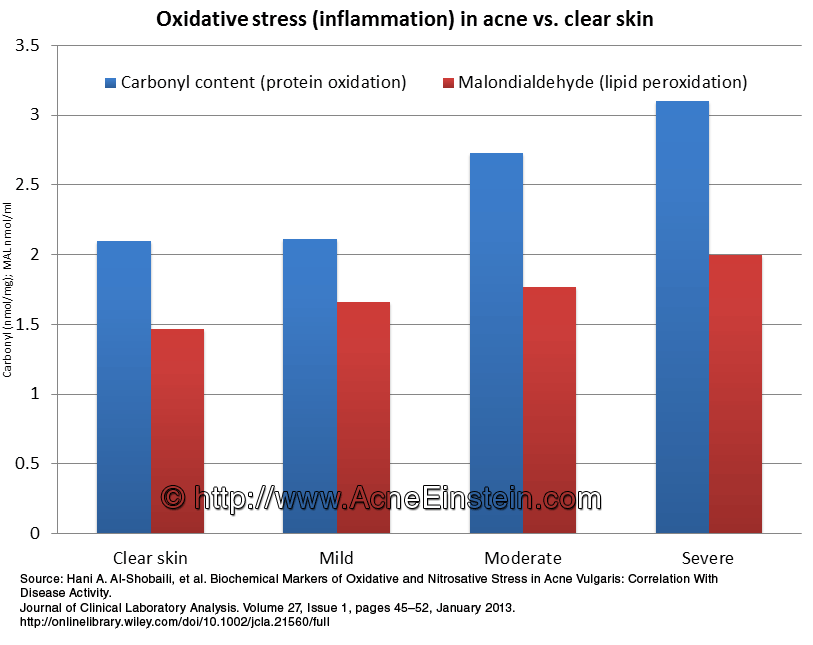
As you can see, there’s a clear correlation between acne severity and inflammatory damage. The graph shows measures for both protein oxidation (the blue bars) and lipid peroxidation (damage to fats, the red bars). But the details don’t really matter to us. What matters is the overall trend showing higher levels of inflammatory damage as acne goes from mild to moderate to severe.
On the flip side, they also looked into antioxidant activity. Here are the results for antioxidant enzymes. This chart shows measures for two very important antioxidant enzymes glutathione and superoxide dismutase. Much like vitamins C and E, these enzymes neutralize free radicals and other inflammatory molecules.
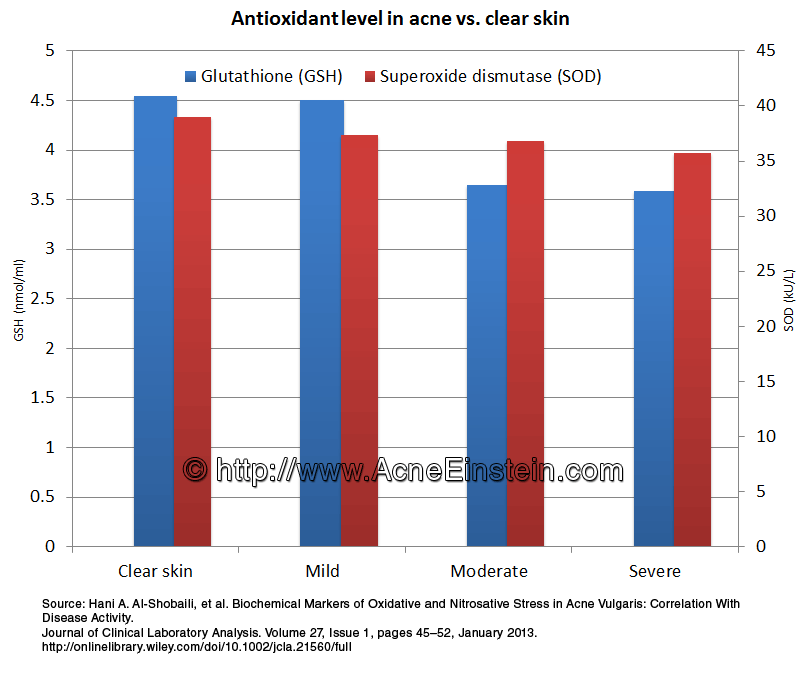
Again we see a similar pattern. People with clear skin show higher levels of these antioxidants and that the levels drop as acne gets worse.
Of course correlation doesn’t equal causation. These data don’t prove that inflammation causes acne. And if these were the only data, I would be careful not to jump to unwarranted conclusions. But these are not the only data, not even close. In the earlier posts I have covered more data on inflammation and the potential role of topical antioxidants.
Acne lesions show inflammatory damage
Another study published in Novermber 2012 provides more evidence. The earlier study measured markers of inflammatory damage and antioxidant enzymes in the blood. This study measured similar things in actual pimples. For the study the researchers took skin samples from people with varied severities of acne, again divided into mild, moderate and severe categories. They also took control samples from people with clear skin.
Results show that people with severe acne showed 2 to 4 fold higher levels of inflammatory damage than people with mild or moderate acne. Similarly, antioxidant enzyme readings were significantly lower in people with severe acne than the other participants. For the most part, there was not much difference between people with mild acne and those with clear skin.
Study: Antioxidant supplements reduce acne by 50%
Late 2012 Iraqi researched published a study that shows antioxidant supplementation can reduce acne by 50%. A few such studies have been published earlier, but those were quite low quality and as such we can’t draw strong conclusions from them. This study was placebo-controlled, which makes this much better.
Placebo control is important because, though it doesn’t seem like that, the placebo effect is very strong in acne. For example, it’s been pointed out that the placebo effect may account for about 50% of all the positive effects seen in studies using oral and topical antibiotics. Without placebo-control we can never know how much of the observed effect was due to the treatment and how much due to various placebo effects. The internet is full of stories of people getting better after ridiculous and implausible ‘therapies’ – most such stories can probably be explained with placebo, and that’s another reason why you shouldn’t put too much faith into those stories. What ‘works’ for them may not work for you.
Back to the study. At the beginning of the study they measured the levels of glutathione (GSH), malondialdehyde (MDA) and interleukine -8 (IL-8). Glutathione is an antioxidant enzyme and malondialdehyde and interleukine -8 are measures of inflammation.
|
Acne |
Clear skin |
Difference |
|
| GSH |
0.65 |
1.61 |
60% lower |
| MDA |
8.68 |
5.46 |
59% higher |
| IL-8 |
61.17 |
36.65 |
66% higher |
Again the same pattern emerges. Acne patients show much higher level of systemic inflammation (they are under higher oxidative stress in medical speak).
Here’s a graph from the study that again shows a correlation between glutathione (antioxidant) level and acne severity. As antioxidant level drops the number of pimples goes up.
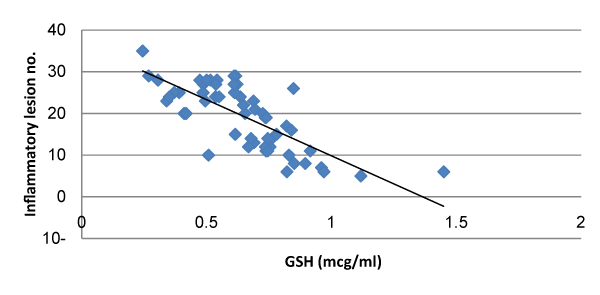
The study also showed similar graphs for other measures of inflammation. I’m not going to post them here, but the study is open-access so you can check them out for yourself.
In the study 56 acne patients were divided into 4 groups. 3 of the groups received one of the 3 studied antioxidant supplements while the 4th group received a placebo pill. The antioxidants were silymarin (milk thistle) (210 mg/day), N-Acetylcystein (NAC) (1200 mg/day) or selenium (200 mcg/day). NAC is a precursor to glutathione and can increase glutathione level in the body. Similarly selenium acts as a coenzyme in glutathione antioxidant reactions. The authors write that silymarin is believed to act as a potent antioxidant in human tissue.
Here are the results.
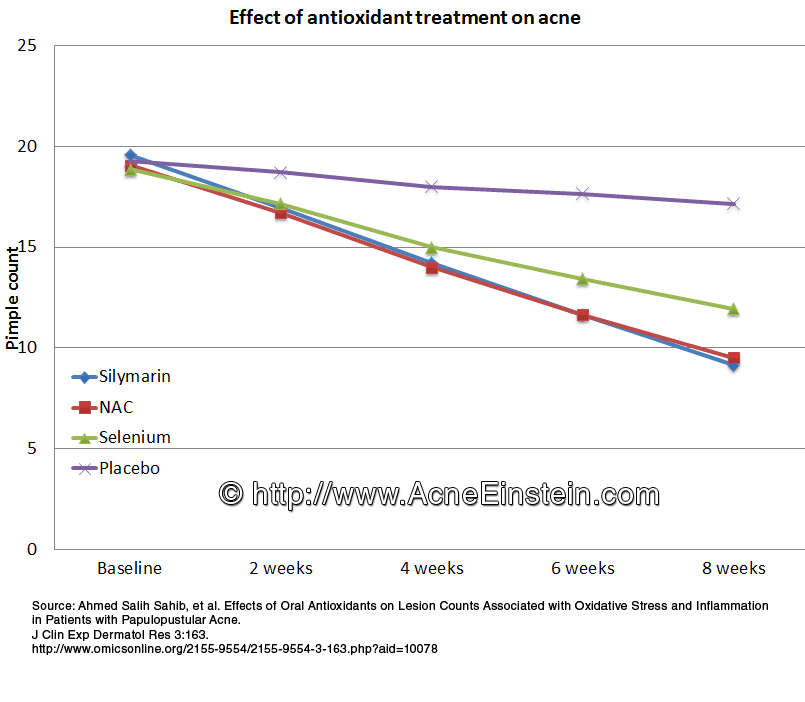
As you can see, the reduction in pimple count is practically linear for both N-Acetylcystein and silymarin supplements. After 8 weeks both supplements reduced acne lesions by about 50%. Selenium supplementation also showed a nice reduction, if not quite as quick as with the other 2 supplements. In contrast, there was no real change in the placebo group. I should note that this study was single-blinded, so the participants didn’t know which supplement they received.
This reduction in acne lesions was mirrored in increase in glutathione levels and reduction in measures of systemic inflammation. In other words, acne and systemic inflammation went down hand in hand.
Pretty encouraging results – especially considering what we discussed above.
There’s also older data that show low levels of glutathione in people with skin problems, and that combined supplementation with selenium and vitamin E increases glutathione levels and improves skin condition.
NAC supplementation may cause adverse effects
In the comment section Bob alerted me to the possibility of side-effects from NAC supplementation. He mentioned that NAC may increase histamine level and thus cause hives or rash.
Unfortunately I couldn’t find any studies on adverse effects of NAC supplementation at doses used for acne. NAC is used as antidote for paracetamol poisoning and in that context we do have safety data.
Adverse effects include:
- Nausea
- Vomiting
- Flushing
- Rashes
- Itching of the skin
- Angioedema (swelling of the skin)
- Constricting of airways (similar to what happens in asthma)
The paper Adverse reactions associated with acetylcysteine mentions that side-effects are more common when NAC is given intravenously. When given orally (as in supplements) side-effects are milder. The doses used for treating paracetamol poisoning are quite a big higher, but not orders of magnitude, than doses used to treat acne.
Risk factors include: history of drug allergies and asthma.
As Bob mentioned in the comments, NAC may increase histamine levels in some people, and this is one of the reasons for side-effects. Anti-histamine drugs and paracetamol can alleviate the side-effects.
Does this mean you shouldn’t take NAC? I don’t think so. The papers mention that in the vast majority of cases side-effects are mild and easily treated. I would start with a smaller dose to see if you get any adverse reactions. If you notice any adverse effects, consider using to sillymarin instead.
What does this mean to you?
By now you may think ‘OK, this is mildly interesting. It looks like inflammation can cause acne, but what does it mean to me? Eat more fruits and vegetables?’ Good point, so let’s move away from the dusty scientific papers and back to the real world where acne doesn’t obey fancy Excel-graphs.
This may be stating the obvious, but preventing and controlling acne means keeping inflammation in check. Unfortunately this is where neat the theory ends and the messy real world begins. The problem is that inflammation is such a fundamental function in the human body that there are countless things that affect it.
How you can reduce inflammation depends on what causes the inflammation in your body. Here are some common possibilities:
- Gut problems allow inflammatory molecules to escape the gut and into systemic circulation. I believe that this is one of the little-known and the most underestimated causes of acne.
- Chronic stress and persistent negative emotional states are very likely to trigger inflammation in the skin. In Clear for Life I wrote how a neurotransmitter called substance P can trigger an inflammatory response in the skin. There’s also evidence that substance P can increase sebum production and contribute to clocked pores. There’s no data on acne, but a study on psoriasis patients showed that injection of substance P triggered a psoriatic flare – even in people not prone to getting psoriasis. Substance P is released during psychological stress.
- Sugar and dairy products can increase sebum production and thus increase antioxidant demand in the skin.
- Inflammatory reaction to gluten is a possible cause, as are other allergic or sensitivity reactions to food.
- Chemicals in acne treatment and personal care products can cause skin irritation for some people.
The exact treatment plan is different for everybody, but here are some things that are likely to be helpful:
- Healthy diet that’s low in sugar and refined carbohydrates and high in fruits, vegetables, protein and healthy fats.
- Drinking 4 to 5 cups of green tea per day.
- Use antioxidant cream or moisturizer.
For more details feel free to read other posts on the skin, or, even better, get my book. Clear for Life packs all of this into an easy to understand and follow program. You can get it from here.

Hey Seppo – thanks for your blog and your new work with Paul 😀
I was wondering – in some people – where acne is maybe not primarily driven by increased IGF – 1 levels – could whey protein be beneficial because of it’s glutathione raising effects?
I personally don’t seem to have any effect either way eating both whey and other milk products.
https://www.ncbi.nlm.nih.gov/pubmed/22889987
It’s possible. Whey also contains lactoferrin, and there was one study that showed quite a nice reduction in acne from lactoferrin supplementation.
I want a procedure how I treat my skin Daily . Dos using moistures can make more Acne?
Depends on the moisturizer. Most probably won’t cause acne, but some do contain ingredients that clog the pores or irritate the skin.
A very interesting study as always. I have now been drinking a Chinese green tea for almost two months and my skin looks much better. Of course I can`t be 100% that it is due to the great amount of antioxidants that the green tea contains but it feels like it has an impact. Nevertheless I am feeling so much better today and I am very grateful for the valuable information you share with us.
Thanks for sharing your experience. I’ve heard from quite a few people that drinking green/white tea helps their skin.
Another great article from you, thank you for sharing this. I also read that people with acne have low level of GLA and EFAs. Apparently, when our body is low of EFAs, our system tells the skin to produce more oil for the skin. What’s your thought in this? Thanks
I can’t say anything definitive about this. I’m not aware of any research that would show increased sebum production with low levels of EFA and GLA. I know that those fats play a role in the skin barrier function. There’s some evidence that GLA either topically or as supplement can help with eczema. It’s possible that topically they are also helpful in acne, but with so little research available it’s hard to say anything for sure.
seppo!! i just buy your book by amazon! i like it so much!! man you ar a genius
its insane!!! thanks for all the research!!! i apriciate your work!!
isidoro from chile
Thanks for getting the book. I really appreciate it. Glad to hear you found it informative.
Hello. What is the name of the book? Thank you.
Hey Seppo,
First off let me say I’ve been a long time reader and big fan of yours for several years now. We’ve actually had a couple back and forths on acne.org in the past. Recently I saw a post of yours on Chris Kresser’s site, which spurred me to read and re-read a ton of your writings. I would argue you are perhaps the most well-rounded educated pundit on the etiology of acne and it’s treatments. You clearly have a discerning, scientific mindset/approach to the subject. Now that my nose is sufficiently brown…
The post of yours on CK’s site was about FODMAPS, something I recently become more aware of as having a big influence on my skin. I’ve tried to avoid being entrenched in dogma over the years with my mostly-paleo lifestyle, but unfortunately there are still a few things I do b/c for whatever reason it is “necessary” or something to that attune. One of those things is feeling that I need to eat tons of vegetables every day, despite feeling good when eating more simple high-digestible fare. I feel great eating bananas, applesauce, hell even some real sourdough bread (organic, ~3 ingredients) but I have this habit of over-complicating my meals, thinking I must get all sorts of nutrients at once. I need to shake the monkey off my back and not stress about changing up my diet, when ultimately it may do me better. I was curious- are you still eating your one fruit-only meal each day and feeling good? Thanks man
Lol, thanks for the compliments Daniel.
I was eating mono fruit meals during my raw food phase. I rarely do that anymore as the low fat, high fruit raw food diet was really bad for me. Not sure exactly what it was, perhaps too much sugar, but I started getting serious joint pains and hitting almost diabetic blood sugar levels. I’ve since switched to a more paleo-style diet, with the exception that I still eat a reasonable amount of grains, not the least of which is my morning oatmeal. I still eat a reasonable amount of fruits, but I don’t consider them as a main source of calories anymore.
I also have some FODMAP issues. Shortly after eating onions I get gut issues and a few days later my scalp breaks out. Onions are the only problem food I can say for sure, but I also suspect problems with apples.
I don’t know what to say to you. You seem already aware that you don’t need to over-complicate your meals for health reasons, and that you don’t need to get all the nutrients from a single meal.
Perhaps it helps to think back in time. During our hunter gatherer evolution humans ate what they could get their hands on. It seems reasonable to assume that our ancestors lived through long periods of food scarcity where they had to live with a very limited diet.
The human body seems to be very good at making substitutions between nutrients. For example, look at the antioxidant study I referenced in this post, it shows all the antioxidant supplements increased antioxidant enzyme levels and reduced inflammatory markers. Both sillymarin and NAC caused a similar increase in blood NAC levels, so somehow the body substituted substances in sillymarin to perform the same function as NAC.
I won’t go into much detail but will answer any questions anyone has. I’ve had acne for 37 years – since puberty. Tried everything – antibiotics [worked while on them, came back when stopped, B5 zinc etc etc. I was diagnosed with acneiform follicultis recently. Gt erythromycin. Again worked but only while on it. Comes back just as bad when stopped.
LONG STORY SHORT. saw this blog…started taking milk thistle and NAC. within 3 days inflammation went down massively. rather than nastily inflamed lesions [I had over 300 at one time] I now have none. I’ve had a couple of new ones come up in 3 weeks, not as big and not as inflamed and they healed within 24 hrs and left far less of a scar or so rather than hanging round for weeks.
It’s early days. I’ve been expecting to wake up with with an outbreak but so far so good. I’m hoping my body doesn’t adjust.
WOW! That’s all I can say. Amazing story, thanks for sharing it! I doubt that your body will adjust so much that your acne would get as bad as it was. It’s possible it gets somewhat worse, but I doubt it’ll get as bad as it was. Now at least you know for sure what’s causing your acne and can start hunting down the sources of the inflammation.
300 inflamed lesions? I’m sorry to say, but that sounds almost unbelievable.
Sorry for the bad editing on my post above.
Seppo,
Just woke up – no fresh lesions, still.
Yes, believe it or not I woke up in December 2011, sat down exactly where I’m sitting now and jumped up. I was sore on my back leg. Looked in the mirror and I had dozens and dozens of what looked like acne but was diagnosed as acneiform folliculitis by a dermatologist. They ranged from thumbnail sized very inflamed ones to smaller down to pinhead ones. I counted over 150 on one leg and even more on the other. I counted as I couldn’t believe how many I had. I’d gone to bed with none there! I then developed them on my trunk, scalp and other places.
I’ve had my acne [not folliculitis] since I was13 including cystic acne. I’m pretty scarred by it. The folliculitis scarring is by far the worst though including scarring. Interesting, the erythromycin I was on for the folliculitis took 5 weeks [1G a day] to achieve what milk thistle and NAC did in 3 days.
The only period in my life, previously, that I was acne free was a 3 month period on the Atkins diet. I went on it just to lose a bit of weight. After about 6 weeks on it I realised I’d only had a few zits come up and they were smaller and not inflamed and healed without me applying anything to them, overnight, leaving no mark. That was 8 years ago. I’ve assumed since then that in my case my acne is a blood sugar issue. I must check your site and see if you’ve anyhting on that. I used to check my blood every morning and after meals and I’m always at the high end of normal or just into what some would call the pre diabetic level.. I know these machines aren’t totally accurate. It’s still high though especially if you’re on a low carb diet. I’ve never been able to replicate the results I had on Atkins. But I maintained a low carb diet as it certainly helped a huge amount. Low carb was far less good for my folliculitis though.
So, to find that milk thistle and NAC work is shocking. 37 years of this could so easily have been prevented [assuming it continues of course]. I’m thinking of going back to a low carb diet. Maybe that + milk thistle an NAC will work better. I’m also thinking of adding maybe selenium and/or ALA and/or CoQ10. We’ll see.
I’ll post again if I get an outbreak or have anything else to say.
Wow, it must have been an experience to wake up with so many lesions all over your body. Can’t imagine what that must have felt.
I find that low carb or reduced carb diets usually work well for hormonal acne. High blood sugar and insulin level causes a hormonal cascade that, for people prone to acne, leads to excessive sebum production and blocked pores. I also notice that when I eat fewer carbs my skin tends to be less oily. I haven’t measured my sugars in years, but when I did I was on the higher side.
Those additional supplements could help, but I wouldn’t bet on it. Maybe you’ve reached saturation level already with your existing supplements and adding more is just a waste of money. Or not. I don’t know. I’m sure it’s worth a try, just keep in mind more may not mean better.
Anyway, really happy to hear that your skin is doing so much better.
Have you ever tried to take aspirin, ibuprofen or other NSAID pills against inflammation? They are stong and effective agains acne and other inflammations.
Find anti-inflammatory plants and make tea from them beside taking ibuprofen.
No, I haven’t tried that. I think NSAID pills are linked to liver damage (not sure about that though), so I wouldn’t be very comfortable taking them long term.
Hi Seppo,
New to browsing here. My skin has been at both ends of the scale. At my worst my acne could be classified as moderately severe. At my best literally non existent (not even occasional pimples or red marks). Around 2010 I read somewhere that milk thistle helps is good for the liver and the liver processes hormones so people find it helpful for acne. I started using it and when my skin was at its absolute clearest I was taking a high quality tinacture every single night. I always thought the milk thistle was the key part of my supplement routine but thought it was to do with the liver. Thank you for this new information
The whole milk thistle ‘boosts your liver’ is common ‘knowledge’ in the alt-med world, and as such completely wrong. Your liver probably doesn’t need any help or ‘boosting’ 🙂
Hey seppo since acne patients suffer from higher levels of inflammation, would anti-inflammatory medicine work then?
Definitely, I’ve written several posts about supplemental and topical antioxidants here. There’s very good evidence to support topical antioxidants and somewhat less solid evidence for supplemental antioxidants.
If that’s the case, do you take any antioxidant supplements? I’ve searched a bit but I always get some article commenting on the dangers of using them is.
Yes, please see the Quick Start Guide for the supplements I recommend and take. When I warned of the dangers of antioxidant supplements the point I wanted to make is that the concept of oxidation = bad, antioxidants = good is too simplified. Oxdation is absolutely crucial for life and you wouldn’t be able to survive without it. That’s why taking too many antioxidants can actually be harmful. It’s all about balance and in cases where there’s too much oxidation, like acne, antioxidant supplements can be helpful.
The quick start guide? Sorry, what/where is that?
It’s a booklet I put together than contains the best recommendations from Clear for Life. It’s there so people can get started doing the right things right away, without having to read all the 300+ pages in Clear for Life.
Thanks I just found it! I’m going to buy the Michael’s Naturopathic, Teen & Adult Skin Factors and an NAC product that contains 600 grams of NAC for each capsule.. And I’ll be careful not to overdose!
You probably don’t need both, I doubt that taking multiple antioxidant supplements offers any cumulative benefits. I’m going for NAC + Zinc combination myself.
Hmm.. I see…. It just makes sense to take both Michael’s Naturopathic and a product containing NAC
From reading around there seems to be a possible side effect of NAC in that it blocks the action of Diamine Oxidase (DAO) enzymes which break down Histamine and so in some people NAC can lead to higher levels of histamine and associated symptoms – like hives. I experimented with 600mg of NAC a day and found that after taking it for two days I had an allergic histamine type reaction – in the form of facial hives. Anti-histamine tablets helped it go in a few hours. So Milk Thistle might be an alternative worth considering for those who find NAC problematic.
Thanks for this, Bob! I checked the studies on this and updated the article.
But one more thing i’ve read a blog post (this one) https://whfoods.org/genpage.php?tname=george&dbid=143
About antioxidant turning into free radicals.. Would it be a bad idea to take those antioxidant supplements, after reading the blog post I am kinda nervous now…
That was my point, too many antioxidants can have a harmful effect. That said, people with acne have depleted levels of antioxidants and studies show nice reduction in acne and oxidative stress with antioxidant supplements. So you are giving your body the antioxidant it needs instead of overdosing with them. It all depends on the context, and that’s why I said that the popular meme antioxidant = good, oxidative stress = bad is oversimplified.
I guess the real harm is only when I overdose.. But regarding the too many antioxidants.. then surely you’re talking about too many of the same antioxidants in toxic doses right? But if I take the supplements in a responsible manner without overdosing then there is no harm is there?
I don’t know. Anyway, this is not something I would worry too much as long as you aren’t taking too many supplements.
Well it can’t hurt. As long as I’m not overdosing.. I doubt that there would happen anything bad. We’ll see.
Yess and no! There are many very harmfull oxidants that need to be neurtralised. Oxidants from for example our own metabolism.
Many substances have anti-oxidant capabilities. Found in foods and made by our body like SOD (super oxide dismutase). SOD is a very strong anti-oxidant and very much needed.
Oxidant substances in foods can indeed turn into pro-oxidants, cause they only can neutralize that much harmfull oxidants and then become instable and an oxidant themselves, but they are way less harmfull then the oxidants neutralized.
Another anti-oxidant then can neutralize that oxidant untill becoming unstable and then being excreated via the liver/ kidneys. It’s about making less harmfull substances. That’s why glutathione in the liver is so important cause the intermediate reactive breakdown product are much more unstable and oxidative then before.
Some substances in foods have low anti-oxidant capabilities but turn on genes like NRF2 that turns on our anti-oxidant system.
To much of one thing is never good, like taking to much high dosed vitamins. Vitamins also keep stable longer when getting it from whole foods cause the different anti-oxidants keep them from being oxidized.
With acne and related skin dispensers, the blame most of the time can be found in the blood that is filtered by the liver and then kidneys. The liver can become clogged with intrahepatic stones ( not visible on scans) made from mostly cholesterol that harbor many harmfull toxins. These stones block the liver from detoxing the body in a good way. So everything that will cleanse the liver from these stones with a diet high in natural anti-oxidants will lessen the occurance of acne and related skin problems like eczema. Keep your blood clean!
Wow that graph is amazing – I wonder what would have happened if they’d kept going – it looks like it’s heading for zero pimples by 16 weeks?
I’m pretty sure the reduction in acne would level off at some point before reaching zero pimples.
Do you think the dose of 1200mg/day NAC is important? I’m nervous about taking large amounts of any supplement – you reckon 600mg might work – but just a bit more slowly?
I don’t know. There’s not enough research on antioxidant supplements on acne to say for sure. It’s likely that 600mg would still work, just more slowly, but that’s just my guess since nobody has established proper antioxidant doses for acne.
Hmm.. I just saw you updated this post – I’ve been taking NAC for… 2 weeks now I believe, + Michael’s Naturopathic skin factors. My face looks.. Pretty good actually. I can’t say if it’s the result of the supplements or my new tropical regimen which includes pretty much all the antioxidants minus vitamin C. But in all my face looks much better!
Although I did notice something weird when I take NAC, like.. I get a warm feeling in my chest. I’m not sure if it’s the NAC or not but it seems to happen after I take 600mg. It’s nothing serious but I don’t know.
Glad to hear your skin is doing better. After Bob alerted me to the possibility of adverse effects from NAC, I wanted to update the post so people know to keep an eye on them.
I wanted to ask actually, is it possible that the antioxidant effects of NAC when converting to glutathione, is it possible that it might cancel out other antioxidants like Vitamin A,B3,C,E etc?
NAC is used to treat inflammation in the lungs – so maybe it’s having a positive impact on your lungs and you feel that as a warming in the chest? I’d guess it’s only a small proportion of people that have negative reactions to NAC – so if you’ve been taking it for a few weeks without noticing anything you’re probably one of the lucky ones who doesn’t react!
I haven’t really noticed anything negative about taking it.. Other than that warm feeling in my chest. It’s hard to describe, it’s not really.. inside my chest more like underneath it. I dunno if it’s a positive or negative thing. It does bother me at some point to the point where I feel like drinking some water to calm down. But I don’t experience anything bad like being dizzy or vomiting.
Honestly speaking, I don’t know.
Was that to my warm feeling in chest comment or the one where the antioxidants might cancel each other out?
Antioxidants cancelling each other out.
I was taking NAC really regularly for a while and noticed that if I didn’t drink enough water with my pills in the morning (1200 mg) I would get some pretty bad heartburn and burning burps. So I think that is probably the warm feeling in your chest!
I started taking NAC to lessen my anxiety and stop pulling out my own hair. I just finished my first bottle and noticed that my horrible acne is actually disappearing. I still have some bumps but it is no longer inflamed and red. I wondered if it was the NAC…and after reading this it looks like it is this supplement that is making a difference in my skin! It has only been a month, and no bad reactions. I took one or two 600 mg a day. Thanks for the info!
Thanks for sharing your experience, Stacey. And glad to hear you are getting such good results with NAC. I think it’s one of the most promising supplements for acne.
Hi Stacey,
I also started taking NAC for trichotillomania (hair pulling) and it seemed to help me. I’ve been so busy with school lately that I haven’t been taking it regularly for the last few weeks. I wasn’t paying attention to my acne but now I think I really need to get back on track with it! I’m curious if it is helping you with your trich, and what dosage are you taking? I was taking 1200 mg in the morning, and sometimes another in the evening before dinner.
Seppo,
If the data shows that both NAC and Milk Thistle were equally as effective in the study, why is it that you don’t recommend the latter in your quick start guide?
Also, why is it that everyone in the comments is talking about NAC but not milk thistle? Am I missing something? Is NAC better?
That might just be my personal bias against herbs, I tend not to trust them because of known problems in product quality, consistency and dosages. That said, many of the problems probably also apply to other supplements. As far as data on acne goes, you can use either NAC or milk thistle.
Try using the intra-cellular liposomal glutathione from maxhealth labs. it is very absorbable, see their web site. cancer drugs are turning to liposomal also to by-pass the digestive system… my daughter is trying to clear up her skin..
I was always interested in glutathion boosting supplements. My theory is that a lot of people with persistant acne have environmental toxins accumulated – heavy metals, PCBs and the like – in their body. The reasons for their body having accumulated these toxins can be manyfold like environmental exposure, lack of nutrients to detox, bad genes etc.
A supplement I have yet to try, which is a very potent antioxidant and used by a lot of people to chelate heavy metals is alpha lipoic acid (ALA). From what I know ALA is so potent that dosing is tricky. Similar to NAC some people have to gradually up the dose or cannot tolerate it at all. Check out the work of Dr. Burt Berkson when it comes to ALA. I have not read of any breakthroughs with ALA when it comes to acne, but knowing how it works in the body I believe the potential is there. However, the question is which kind of ALA do you take, there are different forms out there. It gets tricky figuring out which form of ALA to try.
If anybody has come across research with respect to ALA and acne let me know.
I have never seen any good evidence to implicate heavy metals or other environmental toxins in acne. Increased oxidative stress can be explained in other ways. Given that ALA is a powerful antioxidant it could be helpful in acne, though all the skin-related research looked at topical application of ALA.
Actually i had really bad bacne/chest acne, at one point i had a peak of 30 deep cystic acne nodules and boils on my body at one time. Some combined into a mega cluster of 3 about 5-10 cms across my back which was painful and depressing at the same time. I tried everything from chinese herbal medicine, anti biotics, many skin cleansers and treatments, diet changes, ala, zinc, silymarin (milk thistle), methylation and many other remedies. It wasn’t until i had three metal tests done through urine, hair and blood and found copper, mecury and lead high on all. Started up with 75mcg x2 a day of molybdenum to remove copper and help with sulfite oxidase (as i have problems with sulfur) and i reduced the acne down to 1 or 2 cysts every 2 weeks. I also had a blood test that a few olympic teams use these days that shows you pro and anti oxidant level. Basically i had oxidants in the normal range but my anti oxidant levels were very low so i have been supplementing with riboceine which is basically cysteine wrapped in ribose. It is basically a supplement that helps people who can’t tolerate NAC raise their glutathione levels. After two weeks i have had no new acne or boils and my chest and back are clearing up nicely. So i really think metals can play a part but at the same time NAC would help with them as it can be converted into glutathione which is the our natural mechanism for chelating heavy metals.
Thanks for sharing your experience, Andy. It’s certainly possible that metal exposure plays a role in acne. But until we get more reliable data on this it’s impossible to say what, if any, role they play. It’s equally possible that this is something unique to your body and has little relevance to others. Without good data it’s just not possible to say either way.
I would like to first say, “Thank you!” for your website and for making me think of acne in a new, scientific light. I am a female in her early twenties who has had mild to severe acne for almost 7 years. Initially, I noticed the more I ate at my parent’s for dinner, the more my cheeks broke out in pimples. I assumed it was the pillowcase I was sleeping on or my cellphone. So many articles online relate the words “dirty” with “acne”. During one of my routine internet searches for the cure to my acne, I came across possible dietary factors that influence acne in a scientific article. I then realized that the difference between the food I prepared for myself and what my mother prepared was DAIRY.
So I have reduced my dairy-intake by over 90% in the past few months. I saw a dramatic reduction in the number of pimples on my cheeks. However, the pimples seemed to migrate down along my jawline, chin, and a few at the highest part of my cheekbone. And that is around the time I came across your lovely site.
I began drinking green tea religiously (I actually could not imagine my days without it <3). I take vitamin E and NAC supplements and apply a topical antioxidant (currently I mix up my own daily using cosmetic grade vitamin C and aloe vera gel because my skin is so sensitive to lotions). I have only began ALL of these treatments together for about a week. I am fairly pleased with my results so far. My skin looks much healthier. Although, I still have a mess of red marks left behind and a few pimples (maybe 5 or 6). I also TRY to reduce my high-glycemic food intake and have considered trying Vitamin D, as you have suggested for women. I am happy to hear your days are no longer filled with the awful thoughts brought on by acne and hope you all the happiness in your journey to health.
Happy to hear I’ve been able to help you. Keep up the good work!
Hey Sep, it’s been a while, I wanted to tell you that my skin is still doing fantastically well, I just had a question.
I just got a common cold and some people get prescribed antibiotics for colds, however.. I wanted to know, would Panodil (Paracetamol) have any effect on acne, I’m slightly hesitant to take it because I’m afraid that it might have some antibiotics properties but that doesn’t really seem to be the case as I can’t find anything on the internet that states that. But since it’s anti-inflammatory would it have any effect on acne?
Hi! Glad to hear your skin is doing much better. Honestly speaking, I have no way to say how paracetamol affects acne. Yes, it has an anti-inflammatory effect, but it’s a little too simplified to say based on that that it would help acne. My guess is that it has no effect on your skin.
Right, and it did not have any antibiotic properties right?
I don’t know more about paracetamol than any other non-medical person. But even if it did have some antibiotic activity, I don’t see why that would be bad. The gut flora is fairly resilient and it’s highly, highly unlikely that mild antibiotics would cause long-term disturbance.
Hi Seppo,
I’m wondering if you know how silymarin work to have a similar effect on acne as NAC? Does it work by boosting glutathione? Also, can I take free-form cysteine instead of NAC?
Thanks.
According to the study that showed antioxidant supplements reduce acne glutathione increased in all treatment groups, i.e. all groups except placebo. I don’t remember now whether there were differences in glutathione increase between the groups. I don’t know if free-form cysteine would also work.
I was wondering about purchasing Madre Labs Camellia Care EGCG Green Tea Skin Cream, which is one of your five recommendations as a topical antioxidant for acne. (I have mild acne btw.) Do you know if this is a good choice (compared to the other four), and do i replace my normal moisturizer for this alone, or do i put it under/over my normal moisturizer? I’m worried that if i use it alone it won’t hydrate my skin enough, my skin is forever dehydrated – and not giving it enough moisture can trigger increased oil production, and so on = bad.
Beyond what I mentioned in the report, it’s hard to say which cream is the best since no studies have been done to compare them. That said, I think any of them should do just fine.
As far as I know sebum production has nothing to do with skin hydration. Dehydration doesn’t trigger any compensatory increase in sebum production. If you have oily skin then you probably don’t need to worry about moisturizers too much. Sebum itself works as a moisturizer – one of the main function of a moisturizer is to create a barrier on the skin that prevents moisture loss. All the creams mentioned in the report have some hydrating properties and are probably enough for oily skin. If your skin is on the dry side, then you could fist use the antioxidant cream and follow it up with regular moisturizer.
Thanks for your respons Seppo:)
I was also wondering about antioxidant supplements.
1. Taking 600-1200mg NAC a day, would that be an “overdose” for those people who actually dont need it? I mean, say the cause of your acne has root in some other issue than inflammation/lack of antioxidants, so you dont need the supplement at all really, but you take it to see if it helps. Would that be dangerous?
2. Since too many antioxidants are bad, would it be better to take different kinds of antioxidants to not over-do one type? Or doesnt it matter how many kinds of antioxidants you take, e.i. if you take just one or several types, and rather the amount all together not depending where it comes from?
3. Drinking 2-3 cups of green tea a day, using topical antioxidant cream, AND using say 600mg of NAC a day = is that over-doing the antioxidant intake?
Sorry but there’s no way for me to answer your questions properly. Such detail is just not available from the studies.
Here’s what I can say. Studies show that people with moderate/severe acne often have low levels of antioxidants, but people with mild acne are not that different from people with clear skin. So if your acne is on the milder side, then you may not need or benefit from antioxidant supplementation.
I don’t think there’s any danger in trying AO supplementation for a few months. They can be problematic when taken over a long time. Oxidation is usually vilified in the natural health world, but the truth is that it’s vital for survival. For example, cells use it to transform glucose into energy, and the immune system uses oxidation to kill pathogens.
You need a balance of oxidation and antioxidants. Suppressing oxidation too much with antioxidants can cause problems, studies have shown increases in mortality rates. Ironically, all those supplements touted to ‘boost’ the immune system may do the opposite – shows how little those people actually know about the human body.
This is why I don’t recommend taking AO supplements, or any other supplements for that matter, needlessly. But I also don’t think there’s any harm in taking them for a few months to see if they help.
Your question #2. I don’t think you’ll reduce the risk by taking smaller amounts of several types of AO supplements.
#3. I can’t say, but see my above point about the risk of AO supplements. Using AOs topically doesn’t factor in here since they don’t make it to the bloodstream.
To be honest, i was actually thinking about this last week, and before this week actually, I was scared as well taking multiple antioxidant supplements but last week I was kinda thinking about it.
Seppo has made it clear lots of time that acne patients have low levels of antioxidants in their systems, and combined with how taxing some of our bodies are with producing more oil than normally requires even more antioxidants than normally… Which we don’t have. Oh, let’s not forget all the ways inflammatory stressors that exist out there like UV rays, pollution, chemicals, then there’s gut problems, stress, emotions. Quite a lot of beating a body has to take with such low levels of antioxidants.
With that being said, I don’t take multiple supplements, I take skin foods because of the vitamin A/B3/C/E it provides since I know I’m not getting enough of them in my diet. And I take the NAC supplement because of described above. Wether that offers any additional help, who knows.. But so far my skin is doing pretty well. So it won’t hurt, besides if you feel weird or feel uncomfortable taking it then just stop taking it. Not that hard. 😉
I should clarify that people with moderate to severe acne have depleted levels of antioxidants. People with mild or occasional acne have more or less similar antioxidant levels than people with clear skin. So taking antioxidants for mild acne may not be warranted.
I noticed when I went a week without taking my supplements I started to get quite a lot of acne (that are mostly gone by now) so I think it really depends from people to people.
Yep, the averages reported in studies hide a wide range of responses.
Seppo,
Would you say acne severity is purely down to the level of sebum oxidation? Or does the immune system also affect acne severity? I read somewhere that some acne sufferers have immune systems that react quite strongly to any wounds and not just irritants released by p-acnes in blocked sebaceous glands
MichaelC
As far as I understand, sebum oxidation is more like the trigger that starts the acne formation process. So the more oxidative damage your sebum suffers the higher number of pimples you are likely to have. The severity of individual pimples also depends on the immune response. Basically bacteria colonize the blocked pore and exponentially increases inflammation in the area. So yes, immune response does affect the severity of acne. I have not heard that immune system in acne-prone people would react more strongly to wounds, but I have read studies that show it reacts more strongly to P. Acnes bacteria.
Hi there, just came across your site.. I have had acne for 9 years, I’ve tried EVERYTHING. I don’t eat gluten, dairy, refined sugar, and recently I’ve become a vegetarian. I am eating a low-carb diet and have been trying to reduce my stress levels a lot as well. I have also recently been taking an iron and vitamin C supplement (iron levels were a little low) for months. Doctors think I have PCOS (no cysts though!) irregular hormones, but blood tests come back normal? I’m so confused, and am looking for answers. What do you suggest? Should I incorporate an antioxidant into my supplements? I eat all organic, very clean, no processed junk, real whole food, cook at home 95% of the time, and avoid all GMO’s, preservatives, additives, flavours, colours, etc.
Help?!
It’s hard to say much based on what you wrote. Other than that it seems to me you are focusing, at least partially, on wrong things. For example, organic food seems much more of a marketing gimmick than having anything to do with health. Similarly, GMOs are very unlikely to cause acne. Eating clean is good for overall health, but in my experience one doesn’t have to avoid bad foods all the time to get clear. It’s ok to be normal. Of course, if you prefer to keep doing these things for other reasons, feel free to do so.
Regarding hormones, studies show women with acne don’t often have overt hormonal imbalanced. When you compare hormones between women with and without acne, those with acne have on average higher androgen levels, but the levels are still within normal range. Acne is not only about blood hormone levels, but also how sensitive your skin is to those hormones. For that, you can consider something like topical green tea.
If I had to hazard a guess, I’d say acne causes a lot of stress and emotional pain to you. This by itself can perpetuate it. I don’t have an easy answer to it, but I suggest you start by reading this post.
I hope this helps!
Thanks for your reply! Unfortunately I’ve tried green tea with no results, as well as the “Exposed” product you suggested in your article. Looks like nothing is going to help me 🙁
Thanks anyways..
I wouldn’t conclude yet that nothing is going to help you.
Hi,
Could Milk Thistle actually cause more acne for a period due to it’s detox effects? I’ve been taking Milk thistle for about two weeks now and I’m noticing this in me. I take a few other supplements [Estroblock & Vitex] however I feel like it’s the Milk Thistle that’s causing my body to detox quicker that it can be handled thus resulting in my skin. I take it everyday but I’m considering reducing the dosage to every other day – any suggestions on this?
Thanks.
Please don’t get me wrong, as I don’t try to be dismissive or condescending. The whole detox thing is a myth, a marketing concept designed to get people to buy useless supplements and therapies. I wrote a whole post explaining why detox is more of a sales pitch than anything real.
To answer your question. It’s possible that you suffer some adverse effect to milk thistle and that caused problems on your skin. More likely explanation, in my opinion, is that you are seeing normal ups and downs in acne and perhaps try to find a correlation where there is none.
For how long can you take NAC orally. Or do you just test it a few months to see if it works, instead of years of using it.
I would take it for a few months to see if it helps. If not, stop taking it. It’s not a good idea to take antioxidant supplements, or any other supplements for too long. There’s preliminary animal data to show antioxidant supplements accelerate cancer development and may have other harmful effects in the body.
Does this also apply to Zinc Gluconate 50 mg? I want to start fish oil+ Zinc for my skin and health. Can i use this also for a few months?
What do you mean ‘does this also apply to…’? I’m not sure what you are asking.
I mean, can you use zinc+fish oil every day? or is this the same as with NAC, which you may not use longer than a few months?
Generally speaking, I don’t think it’s a good idea to take any supplements for long time. We just don’t know yet what long term effects they have on the body. What research we have suggests that supplementing with antioxidants is not a good idea in most cases as they can increase the risk of cancer and other health problems. I can’t say anything specific about zinc and fish oil though.
Hello Seppo,
Finding your blog has been a huge help for me, thank you so much! I was wondering if you could recommend any acne friendly moisturizers, preferable ones available for purchase in Europe? I saw that you recommended the Bee Naturals oil free moisturizer on another blog post which looked great, but was unavailable in Europe.
Keep up the great work!
Thanks,
Orla
Glad to hear that you liked the blog, Orla. I don’t live in Europe, so it’s kinda difficult for me to figure out what’s available there and what’s not. Most of the things I recommend aren’t available here in Thailand. So I just order everything from iHerb. Delivery takes about 3 weeks, but it’s not the end of the world when you plan ahead little bit.
Seppo,
Thanks for your reply. I will try to use Iherb.com. What are the main ingredients that you avoid when choosing a moisturizer? should it simply be oil free and non-comodogenic?
Thanks,
Orla
Pretty much the only thing I look out for are citrus extracts and essential oils. Quite many companies use them, but they can also be fairly irritating. I would beware any product where they show up high on the ingredients list. I wouldn’t worry too much about non-comedogenicity or oil-free. Comedogenicity ratings don’t really reflect what happens when products are used in real life, so they are more or less useless. Oil-free products can make your skin less shiny, but applying oil on your face doesn’t cause acne. In fact, they can even help people with dry, acne-prone skin.
Just wanted to say thanks for posting this finding. I’ve tried a lot of things over the years. Everything from topicals to oral anti-biotics. I wash my skin daily I probably have more product than the average woman and for the last year I’d been fighting the worst cystic acne breakout I’ve had since I was 16 or so and went on Accutane. I’d been fine for a few years and then up until a year ago had started to noticed bumps on my neck. Left and right. I’d have these non blackhead under the skin , skin colored bumps. I’d gone to my general practitioner, then a dermatologist all to no avail. I feel they gave it their all and while I may be an extreme case short of going on Accutane again (which I want to avoid I have Crohn’s) I have never experienced results like that of taking NAC. It took a good month to noticed and at first I figured ah well could be placebo. I even stopped washing with benzoyl and acne face washes/creams and yet the bumps slowly, but surely subsided. It sucks thinking I have to be dependent on something I didn’t need when I was 21 (I’m now 23) but at least I can enjoy clear skin again. My right side of my neck is clear, the left side has a few more bumps (2) almost gone now. It’s a far cry from where I started. Just like many things in life NAC won’t be a one size fits all and different things will always affect us differently dependent on our genetic makeup etc but I have to say if you feel like you’ve tried all. Give NAC a try. I’ve never posted a comment before but today after looking in the mirror and thinking holy **** I couldn’t help but say something. Best of luck to all in finding your aid in the fight against acne.
Thanks for sharing your experience, Kyle! And that’s awesome to hear it’s working so well for you.
There could be something that causes the inflammation NAC is countering, perhaps gut issues, perhaps food sensitivities, perhaps something else. I would explore different possibilities and it might be possible for you to not be dependent on NAC.
Thank you for this great article! I’m battling autoimmune disease and am trying to reduce inflammation with healthy eating (just started PHD diet). I did try NAC but it caused severe nausea. Maybe glutathione would work better. Wondering what your thoughts are on Amy Yasko’s methylation cycle. I seem to have a problem with sulfur and she states one should take molybdenum and something else? to clear the pathways before taking glutathione… So many things to figure out! Lol! Thanks again for the post:) I did just start taking evening primrose supps to help with acne and thyroid, maybe I should quit that before starting glutathione. What are your thoughts?
Cheers,
Natalie
I also started bentonite clay (interal)
Glad to hear you liked the post. I’m not at all familiar with methylation cycle and can’t help you there, sorry.
You probably know this already, but autoimmune issues are often linked to gut problems. So that’s probably worth looking into.
Thought you and your readers might like to look at these studies I stumbled across:)
https://www.raysahelian.com/glutathione.html
Thanks. Though I would take that research with a grain of salt. Most of that research is highly preliminary and it’s not at all certain what the real effects will be in humans.
Hello Seppo,
Just stumbled across this website and have to say I am very impressed by your knowledge and expertise on acne. I also like how you have scientific studies backing your claims, as there is a lot of ppl out there who posts things without any scientific proof.
I am a 23 year old male, and have moderate acne. I would say that I have anywheres from 3-7 pimples on my face on average and the rest is left over marks from previous acne(which is a large part of the problem for me). For the past 7 months I have been going to an acne laser place and getting physician strength chemical micropeels as well as something called the Aramis acne laser. It helped alot at first but effectiveness seemed to tail off
And I still have good amount of acne and left over marks after months of treatment. I have also been taking dr perricone skin clear supplements for 2.5 months, which contain Vitamin C, D, E, calcium, magnesium, ascorbyl palmitate, evening primrose oil
Omega -3, b-complex, Zinc, ALA, chromium, and DMAE. Haven’t seen much results from these supplements.
So I believe the problem is internal and would like to address the root cause rather than just treat the symptoms. Thus, I would like to try some anti-oxidant supplements you mentioned to help reduce acne and address problems internally.
Anyway, I have a few questions for you that I hope you can help me out on:
1. As far as the 3 antioxidants mentioned in the study(Silymarin, N-Acetylcysteine and Selenium) and your post, are all 3 equally effective? What do you recommend a safe but effective dosage is for each?
2. Is there any specific, pure brands you recommend for the antioxidants supplements?
3. I only take one supplement and not all three, right?
4. Since I have been taking the above supplements for 2 and a half months, do I need to wait a bit before I take antioxidant supplements?
5. When I do start taking the antioxidant supplements, I also plan to use the green tea topical cream. In your opinion if I am using the supplements and the cream should I stop going for the micropeels and lasers?
Thank you so much for your help. I know the battle with acne is as much mental as physical and I am also working to keep my stress down and focusing on the positive, which I know will also help me out with acne. I don’t expect to never get a pimple again but I do want to reduce/manage it as much as I can so I can live a life of confidence that has evaded me for so long.
Again thank so for your help/ input!
Joe
Glad to hear you liked the site!
Answers to your questions:
1. Other than this study, I don’t have any data on how these supplements affect acne. So I would just go with the same dose the researchers used. Sillymarin 210mg/day, NAC 1200 mg/day, selenium 100 micrograms/day. Don’t take all of those, just one. I would recommend taking either sillymarin or NAC. At this point I have no way to tell which one is more effective.
2. No. Most of my supplements are from ‘Now Foods’, but I have no specific insights into supplement brands. Due to lax regulation buying supplements can be like playing lottery. There’s really no good way to tell what’s inside of the pills. You just have to trust that the manufacturer isn’t filling their pills with cheap fillers.
3. Yes, just one. I would keep supplements to minimum. There are studies that show taking too many antioxidants or vitamins could be harmful.
4. I don’t think so.
5. No, you can continue doing the peels if you want to. They ‘target’ acne differently than antioxidant supplements and creams. Antioxidants aim to prevent acne from even getting started. Peels and lasers sort of help to break existing acne and blocked pores. So they should work well together.
Hope this helps!
Hey Seppo,
I’ve read a lot of your articles and finally purchased your book today because you take such a great approach, hopefully it can work for me too. Do you know of any useful tests relating to inflammation or pro/anti oxidants I could request of my GP? Only one i’ve found so far for inflammation is the C-reactive protein (systemic?) inflammation blood test. I’ve recently started following much of your advice but would like to attempt to get a better idea of what’s going on inside my body at the same time. Any advice would be hugely appreciated.
Thanks,
Joel
P.S. My biggest trigger is whenever I increase my calorie intake to attempt to gain weight so could be insulin/IGF-1 related i guess
Hi Joel,
Thanks for getting Clear for Life. I really appreciate your trust!
I would prefer not to recommend any tests for oxidative stress. The problem is that I don’t have sufficient background knowledge to say what you can conclude from the tests. I could tell you the tests they’ve used in the studies but I wouldn’t know how to interpret the results. There are usually big limitations in what you can conclude from such studies and I’m just not sufficiently knowledgeable to know those.
In this case your best bet would be to try and find a dermatologists/doctor who understands the connection between oxidative stress and acne, perhaps even print out some studies to share with them, and ask them to advice you.
Hi Seppo,
I recently came across your site and wanted to thank you for all the great resources you’ve put together. I’ve been reading non stop for the last couple of days!
I did have a couple of questions for you. I was wondering if you had any thoughts on the study linking NAC to pulmonary arterial hypertension.
https://articles.mercola.com/sites/articles/archive/2007/09/25/this-common-antioxidant-supplement-could-cause-you-loads-of-trouble.aspx
I had considered taking NAC in the past but decided to stay away after reading such articles. It didn’t seem like something I could take for extended periods of time.
Which brings me to my next question. In one of your comments you mention taking AO supplements can have long term side effects linked to cancer. Obviously this is very troubling. Where can I read more about this.
I’ve been taking milk thistle for a few months now and can definitively see a significant reduction in acne. I have tried a few different milk thistle supplements and only the one by naturenetics works for me reliably. Each capsule contains 300mg of milk thistle (80% silymarin) and I take one with each meal. That’s around 3 times the amount of silymarin given in your study and I guess I’m trying to figure out if it’s ok to take that much. I haven’t come across any research regarding significant side effects to milk thistle but obviously I don’t want to be stuck taking milk thistle forever. However if I miss even a day, my acne (of which I’m lucky enough to have the severe variety) comes back to remind me that it’s just lurking around the corner. So what are my options here.
Also do you have any insight regarding taking reduced glutathione directly. I’ve read that it’s not very effective when taken orally but it seems like there are alternatives. Could taking glutathione directly possibly be better than taking AO supplements in the long term?
Sorry for the questions asking you to speculate lol
Sorry about late reply. We are on holiday with my wife and I have limited time to reply.
While I don’t think Mercola is a reliable source of any health-related information, I do agree that it’s not a good idea to take too much antioxidants. The body requires a balance of oxidants and antioxidants to function properly, both are equally critical to life and must be in balance. It’s when the balance gets disturbed that people run into problems. People with more severe forms of acne usually have too much oxidative stress in the body, and in such a case it’s a good idea to test NAC or other antioxidant supplement. They probably do nothing for people with mild acne, and I wouldn’t recommend then in that case.
If I recall correctly, a fairly large observational study showed that combined vitamin E and selenium supplementation increased cancer. I think the study came out a year or two ago, I think it was called SELECT study.
I don’t have any data to comment on how much sillymarin you can take. But if it leads to significant reduction in acne, it’s probably doing something good for you. It might be a good way to explore other ways to reduce acne, such as diet and gut healing, and if those work then reduce or stop supplementation.
I also don’t know about taking glutathione directly. And I would rather not speculate. The problem is that I’m not a doctor and don’t have the necessary background understanding to base my speculations on. As such, it’s likely I could give you completely wrong information and I feel it’s better not to say anything in such cases.
Check out red light therapy. I found a study on female athletes and melatonin levels when exposed to red light (to help performance and sleep). anyways, if red light can help melatonin it can help glutathione. I do red light for eczema, but I haven’t gotten acne while doing it either (although I was mostly clear when I started, sleep is awesome though)
https://www.ergo-log.com/exposure-to-red-light-makes-top-athletes-fitter.html
Thanks. Quite interesting results. Given the size of the machine used in the study, this isn’t really something one can try at home 🙁
Hi Seppo,
Would you recommend using NAC or the glutathione pills?
Depends. They can be useful for people with moderate to severe acne, but unlikely to do anything for people with mild acne. Also, inflammation, or oxidative stress, is more of a symptom than a root cause. So taking antioxidants won’t get to the root cause of acne.
Hello Seppo,
Greetings from Malaysia. I’m a new reader to your blog. Stumbled upon it while searching for green tea & acne healing connection.
I’ve been battling with big, cystic & painful acne since I was put on 3 psychiatric meds 5 years ago. It started slow with increasing amount of whiteheads on my face, which then turn into pimples, and from 2011 onwards, cystic acne. I dismissed it at first because my mental health was more important (I was very suicidal).
Fast forward 2014, my psychiatrist & I decided that we could lower my doses and taper them down towards stopping. Finally a few months ago, I was able to stop all of the meds. And then my acne worsens.
Now, my face is very inflamed, red and full of new cysts. I think I have close to 20-25 cysts on my face now. Reading your posts, I think my acnes (or acneiform, because they’re medication-induced) are caused by inflammation.
Sorry for the long comment, but what do you think?
It’s possible it’s acneiform, but it could also be something else. You have to ask your doctor about this as he/she can advice you about the side-effects of the meds you took. There’s also a link between gut issues / inflammation and mental health. It’s possible that your skin and mental health reflect some common cause. I’m sorry but it’s just not possible for me to say more than this.
Your site is a godsend.
Thank you so much for sharing all this knowledge. I feel more hopeful now. I am 23, and had beautiful clear skin until I was about 21 and now I have extremely bad acne everywhere, even all over my cheeks. It is awful and I have tried so many things and I usually end up blaming myself but I am going to try not to stress about it as I see that is a major cause of acne exacerbation.
Thanks,
Alli
Glad to hear you’ve found the site useful. I think toxic self-blame and hatred is one of the most difficult things to deal with. It’s one of the first things I ask people to work, so you are on the right track!
Hey Seppo, I feel the need to ask for a little advice. I have a mild amount of acne on my chin, jaw, chest, and upper back. I drink about 3-5 cups of green tea a week, I wash acne-prone areas with an antioxidant soap once a day, and I use salicylic acid pads on my chest, shoulders and upper back. I tried cutting sugar out of my diet about a month ago, but started eating sweets again two weeks ago. Other than cut out the sugar, is there anything else I could do to clear my skin? I was also wondering how long it takes for a whitehead to form? I read from some sources that it takes two weeks, but some say it doesn’t take any more than a few days. Thanks
Hi Josh,
There are potentially many things you can try. About a year ago, I came up with the idea of acne types. In a nutshell, there are various internal and external causes that lead to acne. Outwardly, these all look the same, acne. But they may require vastly different treatments internally. For example, my acne comes down to gut issues. There are certain foods I have to avoid if I want to keep clear skin; for example bread and strawberries. But I have no problems eating moderate amounts of sugar, dairy or other foods traditionally seen as bad for acne. It’s difficult for me to tell you much without knowing your acne type. The types I’ve identified are:
– Hormonal, i.e. what most people think of hormonal, or normal, acne
– Inflammatory, often linked to gut issues. If you get digestive of gut discomfort after certain meals, then this could mean your acne is linked to gut issues. Food allergies/sensitivities are another cause for inflammatory-type acne.
– Stress/emotional, these people may suffer from body dysmorphic disorder (being hypercritical of their bodies and appearance), and the stress may lead to acne.
– Infectious, caused by fungi or bacteria (other than p. acnes). Technically not acne, but often mistaken for acne.
– Irritant, caused by mechanical (friction, rubbing, etc.) or chemical (often due to overuse of acne products) irritation.
I’m in the process of rewriting my book to give ways to identify what your acne type is and giving treatment strategies for each type. I don’t mean to say this that you have to buy my course. My point is that the question you are asking is such that one can write a book to answer properly it.
The most common ones, according to my experience, are hormonal, inflammatory and stress/emotional. If your acne doesn’t respond to limiting sugar, carbohydrates (to a moderate degree) and dairy, then you probably don’t have hormonal-type acne. In that case, I would look into gut issues and stress as potential causes.
Just started….
Question: Can my 17yr old son just take L- Glutathione supplement 250mg by SOLGAR? or is the NAC 600 w Selenium 70 mpg and Molybdenum 75mcg sufficient?
Can he take both?
thanks
I’m sorry but I have no data to answer this. I wouldn’t take many antioxidants. There are very good reasons to believe that consuming too many antioxidant supplements is harmful to health. There needs to be a balance between oxidants and antioxidants in the body, and pushing that balance too much to either direction is harmful. I have not looked into data about L-Glutathione supplementation to comment on whether they work on acne.
Hello! I’ve been taking NAC for four days now, and I’ve noticied a slight increase in breakouts. They’re super small, tiny red ones, not painful or itchy or anything. I was wondering if it was normal to have a slight increase in breakouts in the beginning? I have no other side effects except this, but I’m worried about the breakouts. Thank you!
To be honest, I think you are jumping the gun here. It’s normal for acne to vary a bit, but that’s something most of us don’t notice or pay attention to. It’s possible you are just paying more attention to your skin after starting the supplements, and thus, you noticed this daily fluctuation.
As to your question, I don’t know. Studies don’t give information in such resolution. They mainly look at the things before treatment and then 4 to 8-week intervals. There’s no way to know what happened in-between. I also haven’t heard from others who say taking NAC would have caused acne. That being said, anything is possible, and some people react in unexpected ways.
As far as taking an antioxidant supplement to help acne, I am currently looking in to “Thorne Research – Anti-Oxidant – Broad Spectrum Antioxidant Formula” from Amazon. What is your opinion based on your knowledge of this supplement and its ingredients as well as dosage (I’m a bit worried that some of the DVs are over 5,000%?!) as a supplement to help acne? Thank you!
Sorry, but I have no basis to comment on this. Seems like they’ve thrown together a mix of antioxidants into a single pill. What’s the rationale for doing do – other than, “it looks impressive on the label” – I have no idea.
In general, I’m wary of antioxidants. As this post shows, they may help with acne, and it’s not a bad idea to try them. But I wouldn’t take multiple antioxidants, and more is certainly not merrier here.
Would it be best to take in powder or tablet form Seppo?
Thanks,
Stacey
I don’t think it matters.
I took Nac for 28 days without any adverse reactions. My skin did seem to be clearing and I had more energy. It wasn’t until the 29th date that I woke up with knee pain. I went through my day until it because unbearable and tried to rest/ice it but it didn’t work. It kept swelling and it was extremely hot. It was the worst pain I have ever been in in my life. If felt like something that weight 10 tons was pushing my knee into the ground. I went to the emergency room and they just gave me pain killers because they didn’t know what it was. It took three months for my knee to be able to fully move again. I was on bed rest for a month. And now 1 year later it it still a mystery to doctors and causes me sharp pain. I’m hoping one day my knee pain will resolve. I know it was caused by the NAC. But long story short. I do not advise Nac being taken.
Thanks for sharing your experience.
All the research I have read shows NAC to be safe. NAC has been given to thousands of people in studies, and all the evidence points to it being exceptionally safe.
I’m not saying you are wrong. I’m just wondering how you can be so sure that it was NAC? From what you wrote, it’s not possible to conclude that it was NAC that caused your knee pain. Just because it happened after taking NAC, doesn’t prove that NAC caused it. Though, I appreciate that it’s not possible to go over everything in a blog comment.
Interesting that acne may be due to inflammation. Seppo, have you tried using potassium bicarbonate (powder dissolved in water) orally to alkalize, to counter the inflammation? Dr. Mark Sircus talks about sodium bicarbonate to alkalized your body/blood. I use potassium bicarbonate. I heard a story a while ago: Jack Lalane was a teenager, scrawny, unhealthy, with severe acne, and someone told him to eat better and exercise to get rid of his acne. He became a vegetarian and started exercising. His acne went away, he built a new body, and the rest is history.
The only thing this does is neutralize your stomach acid and potentially mess up your digestive system. I really don’t recommend anyone doing this. Lack of stomach acid is one of the key causes of digestive problems, and taking anything to neutralize stomach acid is likely going to be bad for you.
The acid/alkaline theory is iffy.. to put it mildly. Nothing that you eat affects your blood pH-levels, which are tightly regulated and mainly controlled by gas exchange during breathing.
Another fantastic article Seppo, thanks!
Seems that inflammation is said to be the cause of every major illness or problem in the body…
After reading books like It Starts With Food and Wheat Belly, I realized what a huge role our diets and lifestyles play in affecting inflammation, and what that can look like. It looks like (systemic) inflammation can manifest itself as something different depending on your genes – some people get acne, some people get cancer.. Regardless, your body shows symptoms of inflammation, but people with acne are the first to start looking inward for a cause – trying to solve the real problem before it gets bigger.
So keeping inflammation down is important for everybody, with or without acne.
And following a “Healthy diet that’s low in sugar and refined carbohydrates and high in fruits, vegetables, protein and healthy fats.” is advice that everybody should listen to. Food matters.
I said this already in a previous comment.. But I’m facing a terrible irony right now. My skin started breaking out terribly, AFTER I started eating clean (six months of eating clean). My blood work came back great, except for my staggering iron deficiency (which I’ve been slowly getting out of). I’m going to go get another blood panel done tomorrow testing for food sensitivities or allergies. I already know I have a dairy and gluten sensitivity, but now I’m wondering if there’s something else I’m not aware of..
Yes, inflammation does play a role in many chronic diseases. Just be careful not to jump into the notion that inflammation is always bad and we need more antioxidants. There’s enough evidence to show that taking too many antioxidants can also lead to serious problems. There needs to be a balance.
Also, inflammation is usually a side-effect of some other issue in the body.
In your case, I would look into gut issues. Too much fiber and raw vegetable matter can feed bacterial overgrowth in the gut. My skin is hundreds of times better after I took care of my gut issues. Since you are a member of Clear for Life, I would look into the gut healing program I outlined there.
I tried NAC… it increased my histamine levels (itching eyes were the main symptom- not worth it at all), had to take antihistamines for a few weeks to lower them.
I waited a couple of months to let everything settle down. Now i’m taking milk thistle (for around 2 weeks now) so far so good, no side effects at all.
I’m also taking zinc, selenium, vit c supplements.
Hopefully i’ll see some results in 8 weeks or so. I don’t have bad acne, just occasional mild breakouts of pimples around my mouth/nose area. But yeah i’m on a quest to have perfect skin.
Hi Seppo,
First of all, thank you for this article. In fact, thank you for the whole website. You’re really helping out a lot of people around the world.
I have a question about silymarin. These days I read that it has some estrogenic effects…as a 26 male, should I worry about it?
Do you consume NAC or silymarin? Which one would you suggest best?
Thank you for your support.
Dear Seppo,
thank you so much for your advice. I feel a lot more confident now after reading your book.
Do you think I should stop drinking coffee, too? I never drink more than 2 cups per day and I can’t imagine quitting it for good.
Did you find any scientific studies about the impact of Maca on hormonal acne?
Thank you very much in advance.
Lots of greetings from Germany,
Vera
Hi Vera,
Glad to hear that. I don’t think coffee is a big risk factor in acne. Some people react badly to it and may get acne as a result, but I don’t think that’s true for most people. I’ve quit coffee a few times, each time over 30 days, and never noticed any difference in my skin, mood or alertness.
I am a woman who suffered severe cystic acne my whole life from the time I was age 15 to the age of 45 and then as soon as my estrogen levels dropped, no more acne! I tried everything from tetracycline to dietary changes to acupuncture and Chinese cleansing herbs to many if not all the things you listed. I feel badly for all the people out there who think it is due to anything other than their hormones and are mislead by health practitioners into thinking that it is due to something other than that. I can’t get acne now if I tried, even if I had the problems you have listed such as inflammation etc.
Seppo
Just to clarify, in this study, were the three groups taking all three supplements or each of the three were just taking one of the three supplements (as in one group, the NAC, one group the selenium, and one group the milk thistle)? It appears that each were taking a different supplement. In that case it does appear the NAC or milk thistle are the best options.
I have seen selenium be recommended for acne but it appears it would not work as well for most people as the NAC or milk thistle would. Would it then, be reasonable to say that if you took both, it might even be more helpful in treating acne? As a side note, I think you have mentioned this probably, but I often see zinc recommended for acne.
In relation to that side note, in regards to supplements, can you tell me what vitamin supplements for your skin you are currently taking orally? I think I saw a post from 2013 you were taking NAC and Zinc but didn’t mention milk thistle etc so I was curious if what you are taking has changed?
There were three groups with each taking one of the three supplements. This study shows that NAC and milk thistle works better than selenium, but the study is too small to really make that conclusion. There’s too much ‘noise’ in data like this to conclude that the others are better than selenium just based on this study.
I’m currently only taking vitamin C. I take that more for histamine issues than acne – though histamine issues do affect my skin. I’m also taking some acacia fiber to support healthy bacteria in the gut. I pretty much have no acne anymore, so I don’t take any supplements for it. I did try NAC before, but it didn’t make much of a difference then. My skin issues were linked to gut and histamine problems, and once I fixed those, my acne also went away.
My issues also seem to be with my gut!!! I started the ketogenic diet (for acne, leaky gut & rash/candida) and am having horrible histamine issues now. Did you have to rotate foods as well? Trying to figure out where to go from here. Any help would be greatly appreciated. I also heard quercitin could be helpful??? HELP!
This is not really something I can explain well in a blog comment. Clear for Life has a chapter and treatment plan for gut problems and histamine intolerance. I don’t mean to say that you have to buy it, just that covering these things takes more than a blog comment.
I didn’t have to rotate my foods. I’m not quite sure where that idea comes from. In many cases, gut problems can be solved by killing off bacterial overgrowth in the gut. Many people with gut issues also have what’s known as small intestine bacterial overgrowth (SIBO), which means the bacteria that are normally in the colon have migrated up to the small intestine. The plan includes reducing fermentable carbs, taking herbal antimicrobials to kill bacteria, and supporting the digestive system.
After I did that, I’ve had very few problems eating grains and other foods that used to cause bloating and gas. Other people in the CFL Facebook group report similar results. Overall, that process takes 2 to 3 months.
Histamine issues can be solved, at least temporarily, by going on low histamine diet and taking vitamin C.
Although it is clear that antioxidants can have an important role in the treatment of acne and that inflammation has an important role, I think that saying that inflammation in itself or the lack of antioxidants is the cause of acne is not correct.
I’m more towards the idea that inflammation is started by one or multiple causes and that the inflammation causes depletion of endogenous antioxidant, that our body uses to counteract inflammation itself. So having less antioxidant can be both a risk factor for the appearance of lesions and a consequence of this appearance. Just my opinion.