
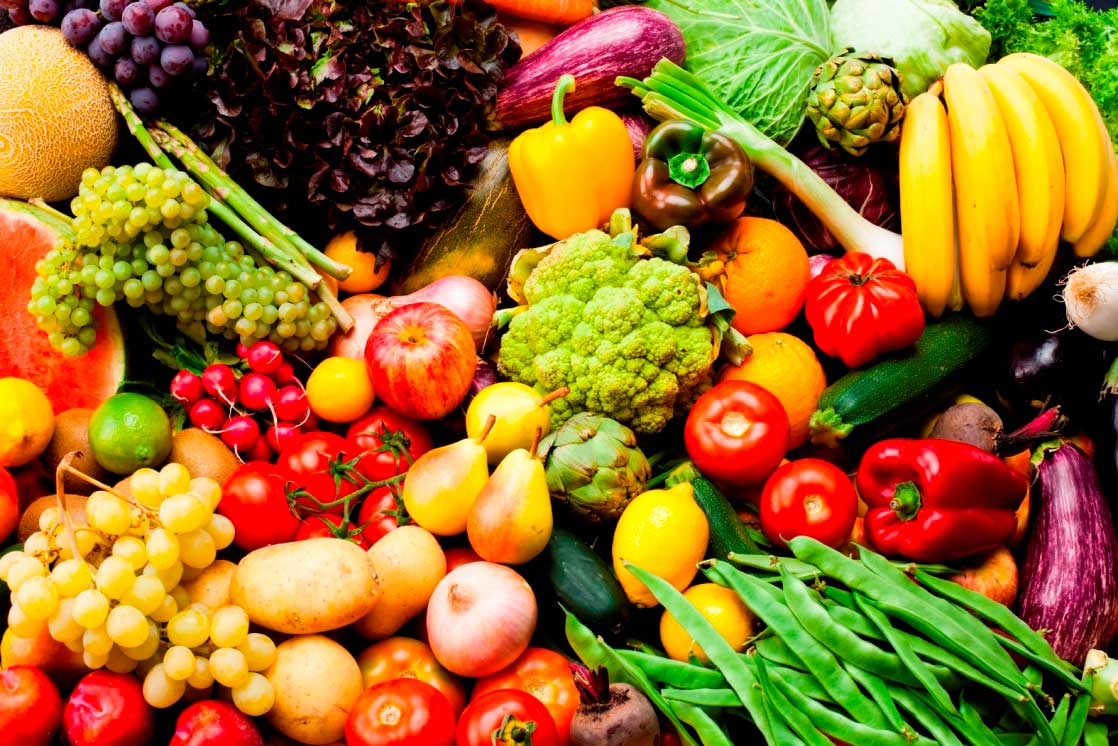
An apple a day may keep the doctor away, but only because it gives you such bad gas that no one wants to be around you…
Fruits and vegetables are rightfully considered health foods. But in some situations even they can cause problems. Many plant foods contain substances that may irritate the digestive track and cause digestive problems. In this case I’m talking about FODMAPs. FODMAP is an acronym for Fermentable Oligosaccharides, Disaccharides, Monosaccharides And Polyols.
FODMAPS are short-chain carbohydrates (often sugars) that are poorly absorbed from the small intestine. People with FODMAP sensitivity experience gas, bloating and other digestive symptoms after eating them. As they irritate the digestive track they cause gut problems and possibly aggravate acne. This can also lead to Candida infection in the gut.
Giving credit where it’s due this post was inspired by Chris Kresser’s excellent post FODMAPs: Could common foods be harming your digestive health? Here are the important points from his article:
- FODMAPs are found in many fruits, vegetables, legumes and other healthy foods. See this helpful FODMAP food chart for guidance.
- The bacteria in the gut ferment the sugars causing gas and bloating.
- Sugars also bind to water causing symptoms such as loose stools and diarrhea.
- Fermentation and increased water are a major cause of irritable bowel syndrome (IBS) symptoms.
- One possible cause for FODMAP intolerance is small intestine bacterial overgrowth (SIBO), see the gut-skin axis article for more on SIBO. Harmful bacteria may interfere with proper digestion and ferment the remaining FODMAPs.
- Addressing SIBO is a key to treating, and possibly eliminating, FODMAP intolerance.
- Low FODMAP diet is also required to allow the gut to heal itself. Several clinical trials have shown that low FODMAP diet is the most effective dietary treatment for reducing IBS symptoms.
- People differ in their FODMAP intolerances. So even if you are FODMAP intolerant you may not have a problem with all of them.
My comments
Following a low FODMAP diet is not easy. You need to cut out many of commonly eaten fruits and vegetables. Some examples of high FODMAP foods are onions, apples and cabbage. So this is not something you try at first, especially if you don’t experience any digestive problems (such as stomach pain, gas, bloating, and loose stools).
Luckily you can get tested for this. FODMAP malabsorption can be detected with breath test. So please talk to your doctor if you believe this is an issue for you.
At this point I can’t say if FODMAPs are an issue for people who don’t experience overt digestive problems.
But if you do have some chronic digestive issues, this could be something to try out. Contrary to many other ‘gut healing regiments’, such as the GAPS diet, FODMAPs are a scientifically recognized issue. And there are already several studies that show the effectiveness of a low FODMAP diet. I also don’t think that you have to stick to the low FODMAP diet indefinitely. Probably 2 to 3 months is enough to allow your gut to heal, after which you shouldn’t have any issues with FODMAPs anymore.
Also for those who are already at the end of the road low FODMAP diet can be something new to try.
Low FODMAP diet resources
Please check out these sites for more information about low FODMAP diet:
- Cassandraforsythe.com for List of FODMAP foods
- Lowfodmap.com has plenty of low FODMAP recipes
Other things to consider with low FODMAP diet:
- Probiotics – either as supplements or daily consumption of fermented foods (the preferred method).
- Stomach acid (HCL) supplements. Low stomach acid often leads to SIBO. Low stomach acid means incompletely digested proteins make their way into the small intestine where they encourage the growth of harmful bacteria.
Do you have any experience with this? Please share it in the comments below so that we all can learn from you.

It annoys me that there is always a f#%king catch. I’ve been following a pro gut flora diet and it’s instructed me to take oligosaccharides as supplements.
I hear you man. Getting to the bottom of these things is frustrating and complicated. It has taken me 8 – 9 years to really start understanding this. About FODMAPs, I should say that I did some more reading on this and they are only a problem for those with digestive symptoms. So if you don’t experience any gas, bloating or abdominal pain then they are probably not an issue for you.
Hey Seppo,
I am thinking of trying out the FODMAPS diet to try to reduce my IBS symptoms. I’m wondering, how long do you think I should stick with it for to determine whether its effective or not??? Thanks!
Hi Kendra,
Honestly speaking, I don’t know. I’m not that experienced in gut issues. But given how FODMAPs are diagnosed from symptoms, I would assume you should see fairly quick resolution of symptoms. In most cases food doesn’t hang around in the digestive system that long. So something you ate 3 days ago shouldn’t cause any digestive issues anymore. My advice is to start with a food journal and symptom tracker sheet. Monitor yourself for digestive symptoms for a week or so before starting a low-FODMAP diet. That way you should be able to see a change in symptoms. If you don’t notice anything in 2 to 3 weeks then they are probably not an issue for you. I would also recommend that you check out my more detailed gut healing post. Just published it yesterday.
Hi Seppo,
What are your thoughts about the GAPS diet for Acne?
I have to confess that I’m not very familiar with GAPS diet. I know more or less what it is but not in detail. Based on what I do know, I’d say it can help some people with acne.
But, like with almost all alt-med treatments, it’s hard to know where facts stop and fiction starts. For example, looking at everything the GAPS practitioner recommended to you, it’s hard to know which one(s) are responsible for your improvements. I can quite confidently say that it has nothing to do with stopping microwave.
I realize this thread was over two years ago, but for anyone who’s interested, the GAPs diet is very similar to the paleo diet, which elsewhere on this site has been stated as potentially beneficial. Paleo would probably be more effective, however, as GAPS allows fermented dairy and paleo is basically dairy-free with the exception of butter. I actually went on the GAPS diet with my son to see if it would help with his autism and my acne cleared BEAUTIFULLY for about six months then came back with the same level of severity. My guess is that it may work if your hormone levels are in the normal range because I was on birth control pills at the start of the diet and then went off them because they are on the no-no list for GAPS. That’s the only reason I can figure why it worked at first and now no longer does. I plan on getting my hormone levels checked and, if necessary, addressing that issue then trying a paleo diet. At this point, diet alone is not cutting it for me.
Hi Christine,
Glad to hear GAPS is (was) working for you. It actually eliminates many acne causing foods, so I’m not surprised it works for some people. My main issue is that it’s very difficult to follow in real life. And because it’s hard to say what parts of it are based on facts and what parts are pure alt-med fiction, I can’t recommend it to my readers.
Do you know about the safety of HCL supplementation? I want to go pick it up and give it a shot, but I feel like self-diagnosing myself could do me more harm than benefit. Of course, unless you know that HCL supplements are rather harmless. (I don’t even know if I have low-stomach acid, I just want to improve my overall digestive system).
Thanks for another informative article 🙂
Most supplements are rather harmelss, especially if you don’t take them for very long. In most cases when supplements cause harm it happens over a long time. I can’t say that HCL supplements are perfectly safe, but I haven’t heard anything that would make me suspect they are more dangerous than other supplements.
For what it’s worth, I’ve been taking HCL supplements for a few months and they’ve done nothing for me. For me they’ve been waste of money. But you may get different results.
Ok, honestly i’m a little lost..again. /:
It seems to be SIBO can be beat with antibiotics, but then what’s the point if i’m seeing articles saying that SIBO reoccurs after treatment? It’s so complicated…I want to safely and effectively fix my gut 🙁
I’m sorry but I don’t have all the answers to these question. You really need to consult someone who has specialized into gut issues.
It was worth a shot. Thanks for the prompt reply. At the moment i’m just on the search for a GI doctor that’s up-to-date with gut health.
Better that way. I would rather not start speculating on issues I’m not that familiar with.
Hi Seppo,
I’m currently on the Candida diet, and after reading your evidence I’m most likely going to ditch it.
I am fairly positive I at least have a leaky gut and/or FODMAP intolerances, and I was wondering if you think that stopping my strict Candida diet and switching to low FODMAP diet would be a good idea/ heal my leaky gut. Thank you.
Tara, there’s really no way for me to answer this question because I don’t know anything about your situation. If you have a diagnosed Candida infection/overgrowth, then I wouldn’t stop the recommended diet. But I suspect you have never been properly diagnosed.
I guess the real question is, does the current diet work for you? Does it help with your skin?
Also I was wondering if following low FODMAP diet with probiotic supplements of course, would be a cure eventually for FODMAP intolerances. Also would you have recommendations for prebiotic supplements that are alright for low FODMAP diet, because I’ve read contrasting accounts about Chicory Root.
Also to clarify on your conclusion about Candida (hypersensitivity) would I have to worry about yeast infection my intestines if I stop my diet a week in?
Thank you so much! Honestly I just want to eat normally and have clear skin.
I don’t know. The FODMAP concept is still fairly new and we don’t have enough information to say what’s the best way to deal with it. So far it seems like FODMAP avoidance is the only way. It’s possible that modifying the gut bacteria could lead to a long lasting results, but it’s too early to say. I suspect that antibiotics will work better than probiotics. In FODMAP intolerant people the gut bacteria have often migrated up to the small intestine, a place that should be relatively sterile.
I haven’t done any research on this, so I don’t have anything readily at hand. In general prebiotic supplements can be problematic for FODMAP intolerant people since it’s often the prebiotic substances that trigger the symptoms. I would check the supplement ingredient list against known FODMAP triggers.
First you would have to reliably establish that you actually suffer from yeast infection in the intestines. I don’t know if you’ve done that, but I suspect not. More often than not people self-diagnose themselves with very dubious questionnaires. Most such questionnaires have never been validated, i.e. shown that their results correlate with objective tests.
Furthermore, many of the questionnaires are worded in a way that just about everyone finds themselves diagnosed. They usually include vague ‘symptoms of life’, like headaches, fatigue, difficulties in waking up – stuff that everyone struggles with. They usually sell you this idea of ‘perfect health’, and if you find yourself lacking from this ideal then there’s obviously something wrong with you. I strongly suspect that nobody can achieve that idealized perfect health.
Can eating such a restrictive diet such as FODMAPS, Paleo, SCD, etc. cause your body to become sensitive to foods because you have limited them so much you are eating a ton of the same ol’ foods? Is there validity in causing food intolerances if you eat to much of it? I am gluten free, dairy free, sugar free and soy free. I want to eat normal again. I looked at the fodmaps list and was eating all my fruits and vegetables from the bad side. I get slight pains in my stomach here or there and gas occasionally. I get a heavy feeling in my chest/throat sometimes. I am also hungry every 1 1/2 hrs. Its crazy. It seems like something is eating all this food or its not n=being digested because I am very thin. 5’6″ and eating 2600-2800cal/day just to maintain my weight. The reason I thought this could be necessary for me is because it seems like I have gut issues. I seem to be reacting with acne to foods I never used to. I eat a LOT of quinoa and rice currently. Is that bad for my body? Can I become intolerant to those?
No, restricting certain foods doesn’t suddenly make you sensitive to them. I mean, sure, if you stop drinking coffee for a year and then have a few cups, then you would get more caffeine buzz than someone who drinks coffee regularly. But I don’t think you mean that.
I don’t think diet really causes your acne, or at least it’s not the main problem. I’m not sure how much gluten and soy restriction helps you. Some people do get acne from gluten, but it’s by no means a problem for everybody. Don’t restrict it just because you’ve read online that it causes acne.
More than likely your acne stems from hormonal imbalances that we discussed at the forums, foods that trigger your gut symptoms (probably FODMAPS) and stress. Restricting your diet too much may just cause additional stress on you and actually make things worse. I would try relaxing your diet a bit and working with a doctor to correct the hormonal imbalances.
I think we covered most of the other points at the forum already.
I had a breath test done a while back, they said nothing was wrong. Should I still keep the fodmaps to a minimum or what?
Do you get any digestive symptoms or problems after eating FODMAPs? If not, then you probably don’t have a problem with them.
I actually can’t say that because I’ve been staying clear of them since I heard FODMAPs haha. I’ll check later on when I get the chance.
I seem to be sensitive to nightshades
(and whey). I kept a food journal for over a year, eliminating dairy, gluten, sugar etc. I finally discovered that tomatoes were present every time I had a horrible outbreak. I’m still trying to figure out if all nightshades cause a problem (potatoes definitely do). My skin is way better now, not perfect but better. Ugh, all those salads where I loaded up on those veggies and used salsa as dressing, yikes!
Hi Seppo,
Just reading through this post and comments – how long would you recommend trying a low, no-FODMAP diet? Getting a breath test where I live takes months and months and is costly, so going for the trial and error approach. Thanks!
Hi Rachel,
I personally notice the effects quite quickly. I don’t normally eat any FODMAPs that irritate my gut, but when I do I notice digestive symptoms within a few hours and my skin breaks out the next day. After that it takes 3 to 4 days for my skin to calm down. It’s possible I see quick results since I don’t normally eat anything that irritates my gut.
Starting from scratch, it could take a bit longer. My guess is that you might start noticing some changes in a few weeks.
Hi Seppo,
I keep finding fodmap diets that say different foods you can and can’t eat. Is the one you provided the one that you recomend?
thank you
There are different forms of FODMAPs and it’s likely you can eat some of them but can’t tolerate others. So there’s no good way to recommend a FODMAP diet that would be correct for everybody. You have to experiment a bit to find out the foods you can and cannot tolerate.
I love vegan kimchi (fermented food) I buy at Whole Foods and find my body works better after eating. Great articles and content. Thanks for caring and sharing.
My former dermatologist put me through hell with her “therapeutic” procedures.
I have gruesome photos and a videos I can share if you want.
God bless you!
Paul
Glad to hear you like the content!
I’m a hard core skeptic when it comes to almost everything, but the FODMAP diet has been life changing, and absolutely works. I’ve been doing it for nearly a year. I have had IBS for over 25 years, but had learned to manage it very well, however, gas and excessive bloating continued to be a major problem. I started the FODMAP diet and within two weeks, a MAJOR difference. Good post. That said, I have not heard of a FODMAP acne link. Is there a connection?
Glad to hear FODMAP diet is working for you.
The connection between FODMAPs and acne is speculative at this point, as opposed to scientifically validated. There is data to show gut issues are more prevalent in people with acne and other skin problems. And there’s data to show treating gut issues also improves the skin. That data, however, is anything but conclusive.
Given the above, it’s not a horrible assumption to make that FODMAP diet could also improve acne. I know it helps my skin.
Hi!
Thank you so much for all those articles. I finished your book “zen of clear skin and it made me cry. I realized how stressed I’ve been for the last yar, trying to get clear of acne in any possible way.
SO my question is: a few years ago, after 2 days suffuring from stomach pain, I’ve been dignosised an irritable gut by my doctor. He stopped the pain with some antibiotics and that was it.
But i realized that I’v always struggled with gaz and gut problems, and even more recently that my acne got worse (I movd out from south of france to live in Denmark)
I’ve tried a reduce gluten, sugar and dairy. Gluten didn’t do anything, even made it worse, but I can see that dairy and sugar affect my digestionn and I have gaz as soon as I eat somethng too sweet (my ane got crazyy after christmass, eating all this cheese, meat and sugar)
So I’m concidering trying out the low FODMAPS diet. Do you think I can find something good for me in it?
Thank you again for all those explanations, it’s very reasuring and relaxing to finally understand my body and my skin a bit better 🙂
Best
Sidonie
Glad to hear if the Zen booklet triggered a positive change in you.
Yes, I think a FODMAP diet would be a good start. There’s a lot of research that shows low FODMAP diet works better for IBS than normal IBS diets. If low FODMAP diet improves you gut and skin then that’s a sign you are dealing with a bacterial issue in the gut. It could be that the bacteria have migrated up to the small intestine (SIBO). Bacterial fermentation in the small intestine can lead to a host of issues. Once I cleared mine my skin has been remarkably stable and I’ve been able to eat foods that I considered off-limits earlier (like bread and grains).
Hi Seppo, speaking of gut, eating fermented foods is a way of introducing good bacteria in the gut and one of your recommended foods is yoghurt. And yet, yoghurt is also considered dairy as it’s made from milk. Dairy is another acne causing food. How does that stack up?
is yoghurt still recommended in that case?
There’s this misconception that gut problems are due to lack of good bacteria in the gut. In some cases that’s probably true, but one has to also keep in mind that often the problem is too many healthy bacteria. So taking probiotics or eating fermented foods isn’t automatically good. In fact, recently studies showed that taking probiotics doesn’t change the gut bacteria in healthy people.
As to yogurt, I’m sorry but nobody can answer that question. We just don’t have such detailed data available – and it probably varies from person to person. You have to test it to find out.
How about nuts? and sauerkraut? are they allowed?