
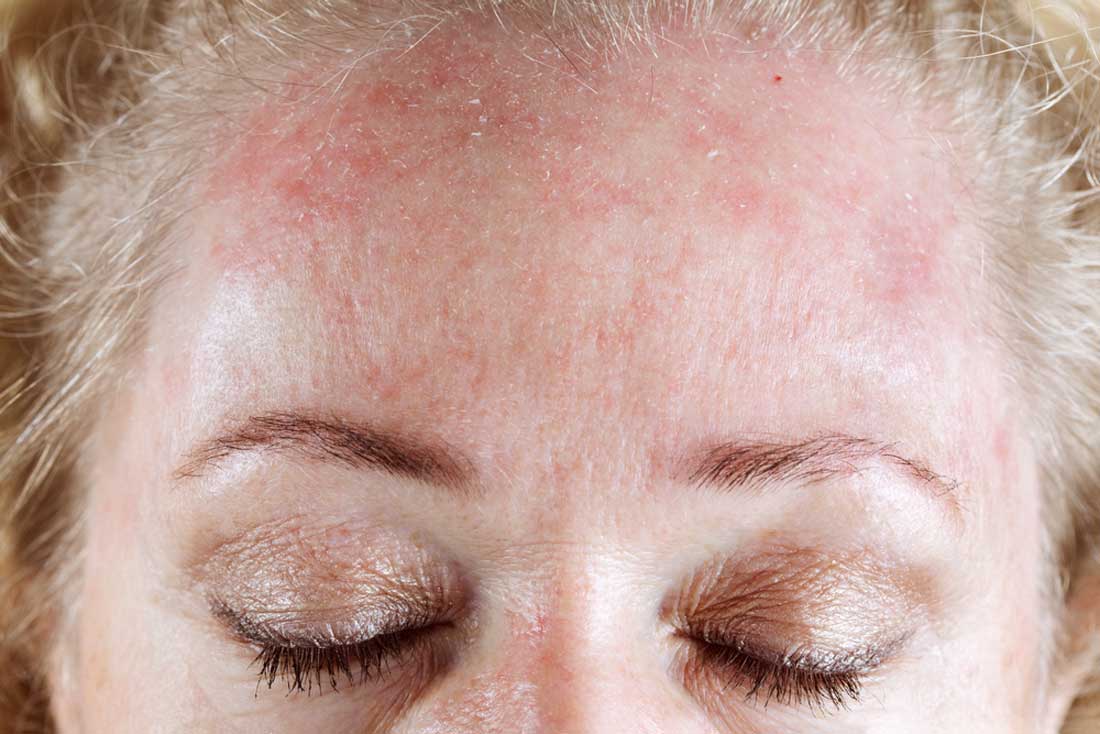
Everybody knows that acne-prone skin produces too much oil. But in their war against sebum and pimples some people go too far. Despite excessive sebum production many acne patients also struggle with dry skin, which can result from over-washing or as a side-effect from some drugs. Whatever the cause it’s important that you deal with it, because lack of moisture makes your skin more sensitive and prone to break outs.
In this post I’m going to show you how to deal with dry skin. We’ll look at how damage to the skin barrier allows moisture to escape and what it means for the health of your skin. Moisturizing being the obvious solution I’ll also give you the basics on moisturizers and how to choose something that’s suitable for your skin.
Dry skin basics
The outermost layer of the skin acts like a barrier between you and the outside world. Medically this is referred as the skin barrier function. To get an idea of how it works just image a brick wall. The cells are like bricks and the natural oils in your skin are the mortar that binds them together. The cells that act like bricks are filled with water and fats to the point where they are swollen. This swelling is good because it packs the cells tightly together and makes it hard for anything to penetrate the barrier.
The fats on top of your skin are also a natural water barrier. They prevent too much moisture from escaping your skin. Without this skin barrier layer your vital internal organs would dry out and you would quickly die. So it’s pretty important.
When you wash your face with soap or other harsh cleanser something bad happens. The detergent strips away lot of the natural oils from the skin. It strips away the mortar that holds the bricks together. This also allows water to evaporate out of the skin.
When this happens repeatedly the cells in the skin barrier lose water and shrivel. So the barrier becomes less effective, allowing even more moisture to escape the skin. In the end your skin becomes dry, and if the situation gets even worse the skin starts flaking. This happens because the enzymes the separate dead skin cells need sufficient moisture to work properly.
Soaps and detergents are just one cause of dry skin. But regardless of the cause the basic mechanism remains the same.
Now that you understand the basics, let me give you a reason why you should do something about it.
Dry skin can cause acne
For some people dry skin causes itching and other annoyance while other people barely even notice it. But in all cases dry skin can make your skin more prone to breaking out.
Any injury to the skin barrier function causes an immediate immune response. The skin barrier function is vital for your survival and your body tries to repair it immediately. Immune response of course means more acne-causing inflammation in the skin.
Weakened skin barrier also allows bacteria and chemicals to penetrate deeper into the skin. The skin becomes more vulnerable to infections from acne-causing bacteria. And pollution and chemicals in skin care products may penetrate the skin. Both of these things mean more inflammation in the skin.
So if you are looking to get clear skin it’s in your best interest to deal with dry skin and have healthy skin barrier. But before we get to that let’s go over some common causes.
Common causes
Here’s a list of things that frequently cause dry skin.
- Soaps and cleansers with harsh detergents, such as sodium lauryl sulfate.
- Benzoyl peroxide, retinoids and other topical acne drugs may cause dry skin.
- Cleansers that are too alkaline, look for pH-balanced products.
- Winter and low humidity. Very dry environment can suck moisture out of the skin.
- Long hot showers and baths.
- Chemical irritants in personal care and household products. One example is laundry detergent residues.
- Some medications, such as Accutane.
What to do about it
The obvious first step is to remove the irritant or factor that causes dry skin. Sometimes that’s possible, it’s easy to stop using soap or switch to a milder cleanser. But sometimes it’s not. Like what are you going to do about the dry climate in winter, or maybe there just aren’t suitable alternatives to the product that irritates your skin.
Moisturizer for acne prone skin
So what can you do in those cases? Moisturize. Obvious, I know, but sometimes answers are like that. Anyway, before you dash out to get the greatest and latest moisturizer let’s talk little bit about what moisturizers are and what you should look for.
Because regardless of the brand or price they all pretty much work the same way. Pretty much all moisturizers contain substances that attract moisture. When these humectants penetrate the skin they also bind moisture into it. A good moisturizer also seals the moisture into the skin. They do this by creating a lipid (fat) layer on top of the skin, and in this way act much like the natural oils in the skin.
Because most moisturizers work pretty much the same way it may not make sense to pay for the higher end brands. Many dermatologist written articles in fact recommend just using the cheap stuff.
What to look for
But this doesn’t mean you can slap just any old grease on and call it good.
Choose a suitable formulation
Moisturizers are a mixture of water and fats. Heavier formulations have more fat and are often called creams. Whereas lighter ones have less fat and more water and are usually called lotions. Creams are of course better at moisturizing but they can also cause more problems in acne-prone skin, especially if they contain mineral oils. Light lotions are the best choice for daily maintenance, but you might need a heavier cream for initially repairing your skin.
This should be obvious but bears saying, if you apply moisturizer on your face choose something that’s formulated for facial skin. By and large they are all noncomedogenic and won’t make your face look too greasy.
Go for non-irritating products
All moisturizers contain some irritating ingredients. The formulation just wouldn’t work otherwise. These are ‘necessary evil’. But in other cases it’s mostly just ‘evil’, such as some preservatives, fragrances and colors.
Look at the label for words like nonirritating or hypoallergenic. In many of the cleanser studies I’ve seen products from Dove are usually rated as the least irritating. Hopefully that carries over to their moisturizers also.
And for those who don’t trust the labels or just want to get geeky, here’s a list of irritants commonly used in moisturizers:
- Acetone
- Alcohol
- Propylene glycol
- Alpha-hydroxy acids
- Sodium lauryl sulfate
- Benzalkonium chloride
- Formaldehyde releasers
- Menthol
- Benzyl alcohol
- Camphor
- Urea – irritating only in higher concentrations
- Pyrriolidonic carboxylic acid
- Lanolin
- Fragrances
Keep in mind that things like urea are very effective at binding moisture and studies show moisturizers containing urea reduce skin irritation. Urea becomes irritating when it’s used in concentrations of 5% or higher.
Similarly alpha-hydroxy acids can make the skin thinner and help to keep the pores open. That’s why they are often used in medicated moisturizers aimed at acne patients.
Glycerin is usually a safe choice for sensitive skin. It’s non-irritating and effectively binds water into the skin.
Those little extras
The main job of your moisturizer is to repair the skin barrier function and help the skin to retain moisture. But it doesn’t mean that’s the only thing moisturizer can do for you. Often manufacturers include antioxidants, vitamins and other active nutrients into their formulations. So moisturizer becomes a vehicle for delivering these to the skin.
I recommend you take advantage of this and look for the following:
- Green tea, see my post on green tea for why this is important.
- Vitamin E is the main antioxidant that protects sebum.
- Vitamin C makes vitamin E more effective when they are used together.
- Vitamin B3 (nicotinamide/niacin) is found to be effective moisturizer in some studies. Other studies have found that topical B3 is quite effective in treating acne.
- Aloe vera or other antioxidants.
- Ceramides are naturally occurring fats in the skin. Compared to healthy skin acne-prone skin has fewer ceramides. So applying them in a moisturizer might help.
- Natural oils and essential fatty acids. Some studies indicate that fatty acids (such as omega 3 and 6 and GLA) can soother inflammation in problem skin.
Don’t get too obsessed about these things. You won’t find a product with all of these in it. Vitamins B3 and E are probably the most important.
How to moisturize – important!
How you moisturize is also important. Above we talked about humectants and how they attract moisture into the skin. They can only pull moisture from the water that’s in the skin. They can’t pull in moisture from the environment. To get the best effect you should moisturize right after shower and while your skin is still a little wet. During shower water penetrates the skin and you want to lock it in with a moisturizer.
So after a shower pat your skin light with a towel to get rid of excess water. As your skin is still little wet, apply the moisturizer and wait for your skin to dry.
Conclusion
The first one being I’m incapable of writing short blog posts, but I digress. Anyway, dry skin. It happens because of damage to the skin barrier function allows too much moisture to escape the skin. Soap, harsh cleansers and acne medications are the most common cause for acne patients. The first step is to remove what’s irritating your skin.
Next step is to moisture. We talked how all moisturizers work more or less the same way, so paying the premium may not do any good. Most acne patients probably do better with lighter, water-based lotions rather than heavier creams. As your skin is probably already irritated go for something that’s minimally irritating. And if you can find something with vitamins B3 and E as extras then you have a winner.
And to get the most of your moisturizer you have to use it properly. Apply the moisturizer immediately after taking a shower and while your skin is still little bit wet.

I’ve been overdrying my skin for god knows how long! looks exactly like the picture on top of the page with breakouts. Thnx for this great article,helped alot!
Happy to help Karol.
Very informative, thank you. Do you have an exact brand of facial moisturize you would recommend ? I know you talked about Dove, just thought I would double check.
Nico, I’m using this: Madre Labs, Camellia Care, EGCG Green Tea Skin Cream. It doubles up as a light moisturizer and acne treatment at the same time. It’s quite light, so if your skin is very dry maybe you need something stronger. My skin is fairly oily so I don’t want to use heavy creams on it.
What about cleansers? I have dry body skin, and I cant find anything gentle enough to not dry my skin but also cleanse enough.
So what recommendations do you have for face and body cleansers?
Chris,
Perhaps your skin reacts badly to something in the body washes. I don’t have specific product recommendations, but I can point you somewhere.
Look at iHerb catalog. They have tons of natural cleansers, soaps and other stuff. I buy all of my skin care products from there. Here’s a link to the category for body washes.
Without knowing what is it that irritates your skin, it’s hard to say more. Sulfates are quite common irritants.
You could also try looking at the National Eczema Associations list of accepted products: https://www.nationaleczema.org/seal-of-acceptance/product-directory
Perfect!
Thank you very much. Yes I’ve tried to stay away from sulfates of any kind. I’m trying to figure out what ingredient irritates my skin as well. I removed SLS in cleansers, that seemed to help.
I’m trying to remove silicones from my moisturizers to see if that helps. I’m not able to use most moisturizers as they make the skin on my body break out…even though I need them at times to hydrate.
It’s definitely an on going battle, I really cant say I have acne anymore (I’m 27) but I do get the occasional breakout, and I definitely need to be gentle with my skin care.
Try the oil cleansing method (OCM). For my skin grapeseed oil and jojoba oil work the best. After I discovered jojoba oil I stopped using any other moisturizer. You will find it is much better for the skin, leaves it smooth and supple. With commercial moisturizers my skin is dry in the evening (or in the morning). With oils it feels just perfect. Find the best oil for you and you will ditch all the commercial stuff, save money and look radiant.
If you are a guy you can also ditch the shaving gel or foam – you can shave with oils! I shave my legs with olive oil and trust me, I will never ever go back! Of course, olive oil may not be the best for your face (or it might be perfect) but with a bit of experimenting you’ll find the best oil for you. Also, you need no aftershave after that. If you are a girl (or just have long hair or just want to have nice short hair) you can moisture your hair with oils. Trust me, it works!
Thanks for this information, but for me it is so difficult to use a moisturizer for so many reasons…
My skin is often: Dry, EXTREMELY sensitive, sometimes some acne, and I suffer from mild rosacea.
On top of this, I am a guy and many of these products are marketed at women. Plus I’m from the UK so I don’t really want to be purchasing products from overseas and getting them sent here.
I have found of list of products from some research but I don’t know how great they are for my tricky skin!
I noticed that those DHT blocker lotion is slightly drying for my skin, in some areas my skin is now flaky but it’s definitely not as oily again.. Though it’s slightly annoying. I think I’m going to use this lotion every 2nd day so my skin isn’t getting overdried.
What cleanser do you get from iHerb? I live abroad so I cannot buy the Exposed cleanser due to shipping costs.
I’ve been using this cleanser from La Roche Posay but I am afraid it is too drying:
https://www.laroche-posay.com/products-treatments/Toleriane/Toleriane-Purifying-Foaming-Cream-p544.aspx
Ingredients:
AQUA / WATER
GLYCERIN
MYRISTIC ACID
POTASSIUM HYDROXIDE
GLYCERYL STEARATE SE
STEARIC ACID
LAURIC ACID
PALMITIC ACID
COCO-GLUCOSIDE
TETRASODIUM EDTA
Cleansers rarely have a huge impact on your skin. I also didn’t see anything alarming in the cleanser you use (but keep in mind that I’m not a cosmetic chemist). If you want to try some other cleanser, here’s the one I’ve been using for some time: https://www.iherb.com/beauty-without-cruelty-facial-cleanser-3-aha-complex-8-5-fl-oz-250-ml/9574?rcode=kmd933
any sunscreen recommendations? i am always afraid of wearing sunscreen cause im afraid it will give me acne.. :/
Sorry, I don’t don’t have any recommendations I would be 100% sure of. But I would look into Neutrogena and other big brands that manufacture acne treatment products. I would be surprised if their products are not suitable for acne-prone skin. Also, please see my discussion on comedogenicity in this post.
Hi Seppo, I have a question about toner/moisturizer. I have mild acne yet rosacea/sensitive skin. I have tried the Exposed Skincare products by the toner and the two serums are killing my skin. Do you recommend any Vitamin E moisturizer (or perhaps the green tea one that you mentioned above..?) and toner that has antioxidant properties that can be used for acne yet not irritate my rosacea/sensitive skin?
I’m sorry but I don’t have any recommendations at hand now. I’m a bit hesitant to recommend the products I use normally since you have rosacea-prone skin. I mean, the green tea moisturizer from Madre Labs should be ok for rosacea-prone skin.
sorry didn’t check the msg, the green tea moisturizer from Madre Labs seems to be discontinued. Couldn’t find it anywhere.. am thinking about “Dermalogica Antioxidant Hydramist,” since it contains vitamins like A,C, and E… crossing fingers..
Seems the Madre Labs cream is out of stock for some time at iHerb. The Dermatologica product seems reasonable. Thought the amount of vitamin C in it is probably on the low side. Green tea appeared fairly high up on the list so that should be ok.
Hello!! Your article is very helpful indeed. Lately I’ve been struggling with adult acne. I’ve bought everything and done everything you can imagine. I’ve used super pricey to cheap brands and don’t know what to do. I just scheduled an appt with a dermatologist cuz I don’t know what else to do or use for my skin. It’s very stressing. My skin has gone to normal/combination to very sensitive and dry. Is there anything you think that would work for me as my last resort?? Very desperate here!! I would appreciate your advice or any recommendations.
Hi Seppo,
I have been using a face wash that has SLS so I know I need to change it. Do you still recommend the Vitamin C cleanser by Avalon Organics? I have mainly hormonal acne, but do get small pimples elsewhere and tiny clogged pores all over my forehead. I have insanely oily skin. I take omega 3, zinc, and vitamin A (30,000/day). Could the oil be from my skin too stripped? It’s really dry before moisturizing. I use the green tea moisturizer you recommend and love it. Do you suggest the BWC cleanser more? Also, do I need a toner? What are your thoughts on essential oils like Frankincense or Tea Tree mixed with hemp oil? Any thing to spot treat? BP makes my skin bright red if I spot treat with that.
Thank you for all your help and research!
TM
It doesn’t really matter what cleanser you use, as long as it doesn’t irritate the skin. So the Avalon Vit C cleanser would probably be ok. Sebum production is mainly driven by hormones and genetics. There’s no good research to show how washing the skin affects it. I suspect that the theory skin overcompensating it wrong, but can’t say for sure.
No, you probably don’t need a toner. I think toners, masks and such as just sold as useless extras to pad the profits of skin care companies. Most people only need a cleanser, possibly a treatment cream/serum, moisturizer and a sunscreen.
Essential oils can work as the active ingredients in skin care products, but I wouldn’t use them in any homemade mixtures. They can be quite irritating.
Spot treatment is a bit of a fallacious concept. Once an inflamed pimple has formed, there’s not much you can do to stop it. Salicylic acid works well as a preventative treatment.
Am I not supposed to cleanse my face then? Is it OK to cleanse once a day or is that too often?
Thank you.
You can use gentle cleansers that don’t strip the skin so badly. Look for eczema or sensitive skin cleansers.
Hi Seppo! what a wonderful article! I am so happy to find your article and this website.
I have very dry skin and with Acne Closed Comedo(acne closed comedo like in this picture:https://www.dermnet.com/images/Acne-Closed-Comedo) and they are not exactly acne!they are little bumbs under my skin.
because I have very very dry skin, I need a moisturizer but I don’t know which moisturizer brand is good for me. I don’t want more comedon on my face. if I don’t use any cream or make up, most of comedones disappear. most of them not all of them:(
could you please recommend a skin care and also a daily moisturizer for me?
Glad to hear you liked the article.
Most modern moisturizers should be safe for acne-prone skin. Many skin care and beauty blogs write that you should avoid products with comedogenic ingredients, i.e. ingredients that supposedly cause acne. That’s not really true and the comedogenicity ratings are not really useful. A few studies have shown that products that contain comedogenic ingredients don’t cause any more acne than products without comedogenic ingredients. That said, it’s always possible that some people react negatively to some cosmetic ingredients.
I’m currently using these 2 products:
https://www.iherb.com/Derma-E-Evenly-Radiant-Brightening-Serum-with-Vitamin-C-2-fl-oz-60-ml/47009
https://www.iherb.com/Madre-Labs-Camellia-Care-EGCG-Green-Tea-Skin-Cream-1-7-fl-oz-50-ml/39108
But I’m not sure if they are enough for someone with dry skin. If you haven’t already, you might also want to try CeraVe moisturizers. They are supposed to be pretty good.
I’ve found this moisturizer to work quite nicely:
https://dermae.com/product/275/Tea-Tree-and-E-Antiseptic-Cr%C3%A8me.html
Very informative article, except for a detail: it’s not said anywhere to use only oil-free products.
That’s the best advice for people who fight acne.
Acneic skin is high in oil and low in water, the moisturising routine must be done by applying water-based sierums and completely oil-free
I have to disagree with you a bit on using only oil-free products. Oil in skin care products doesn’t actually cause acne, nor does it clog your pores. Aesthetically it may be nicer not to add oil on already oily skin though.
This might seem like a weird question but what would happen if I just stopped cleansing or putting any products on my face all together? Tracy from the Love Vitamin has beautiful skin and she says she just uses water. My mom and Grandma don’t use anything but a washcloth and water and they don’t have acne…. I ask because I’ve tried a million different “gentle” cleansers and even the most mild, non foamy ones turn my face red, tight and irritated. And moisturizers also make my face red and break me out even more. It’s a vicious cycle… My skin seems to do better when I just leave it alone completely… So, will I always have mild acne if I don’t cleanse? Thanks.
I’m not a huge fan of the caveman, or water only, method. It can seem to work because some people have irritated their skin too much with harsh acne products. In such cases stopping the products gives the skin time to recover. That being said, there’s good evidence to show acne-prone skin needs more antioxidant protection than normal skin. That’s why I recommend at least using some antioxidant creams or serums – even if you stop all the traditional acne treatment products.
It does sound like your skin reacts badly to something in the skin care products you’ve been using. It’s probably a good idea to talk to a dermatologists and see if they can test what your skin reacts to. In the meanwhile, I would avoid skin care products and perhaps try to wash your face with just honey. It works as a simple cleanser.
To answer your last question, no, you don’t necessarily have to cleanse your skin. Cleansers actually have little to no effect on acne. If you can cleanse your skin with honey or plain water then there’s no real need to use normal cleansers.
Thank you for your reply. Maybe I just haven’t found the right products yet.
If I don’t use a cleanser, won’t my pores become clogged with dead skin cells, dirty oil, pollution, bacteria, etc?
I thought if I used a moisturizer or serum, that I need a cleanser to clean it off my face at night.
No, your pores won’t get clogged with junk if you don’t use cleanser. The human skin has managed hundreds of thousands of years just fine without cleansers and washes.
Yes, it’s good to clean your face before applying moisturizers or serums. But you can do that with honey just fine if actual cleansers irritate your skin. It’s never a good idea to keep using products that irritate your skin.
Thank you so much again for your responses. You are very helpful and kind for replying to comments. Thanks.
Hi! Thank you for this very interesting article!
I have this problem, a very dry skin but a moderate acne. I don’t really know where it comes from tho because I don’t use any harsh product on my skin (i don’t use any product actualy)
I want to try out to get clear by coplementing my lifestyle with some good products. I saw that you recomende the brand “Exposed” a few times. do you think it would be too hard for my skin? can I balance it by sing a good moisterizer?
I hope you can help me a bit on that.
Best
Exposed is generally fairly easy on the skin. But I could see it being too much for someone with a sensitive skin. Might be a good idea to get some vitamin C serum and a good moisturizer before first. Cerave makes good moisturizers that are normally well tolerated.
I have extremely dry skin, especially my hands, legs, feet, and arms (LOL everywhere). I was looking at a Dr. Oz show and he recommended Made from Earth body lotions for dry skin. I tried the Valencia Orange All Purpose Lotion (yes, you can use it on your face also) and I haven’t stop using it since. It is not oily but it does moisturize my skin very well. its a large 8 ounce bottle – i started about 3 months ago and I still have a little less than half left. It works great on both my face and body. My fiance always says I smell great after I wear it !
I have been plagued with acne on my arms most of my life and extremely itchy skin. After reading your article I have a much better understanding of why this is happening and now know what to do to improve the problem. Thanks for the information.
Hi,
My skin has become very sensitive and red…I think I used lil extra tea tree oil in my facewash.
Is it OK to apply Vit.E oil directly on face.. Will it clog pores ??
Am using FACECLIN at present which contains 1% clindamycin and 4% nicotinamide.
Thank you for so many study based information, it helped me a lot.
My skin is not stable at the moment, facing up and downs 🙁
Can u please also tell me some treatment for those skin coloured small bums that won’t go away, they are increasing on my face and so the stress level. I think its sebaceous gland hyperplasia/hypertrophy.
Please help me…any solution to this ??
What does it mean when moisturizer makes your face sticky? My skin has been dehydrated + dry for months & moisturizer just feels sticky on my face like it’s not even absorbing.
This sounds like a problem with product formulation. The formulation either doesn’t absorb well or contains ingredients that leave the skin sticky.
What if this doesn’t work? Dry skin on the face that doesn’t change even with moisturizer. My oily skin turned dry last winter while on a retinoid. Can retinoids permanently damage skin? My facial skin is always dry now and cheeks are sunken in.
Dries out your pimples very well. Dermalmd blemish serum is the stuff your doctor’s will prescribe for acne, with a different brand name of course. But it has the benzoyl peroxide in it and that’s the acne agent. Just be sure to only put this on your blemish, not your whole face for your face will get really dry if you apply it everywhere.
I have really bad breaking dry face i was using Neutrogena for hydration is a moisturizer but that didn’t work like i think it would of it got my face white and really break and dry and i have alot so much pimples on my face and i dont know what to do everything that i put it make it worst what do you think i can use for that and i have really bad sensitive skin
Right here is the perfect website for anybody who
wants to find out about this topic. You realize so much its almost tough to argue with you (not that I actually would want to…HaHa).
You definitely put a fresh spin on a subject that has been discussed
for decades. Wonderful stuff, just excellent!
For me the dry skin was an internal issue. Moisturizer did almost nothing.