
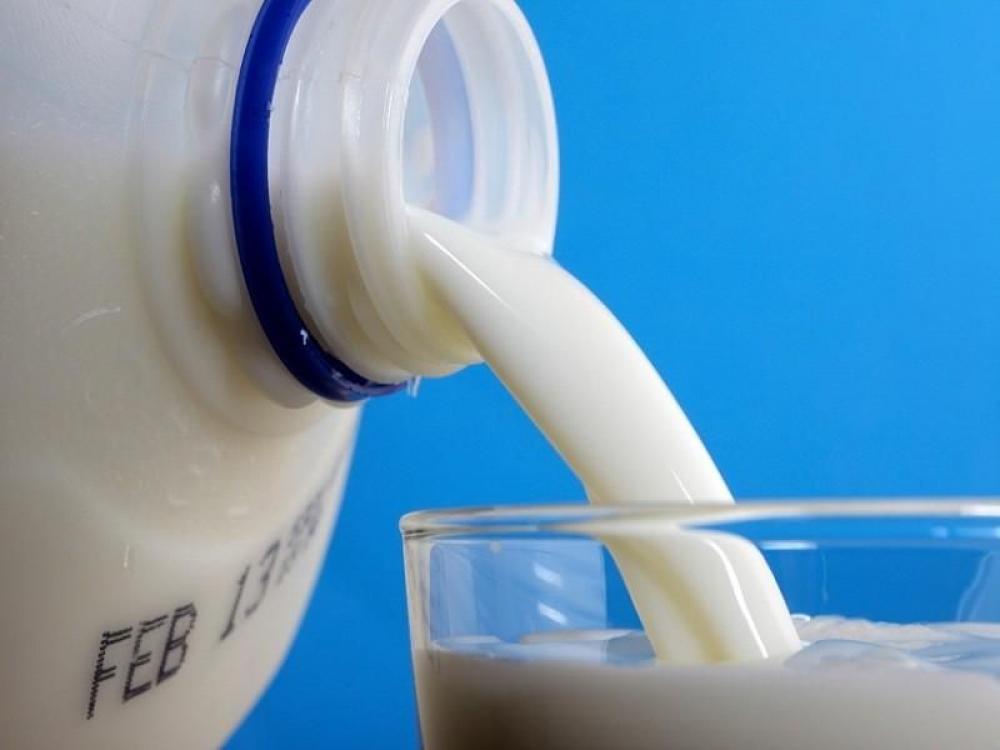
It’s true. That creamy deliciousness that we all love with our cereal, our baked goods, or even by itself. There is now substantial evidence that milk causes acne, especially in those who drink more milk than usual. Studies have become so prominent that Nestle even published a critical report implying they need to produce milk that causes less acne if they want to keep selling it.
In this article, you will receive an overview about dairy and its effect on acne as well as brief explanations of supporting studies and the process behind it all. Finally, we’ll look at some milk alternatives and whether those may be better for your skin.
It is said that a marriage in Hollywood is successful if it outlasts milk. If this is the case, then the golden anniversary must be when the marriage outlasts the acne caused by milk.
Can milk and dairy products cause acne?
Consuming milk and dairy products does not directly cause acne. However, there is evidence that shows a strong association between dairy products and acne. Acne is an inflammatory condition that may be influenced by the presence of certain hormones. These hormones may be increased by drinking milk and other dairy products.
How does dairy cause acne?
Research in the past 2 decades has underestimated the role that hormones play in acne, especially with regards to insulin and insulin like growth factor 1 (IGF-1). We could go on for days discussing the nuances in how hormones affect acne. For that reason, I’ve dedicated a post of that here. For now, suffice it to say that higher hormone levels stimulate oil glands in the skin and cause more acne.
IGF-1 and Growth Hormone
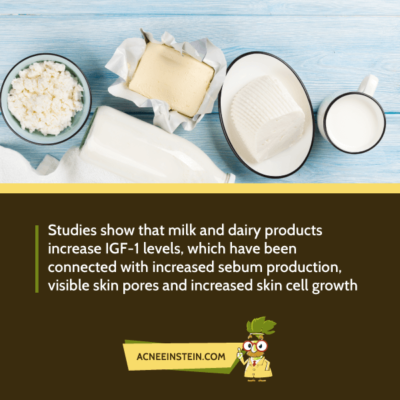
Studies show that milk and dairy products increase IGF-1 levels. IGF-1, or insulin-like growth factor, is a protein that mediates growth hormone and other functional processes in the body. One study in older adults showed that 3 servings of milk per day for 12 weeks increased IGF-1 levels by 10%. Another study showed 16% higher IGF-1 levels in those who drank 1-2 servings of milk per day as compared to those who drank only rarely.
Overall results showed correlation between IGF-1 and acne. Increased IGF-1 was found with increased sebum production, visible skin pores, and increased skin cell growth. It may be important to note that the effects of IGF-1 were more prominent in women than in men.
DHEAS
DHEAS, or Dehydroepiandrosterone, is another hormone that has been shown to be correlated with increased acne. In an Archives of Dermatology study, higher levels of DHEAS were found in a larger number of women who had acne. It is speculated that DHEAS plays an influential role with IGF-1 and growth hormone.
DHEAS may also increase levels of testosterone and DHT, which are other potent hormones. Theories suggest that increased levels of these androgens may cause acne lesions through a couple of ways.
Increased acne may be due to increased production of these hormones in local skin areas. Paired with an increased sensitivity to these hormones, you may find yourself waking up with more acne. Of course, these factors are highly dependent on individual factors.
Insulin
You are probably familiar with glycemic index, it measures how quickly certain foods increase blood sugar levels. Insulin index does the same for insulin. It measures how insulin levels increase when given a certain portion of food (approximately 240 calories). For one study, white bread was used as a reference food with an index value of 100. Here are insulin index values that were found for other common foods:
- Eggs 31
- Beef 45
- White rice 79
- White bread 100
- Yogurt 115
As you can see, insulin levels skyrocket after eating yogurt, even more than white bread. It may be fair to note that they probably used commercial yogurt with added sugar. Therefore, the value may be somewhat lower for unflavored, sugar-free yogurt. Still, it is alarmingly high.
So why is insulin bad? Like IGF-1, it can stimulate hormonal acne. But it also increases bioavailability of IGF-1.
Milk Allergies and Lactose Intolerance
Some people are allergic to milk. Their immune system reacts to proteins in milk, usually casein, and treats them as invaders. Symptoms usually include rash and other skin problems. However, allergic reactions to milk do not directly cause acne lesions.
Milk allergy also comes in a less severe form, known as milk protein intolerance. The problem is that common food allergy tests don’t detect this. While milk protein intolerance triggers an immune response similar to milk allergies, no studies have shown that this intolerance causes acne.
Lactose intolerance has been speculated as a way that milk can possibly cause acne. Studies typically report that lactose intolerance is associated with gut problems. These bacterial imbalances in the gut may be a cause of inflammation and oxidative stress, resulting in acne.
For further information on this topic, I’ve written a detailed explanation on how gut problems can cause acne.
FAQ: Dairy Products and Acne
Is it better to drink whole or skimmed milk?
Skim milk is associated with an increase in acne compared to whole milk. The reason for this is unclear. However, it may be due to a higher glycemic index with skim milk compared to whole milk. A high glycemic index can lead to increased inflammation and acne.
Is organic milk better for my skin?
Both organic milk and regular milk contain hormones that may cause inflammation and acne. However, organic milk does not contain added hormones. Switching from regular to organic milk may be an option to decrease acne for this reason.
Does raw milk cause acne?
Raw milk contains the same hormones found in regular milk. Therefore, raw milk can cause acne. Regular milk is raw milk that has undergone pasteurization. Pasteurization removes bacteria, enzymes, and some nutrients. It does not remove IGF-1, which is known to cause acne.
Can I eat cheese if I have acne?
While cheese may cause or worsen acne, it may be less of an effect compared with milk and ice cream. The reason for this is unclear. Regardless, all cheeses, including cottage cheese, still contains hormones that can increase inflammation.
Does greek yogurt cause acne?
Greek yogurt is considered a health food that may cause less acne compared to milk. This might be explained by probiotics found in yogurt that can decrease inflammation. However, it is important to note any added sugar content which can result in increased acne.
What about ice cream?
Ice cream has been found to be associated with acne. The cause is mainly attributed to high glycemic index of ice cream. A high glycemic index can increase levels of certain hormones such as IGF-1 which is associated with acne development.
What about milk alternatives?
If you’ve read this far, you can see that there is ample evidence for milk causing acne. But what about alternatives, like milk made from soy, almonds, goats, etc? Are they safer for your skin? It can’t be said for sure, but here are some pointers:
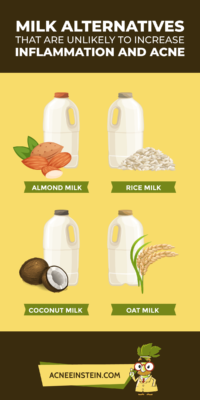 Milk alternatives such as almond, rice, coconut, and oat milk are unlikely to increase inflammation and acne. There are no direct studies to explain this. These alternatives do not contain the hormones found in milk that have been associated with increased acne. However, added sugar may be a potential concern. As mentioned previously, a higher glycemic index may increase or worsen acne.
There is no credible evidence to show that goat or buffalo milk causes less acne compared to milk. According to one report, goat’s milk does not increase insulin levels as much as cow’s milk. In this case, it could be better for your skin.
If you think about it though, milk coming from a goat or a buffalo is still milk coming from an animal that produces hormones. While the amount of these hormones may differ, they still have a potential to cause acne.
What about Soy? There’s a lot of debate about soy. Some say soy decreases testosterone levels and has a feminizing effect in men. After looking at some studies, the hormonal effects of soy are weak or nonexistent in men (refer to this detailed post about soy). In women, however, regularly consuming soy has been shown to reduce estrogen levels which could aggravate the androgen/estrogen imbalance that causes acne.
Did I miss some dairy alternative? Please post to the comments below and I’ll add it here.
Studies Linking Dairy Products to Acne
So far, we have discussed how acne is linked to hormones and dairy products. But what supporting evidence is there behind it?
A recent meta analysis in 2018 reported considerable evidence that consuming dairy is associated with increased acne. Note: A meta analysis is one the strongest pieces of evidence to support a hypothesis. In this study, data was extracted from 14 different studies which included a whopping 80,000 individuals from five different continents.
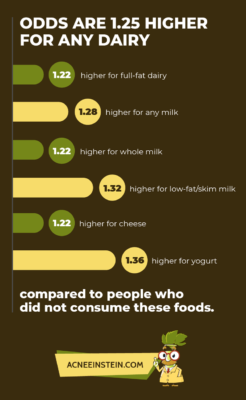 Overall results stated that, “intake of any dairy, any milk, full-fat dairy, whole milk, low-fat/skim milk, and yogurt regardless of amount or frequency were associated with a higher odds ratio for acne compared to no intake in individuals aged 7–30 years.”
Looking more closely at the data, skim milk was associated with higher incidence of acne than whole milk. This may be due to the higher amount of total milk consumed with skim milk. While studies may have had limitations with no definitive cause for increased acne, there was also a supporting link found between IGF-1 and acne.
Another relatively recent longitudinal study found that acne may be associated with an overall high glycemic diet. The study reported that, “Although the link between dairy intake and acne is less convincing than that between a high glycemic diet and acne, both deserve considerationwhen providing any dietary advice.”
In other words, drinking milk can contribute to a high glycemic diet which may then cause acne due to increased insulin levels. Either way, it may be a good idea to note whether other foods are causing a flare up in acne and then limiting their consumption as well.
Two other studies evaluated milk and the incidence of acne in teenage girls and teenage boys. In both of these studies, they followed each group for 3 years. Each year they asked the participant to answer a food frequency questionnaire with questions such as how often they ate certain foods.
Both studies found very similar results. Those who drank more than 2 servings of milk per day were 20% more likely to suffer from acne than those who drank less than 1 serving per week. Not exactly earth-shattering results, but this shows it’s possible that milk and dairy products aggravate acne.
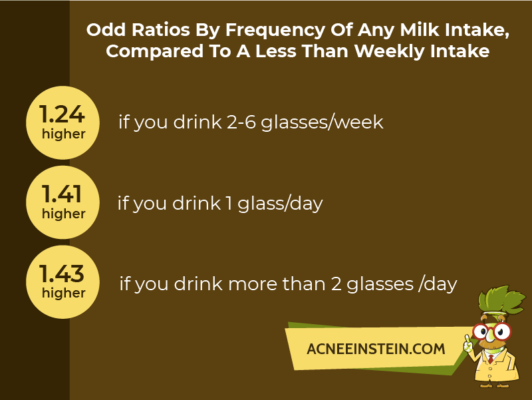
It is fair to suspect that these adolescent studies may understate the risk in adults.An Italian study performed in older subjects supports this. This study examined adolescents and young adults where it was found that there was a 78% higher risk of acne in those drinking more than 3 servings of milk per week.
It should be noted that all of the above studies found skim milk to be worse than full-fat or low-fat milk.
Conclusion
So does milk cause acne? Based on available evidence, it can be safely concluded that milk may carry a higher risk of acne for some individuals. This could be due to hormonal factors as well as intolerance effects of milk in those who are more sensitive to milk.
Goat’s milk may be promoted as a safer alternative to cow’s milk due to its lesser insulin effects. While soy allergies are fairly common, soy milk shouldn’t be a problem in allergy-free people. Similarly, almond, rice and various other alternative milk products should be acne safe.
Yogurt has both beneficial and harmful effects on the skin. It’s a good source of probiotic bacteria and can help with gut problems. The fermentation process mitigates some hormonal problems. However, it’s still a dairy product that can spike insulin levels. You may have to experiment yourself to find which alternative is best for you if you suspect that milk is causing your acne.
I hope you found this post informative. Please share your experience with milk in the comments below.

Hi, just wanted to say that I traced my acne quite clearly to dairy (basically an elemination diet with some dairy reintroductions/challenges).
Furthermore I can say that in my case, cheese from raw cow milk causes only very very very little acne, while similar cheese from pasteurized milk causes quite clearly acne for me.
BTW, dark chocolate (without milk) is OK for me, while milk chocolate causes acne.
And ghee (clarified butter) seems OK for me too – so if it is hormones from milk, they are not in the fat faction. To speculate: I suspect that it is not hormones, but the immunoglobulins from the milk that are the problem.
Hi Tony. Thanks for sharing your experience. It’s always nice to get real feedback and reports from readers.
I agree with you that it’s rarely the fat portion of the milk that causes acne. Some people may struggle with allergic reactions to milk and that causes acne for them, but for most people I think it comes down to milk proteins and their effect on IGF-1 and insulin levels.
I’d like to hear more about your suspicion that it’s not hormones but immunoglobulins that cause the problem for you? Can you talk a bit more about that and what are you basing the assumption on?
It’s also interesting that you’ve noticed the difference between dairy products made from raw and pasteurized milk. Raw milk usually comes from smaller producers that most likely treat their animals better. Perhaps the differences in growing practices cause some differences in the milk. I’m not aware of any compelling evidence for that though.
Just yesterday I was doing some cursory research on the possibility that chocolate can cause acne. And I mean pure chocolate with no milk or sugar added. I’ll do a post about it later, but coco seems to spike insulin levels, and that can contribute to acne for some people.
I would think the major difference between the raw and pasteurized milk would be the iodine levels.
Its demoralizing to hear that milk may make acne worse after being taught in school that it was once considered the healthiest/most complete drink in the world… I’ve had severe acne and used antibiotics heavily to treat it. Although the antibiotics definitely reduced my acne and sometimes completely cleared it up, I was never told about the side effects of antibiotics. I’m (well used to be) also an extremely heavy milk drinker (6-7 cups a day) and never thought twice that milk, the holy grail of drinks, could cause me to be so self conscious of my skin. Not to rant too much but the dermatology system is a bit messed up. My doc prescribed antibiotics to treat my acne, but it didn’t treat the core of the problem which may be my diet. This information needs to be published in newspapers and magazines so the general public can hear about these studies and hopefully in turn force the large milk producers to take better care of their cows and produce healthier milk
I agree that this is frustrating. And this is by far not the only issue I have with current dermatological practices, at least with regard to acne. If a layperson like me can put these things together then certainly a trained doctor could do a far better job. I just don’t understand why more dermatologists don’t stay up to date with research.
There’s no doubt that milk is highly nutritious, so in that regard you’ve been taught correctly, but it also has unfortunate side-effects. I don’t think the issue is how dairy producers treat cows, though that leaves a lot to be desired. Milk is inherently acnegenic. It contains hormones and substances that ‘hook into’ pathways that lead to acne. This is true even for milk produced with organic and most humane means.
I was wondering about using Almond milk as a substitute for cows milk but was concerned about the high – no, huge – Omega 6 content of the Almond and its inflammatory effect on acne. The Almond has the highest by far Omega 6 (as opposed to Omega 3) content of all the nuts. Would Almond Milk be a better substitute for dairy milk? I’m hoping I wouldn’t be going from the frying pan into the fire by using Almond Milk even though some articles state a milk substitute like Almond Milk would be a better alternative than dairy milk in people with acne. Any thoughts?
That’s a potential concern, though I haven’t looked at how much omega-6 fats there are in almond milk. I would be more concerned about the total amount of omega-6 than the ratio.
Also, the question about the importance of omega-3:6 ratio is far from settled. There’s some evidence to show it doesn’t matter and there’s some to show it does matter. I think in this case it’s prudent to assume it is a valid concern and try to maintain a balance between omega-3 and -6 fats.
Regardless of the omega-6 content of almond milk I would say it’s better than cows’ milk. The real problem with dairy is that it spikes insulin level. Almond milk without added sugar probably doesn’t do that.
I also can’t say whether omega-3:6 ratio has any effect on acne. It may, but there’s no data to show either way. My advice is to treat it as a potential concern, but I wouldn’t put too much emphasis on it.
Thanks much, Seppo.
So did the acne subside after you stopped drinking milk? I notice acne breakouts the following day after drinking cows milk or eating chocolate lately and I usually have clear skin. It’s a intolerance that’s developed in my system recently
Hi. Wow. I have been reading your website and am blown away by the information. I have a 19 year old son who suffers from acne. He’s currently on a long term maintenance antibiotic therapy and two prescription topicals. His derm says there is no connection with milk intake – i brought it up a few years ago when i read something about the connection. My son does consume a lot of milk and his diet isn’t that great — bread, juices, milk, cereal, etc. interesting about the glycemic thing and acne. I will talk to him about that. I’m also reading a book about the gut and just how important a healthy one is for good health and i am alarmed about my son’s use of antibiotics….I read your blog about green tea. Is it possible to make our own mask or solution using tea bags? Any way, your site is very professional and I appreciate your honesty. Best regards.
Glad to hear you like the site, Rhonda. I can kinda understand when derms say there’s no proven connection between foods and acne. The data is still somewhat preliminary and not strong enough to base generalized treatment recommendations on.
That said, there’s no excuse to categorically deny any connection. That’s just being lazy. They should at least inform people about a possible connection – even if the data is not yet rock solid.
Agree on the importance of gut health. For me, gut health is one of the biggest influences on my scalp acne. If I eat something that aggravates my gut I can invariably expect a painful breakout on my scalp a day or two later.
Seppo, it’s interesting you mention scalp acne. That seems to be the only problem I have and have had for years now. Three different derms and many different topicals, antibiotics don’t seem to work. The antibiotics worked but almost immediately after stopping the scalp acne comes back. Haven’t taken antibiotics for a couple of years now and it was only for 2 or 3 weeks. Interesting that I never had any scalp problems until I hit 40 or so and even when I had bad acne problems in my teens and twenty’s I never had a zit on my head. Very weird. I have absolutely no gut problems and my general health is excellent. The derms say it is probably hormonal and not a whole lot they can do. Any “magical” topical solutions (I’ve think I’ve tried them all) that you find worthwhile? I just stopped drinking milk because of the possible “hormonal” connection but I guess I will have to wait and see. This scalp acne is very bizarre to me because like I said I never got it until way into my adult years.
Similar story here. Antibiotics work, but acne comes back within a week of stopping the meds. Now that I think about it, my scalp acne started after Accutane. Accutane got rid of my severe back acne, but my joy was short-lived as acne came back on my scalp.
I thought I had no gut issues until I really started paying attention. Not saying that’s the case with you, but it’s an angle worth looking into.
The only topical solution that has worked for me is to avoid chemicals that irritate my scalp. So I had to switch to sulfate-free shampoos.
I have been working on the assumption that I am lactose intolerant for a while now. It took a while to figure out, but as long as I use the lactase enzyme pills whenever I eat anything dairy, I don’t have the horrible gas, bloating etc. digestive difficulties I was having. Having said that, I still have dark circles under my eyes, painful knees and yep acne (at age 50) Actually, even more acne now than ever before in my life, including my teen years. Growing up I lived in farm country and we drank raw milk at home. When I left home and moved to the city I no longer had raw milk, but also wasn’t drinking very much milk at all so didn’t have many problems. Over the years acne came and went and I really wondered why as an adult and not as a teen but didn’t think too much about it until recently when the lactose intolerance became a problem. Since switching to lactose free milk, I have noticed an increase in general malaise that does not appear to be related to anything else. I know exactly how much milk I consume as I am the only one drinking from the 4 litre jug I buy each week! (works out to about 16 oz per day consumed as liquid milk or in other foods prepared using milk) So after reading this article and a few others covering my other symptoms as they relate to milk allergy, I have decided to give milk a pass for now and see if things clear up.
Let us know how it works out for you!
Well, it’s been several months now and I have to say that I am definitely much better off without cow’s milk and products derived from cow’s milk. It took quite some time for the acne to clear up and along the way I discovered it wasn’t just acne being caused by milk and milk products. I was having all sorts of acid problems, even when taking the lactase enzyme for my lactose intolerance. The only “milk” I use now is rice milk and what a difference it has made to my digestive problems. The odd time I do eat a bit of cheese (that’s been the hardest to give up) I find I am not having lactose intolerance symptoms, but boy does the acne come back and fast! (8 to24 hrs) and the next day I do suffer from acid once again which takes up to three days to correct itself.. So for me, the answer to my digestive concerns and acne woes is solved by not consuming cow’s milk.
Thanks for sharing.
Yogurt and milk were hands down the cause for my cystic acne. I suffered from acne for years and went to 3 dermatologists. I was on isotretinoin (accutane), prescription creams, birth control, and a variety of other pills and medications for my acne vulgaris and nothing seemed to work. All the while I was a yogurt-holic and had at least 2 servings a day. After finding an article describing the negative effects of hormones in dairy I took a break from my yogurt consumption and what do you know? My acne disappeared! I can still eat cheese still but I can no longer consume milk or yogurt without developing a facial cyst. Almond milk has proven to be a great alternative. I wish I had known all of this before I spent all of that time and money with the dermatologists…
Thanks for sharing. It’s kinda sad that derms still rarely mention the possibility of dairy causing acne to their patients.
I was lactose intolerant all my life. I never drank milk or ate cheese because it made me feel awful afterwards. I had clear skin all my life even as a teen. Around 23 I started slowly adding diary into my diet…coffee cereal etc. I did notice I was getting breakouts but wasn’t enough to be noticeable. About a year ago my skin started having consistent acne meltdowns. I recently started noticing I was getting sick to my stomach every time I had high content diary products. I finally stop consuming all diary and switch to almond milk and my skin is back to being completely clear. I could probably wash my face with dirt and it would stay clear. After about two months without diary I broke down and had pizza with cheese, I woke up the next day with 3 cystic acne bumps on my face. I love almond milk I should’ve been drinking this my whole life. I won’t go back to diary and will ration cheese to limited occasions. Hope this helps!
I linked my acne break outs to dairy without even knowing about these studies. I had the odd spot on my face but thought they would go with time, but at age 21 they still kept coming.
One week this year I ate a lot of goat cheese and my skin went crazy, I’ve never had such a bad outbreak in my life. I wondered if it could be linked to the cheese, and decided to cut out all dairy products for a month. My skin got clearer straight away, when it was perfectly clear I had a cheese sandwich and sure enough, the spots came back. I now avoid dairy (and sugar) as much as I can and my skin is pretty clear. Every time I succumb to the lure of cheese, I know I will have bad skin for the next ten days.
Thanks for sharing your experience, Jelena.
I actually don’t have any problems with home made buffalo yoghurt but commercial yoghurt causes me to break out. What do you think of that? And what about feta cheese? I haven’t eaten it in more than a year because I’m scared but I really like it. And what about parmesan? I guess moulded cheeses are not good, I know for sure they do contribute to my acne, but maybe different kinds of cheese have different effect? I would love to know your opinion.
Hard to say. Are you comparing home-made buffalo yogurt to commercial yogurt made from cow’s milk?
I know that fermentation reduced IGF-1 level in milk. So it’s possible, but this is just speculation, that home-made yogurt is fermented longer than commercial and thus has less IGF-1.
Cheese is condensed milk. So an ounce of cheese is probably worse for your skin than an ounce of milk. I have no information on whether there are differences between cheeses are how they affect acne.
Hi Sir Seppo! How are you doing?
First of all, I found your site fascinating! I find it really more rational than its counterparts.
My first inquiry is about soy: This post as well as this – https://acneeinstein.com/soy-and-acne/ – seems to suggest that there’s no, at least as of now, known negative effect soy has to acne. Moreover, you, as well as the vast number of nutritionists, believe that IGF-1 is one of the hormones that might be causing acne. Now, have you already seen this – https://nutritionfacts.org/video/how-much-soy-is-too-much/? If Dr. Greger’s video about soy causing rise of IGF-1, then would it mean that soy actually could cause acne just like milk/dairy?
Second is about Androgen (male sex hormones). I don’t find you talk about Androgen on dairy here. On Dr. Hyman’s page you’ve linked (https://drhyman.com/blog/2011/02/11/do-milk-and-sugar-cause-acne/) he seems to say that the hormone might also be causing acne aside from insulin and IGF-1 is Androgen. Don’t you believe that?
Thanks for any response! Have a good day!
Thanks for posting link to the nutritionfacts.org page, the video there was quite informative. It’s possible that eating a lot of soy can increase risk of acne, as it somewhat increases IGF-1 levels. That said, I suspect this would apply too proteins – not just to soy. Also, if eating a lot of soy does increase risk of acne, it’s hard to quantify the increased risk. I suspect that the increased risk would be fairly small.
I haven’t talked about androgens much on the blog, but I covered it extensively in my book. The short story is that yes, androgens are the main hormonal drives in acne. In fact, in medical literature acne is often referred as ‘androgen dependent problem’. But I don’t talk about androgens on the blog that much since there’s not much you can do about them. You can affect them indirectly via insulin and that’s why I usually emphasize controlling insulin.
There are several hormones that affect acne, such as various forms of androgens, IGF-1, insulin and growth hormone. Even female hormones come into play, estrogen for example can protect against acne. So the end result is a mixture of all those hormones, and nobody has properly figured how each of those hormones affects the skin.
hi, great site.
just wondering, do u recommend cutting out butter aswell? Some info seems to suggest it can be tolerated because its the fat. Does it contain the hormones aswell?
thanks.
No, butter should be ok to eat.
Butter makes me break out with small breakouts/white heads all over my face, even if its just on some veggies… even the slightest bit of dairy makes break out.
What is your opinion about hormones and certain molecules in red meat? We have been eating organic grass fed beef and venison, both high quality red meat without added hormones but I read where the naturally occurring molecule Neu5gc is high in the red meats and can cause acne due to it’s tendency to cause inflammation. I have always struggled with acne and have been diagnosed with acne vulgaris due to hormone sensitivity to androgens–it explains the type of acne I get as well; cystic. It’s been under control and although I still break out it hasn’t been anything severe for years. But since the weather has gotten nicer we’ve been cooking out a lot so that means burgers, venison steaks, beef ribs, bratwurst, etc (which I usually don’t care for but when the husband is grilling, I don’t protest 🙂 My skin went nuts! Large and small cystic lumps all over my jawline and neck; a few new ones each day until there was about 10-12 cysts on my neck alone at one time so I tried to think of what I was doing differently and realized that I hadn’t been eating red meat much at all for the past few years until around Easter when I starting eating more than usual and that’s when the cysts started. I know it wasn’t due to the weather (humidity) because I live in a cool climate and it’s been very cool weather even in June. Then I did some research and found that red meat has molecules which some people can handle, but people like me who are very reactive and sensitive to hormones and inflammation cannot. It just made sense. I recently saw my doctor hoping he could lance the cysts. He prescribed an antibiotic instead much to my dismay however he did say these substances in the meat could very well have caused the outbreak.
Good question! I don’t think I can give you a definitive answer to this. I read a recent review paper on Neu5Gc and their role in human disease: https://www.ncbi.nlm.nih.gov/pubmed/24680512. The paper was quite technical and went over my head somewhat, but from what I was able to gather, it’s possible that this glycan triggers an immune response in humans. Whether this happens to everybody and to what degree remains unknown.
My gut feeling is that it’s not a widespread problem as stories of red meat causing acne are quite rare. Also, there’s no really convincing evidence that red meat would be a significant cause of heart disease or cancers. However, every person is different and it’s possible some people are more sensitive to it than others.
The only advice I can offer at this point is to experiment and see what happens. Cut red meat out of your diet for some time and then reintroduce it back to see what happens. Also, even if you are sensitive to Neu5Gc, chicken and fish should still be safe to eat. The paper included a table of Neu5Gc content by meat type. Here’s the data from the table. Shows Neu5Gc content (in micrograms) per 250g portion of various meats:
– Beef: 7525
– Pork: 6375
– Lamb: 4550
– Salmon: 368
– Chicken: 19
– Turkey: 12
– Tuna: 8
– Duck: 5
Dairy products (excluding butter) also contain quite a bit.
Thanks so much! Great information! I’ve learned so much from your site; more than from any doctor… or even dermatologist.
Happy to help! 🙂
Do you know a way to decrease IGF-1 baseline levels?
Aside from controlling insulin levels I don’t think there’s much you can do to affect IGF-1. It’s not one of those hormones you have a lot of control over.
Hello! I very rarely eat dairy aside from goat milk yogurt and am vegetarian. I moved to Berkeley/Oakland recently and the food culture here is amazing. That being said, there are a ton of small self-made ice cream shops. I went on a roll of trying all of them over the course of two weeks and low and behold, I ended up getting major cystic acne! It was the only connection. It’s been a month and I’ve finally got it under control. I’m very organic and cook well for myself, and had breakfast two days ago with an older conservative/conventional couple from Southern California and they didn’t believe me. So interesting how people can put so much faith into what has been engrained in our heads all of our lives. Thanks for your blog post!
Thanks for sharing your experience. Yes, that indeed is sad. And even sadder is the fact that many doctors still reinforce those old myths.
Like many of the commenters here, drastically reducing my dairy intake has given me clear skin. For years, my derm told me that dairy wasn’t linked to acne and I listened to her because I didn’t want to stop eating dairy, but the bumps that would appear hours after consuming cheese told a truer tale. Not only did I get acne on my face, but on my chest and back as well.
Using a retinoid cream (Tazarac) has made my breakouts much less frequent, but if I overdo the dairy (meaning having more than a slice or so of cheese a week), I’m on the lookout for bumps. Being African American, pimples tend to leave dark marks that take years to go away so I rarely test the waters. Also, I try not to have dairy during pms/menses because that usually ends in disaster.
I find that cheese and butter affect my acne much less than yogurt/heavy cream/milk/ice cream.
Thanks for sharing your experience, Raaya!
Hi Seppo- thanks for such a great website! Will begin my dairy free living and let you know how I go! Have you heard of/ made/ used milk kefir? Apparently it is great for gut health. Should I cut this out too?
Thanks again- Ebony
It depends. Fermented dairy products, like kefir and yogurt, still spike the acne-causing hormones. Whether you can eat them or not depends on how sensitive you are to dairy. For women with hormonal-type acne, it’s probably a good idea to cut out or drastically reduce all dairy products. People with other types of acne probably can include more dairy in diet.
I cut dairy completely out of my diet about 8 months ago, with only the very occasional deviation (for instance if I accidentally order something at a restaurant that ends up having dairy in it, I just go ahead and eat it anyway instead of being a nuisance about it, but those accidents are very rare). Honestly, I can’t say that it’s made any noticeable difference to my skin, and I think 8 months of being almost entirely without it would be enough to gauge its effect.
There has been a very noticeable negative effect, however — I suffer from cold sores, and when I was consuming dairy (almost entirely in the form of yogurt, but occasionally cheese and very rarely milk) I would have a cold sore maybe a couple times a year, and they would be small and heal quickly. Since I quit dairy 8 months ago, I’ve had about 6 or 7 cold sores, which have all been significantly larger and longer lasting. The reasoning behind this is actually quite straightforward. Dairy — especially yogurt — is by far one of the richest natural sources of the amino acid lysine, which counteracts your levels of arginine, and it’s been shown that the latter encourages the growth of the herpes virus.
So in a sort of bitter irony, I’ve often found myself having to choose between what problem I want to address, acne or cold sores, through my diet, because in a few instances they require the opposite. As already said, dairy is good for cold sores but bad for acne. Also, nuts, particularly almonds, are good for acne (rich in vitamin E), but are the worst things you can have for cold sores due to their high arginine content! It’s kind of ridiculous…
However, reading this article has encouraged me to slowly reintroduce just probiotic yogurt back into my diet. It might spike insulin levels, but at least the bacteria it contains is helpful for my gut, AND it massively helps reduce my cold sore breakouts. So that’s 2 against 1. What a relief, since I really miss yogurt, haha.
(Also, I’m aware that lysine could simply be taken as a supplement, and I do take it that way, although simply eating yogurt seemed more effective).
The problem is that these studies lump all acne patients into one group and look at what happens on average in that group. The underlying assumption is that all acne is the same and reacts the same way.
As I talked in this post, I think there are different types of acne. Some react to hormones, some are linked to inflammatory damage and gut issues, some are more stress related.
So if you would only look at people with hormonal-type acne, you would probably see a much larger effect from milk. Whereas people with other types of acne would see much smaller, if any, effect from consuming dairy.
My point is that just because a study says dairy increases acne on average by so and so many percentages in a large group of people, it doesn’t mean it would be harmful for your skin. At least when consumed in moderation.
That would indeed explain why some people miraculously become clear after quitting dairy, whereas others, like myself, notice no effect whatsoever. I was hopeful about it at first because I used to eat yogurt practically everyday — I figured that if I’m consuming a fair amount of dairy then it might have been a factor. But alas, that is not the case.
But I’m glad I’ve gone dairy-free for so long because I can now rule it out as a potential cause for my acne, and I’ve come to understand the profound effect it had on reducing the frequency and severity of my cold sores. So I’ll return to yogurt — we’ve been apart too long!
This is a great post, and very informative.
I gave up milk about 3 weeks ago, and have noticed a huge difference. My skin is just about clear. I had a slice of pizza two days ago, and woke up with a small pimple (no big deal), but also felt terrible all day – tired and just awful, for no good reason. No idea if it’s related to the dairy, but it will be interesting to keep track of.
Here’s what I’m wondering about. I think that probably most of us posting here are adults, and have suffered from acne for years, possibly decades. It would be great if we could get rid of our acne, but even better if we could have prevented it (or at least reduced the severity).
So,given that milk seems to have such a clear link to acne, would you cut it of your children’s diet? If they start breaking out as a teenager, it seems like a good first step. But what about cutting it out when they’re little, as a preventative measure? I have two young kids (3 and 6), and am debating what to do. We hear so much about how milk is such an important part of a healthy diet that it seems almost irresponsible to exclude it from a kid’s diet without a clear reason. It’s also pretty difficult to do, in practice. Daycare and birthday parties make it very tricky. On the other hand, is milk actually harming my kids in ways I can’t see? Thoughts?
I’m not a pediatrist and would rather not give advice regarding minors. This is something you should talk with a doctor.
But I can say that there are plenty of countries where children drink little to no milk. Such as many places in Asia. While milk is nutritious, it’s not an essential food by any means. You can get all the nutrients also from other sources.
If I had a child, I probably wouldn’t feed them milk on a daily basis. I wouldn’t make a fuss about occasionally consuming dairy but I wouldn’t make it a part of their daily diet.
Does milk cause acne for you? I’m currently eating yogurt for 5 days to test out if it can cause acne for me. I know that gut problems causes acne for me, but I’m taking Lactrase because i’m lactose intolerant. So I’m seeing if the hormones can cause acne or not
No, milk doesn’t cause acne for me. I eat dairy every day, some milk in my oatmeal and yogurt in the morning.
For me, it’s the full fat commercial diary products which cause the acne. If I cut out dairy my skin resolves itself completely. It’s actually the hormones which are mostly found in the fat which are associated with pregnancy progestins, which cause the problem. Some of them have fairly powerful androgenic properties. A commercial dairy cow has a calf every year, it’s impregnated again just two months after it gives birth, and continues milking for it’s gestation. So the majority of the milk from a herd is coming from a pregnant animal, and so is full of progestins and other hormones. It causes acne end of story. Milk from a non pregnant animal does not cause acne.
I have cystic acne whenever I drink cow fresh milk as in every time. But yoghurt is most likely to cause acne after 2-3 times. No reaction with Philadelphia brand cream cheese.
Because I love milk. I found an alternative and its available in my country.
I drink fresh camel milk as in liters per week. I actually went for camel milk fast (Plus water), drinking 3 liters of Camel milk per day for almost a week. I NEVER HAD 1 CYSTIC ACNE DURING AND AFTER THE FAST. I still drink camel milk 3 cups a day but NEVER cow milk. Please consider cleaning your lymphatic system ( I did wet cupping, it was a success got clear skin in 10 days, this is acne start popping out slowly after stopping cow milk ) . Use Burdock root powder( with water, create a paste) to apply over the cystic acne overnight (you will feel the burn first but fades). Its so strong it will shrink from day 1).
Back in my late teens and well into university I used to get acne, not too severe but still noticeable. One day I read a quote by Einstein saying something along the lines of “don’t expect changes if you keep doing the same thing”, so I thought let’s change something. I had tried all sorts of face wash products but those, in hindsight, may well have been the culprit. Anyway, the changes I made were 3: 1) no dairy, 2) wash face *gently* with just warm water and hands, and 3) no spicy food. I swear my acne was gone after one month. Looking back I’m not sure not eating spicy food did anything, I was certainly eating too much of it (a bottle Tabasco a day!). Whether it was one or two or all of these three changes that did it, I don’t know, but anyone with acne could give it a try. Once it was gone I went back to eating dairy and spicy food (the latter in moderation) and I’ve not had acne since, perhaps the bacterial infection cleared up. However, the ONE thing I’ve never done again is to wash my face with Neutrogena or similar products, I just use warm water and a cloth in the shower to gently rub out the dead skin and dirt. I’m 37 and people think I’m 25 (I don’t smoke or drink though). Recently I’ve started going almost dairy-free again, going to try it for a month to see if anything good happens.