
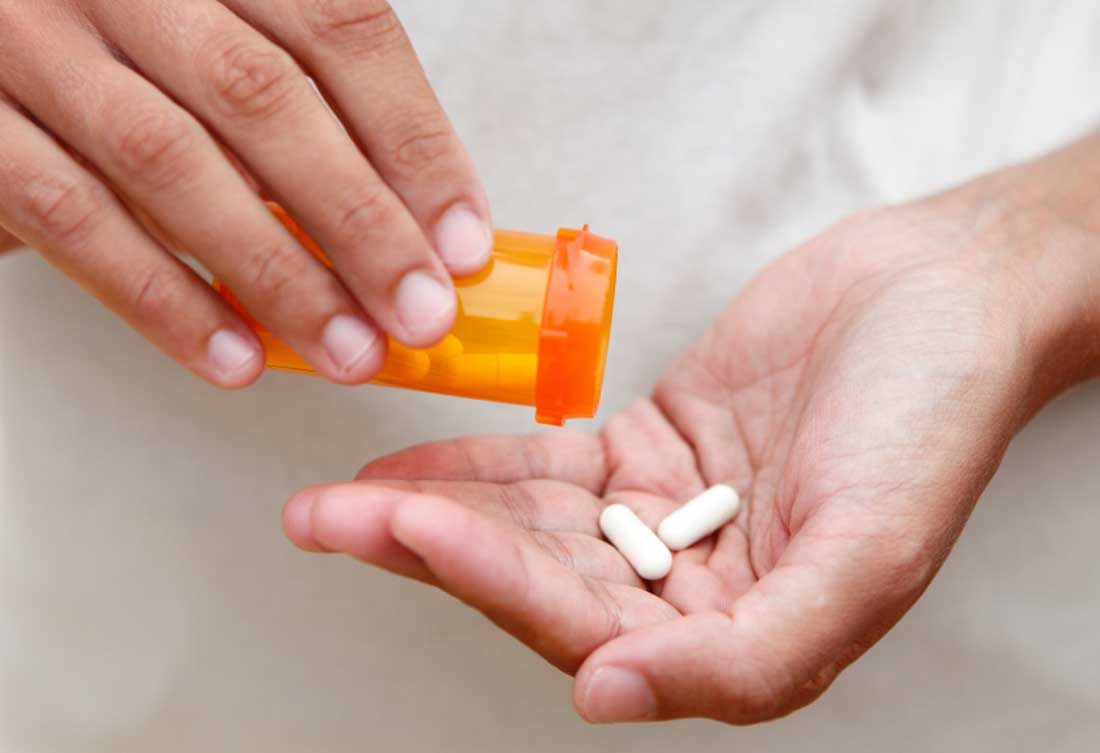
Antibiotics are the first-line treatment for moderate to severe acne. And most acne patients walk out from dermatologist’s office with a prescription for course of oral antibiotics. Doctors prescribe and we take them assuming they are safe and without a second thought. While antibiotics are generally safe, there’s now good reason to believe they may make you more prone to future acne breakouts.
In this post I’m going to call into question the use of oral antibiotics in treating acne. For two reasons. They don’t really work, and they carry long-term consequences that may harm your skin.
Do antibiotics really work for acne?
Obviously antibiotics work short-term. Nobody doubts that. The real question is what happens after you finish the treatment. Acne forums are filled with posts complaining how acne came roaring back after the treatment stopped.
Anecdotal evidence is horribly unreliable, so I wanted to see what studies say on this. I looked for studies on recurrence or relapse rates after oral antibiotic therapy. Given how often they are used I was quite shocked that this was the best I could find:
In a study of women over the age of 25 with persistent AV [acne vulgaris], approximately 82 percent failed therapy with multiple courses of antibiotics and 32 percent had relapsed after treatment with one or more courses of oral isotretinoin.
I couldn’t find any studies on recurrence rates of acne after oral antibiotic therapy. Pretty much all studies just say that patients improved so and so many percentages after so and so many weeks. But nobody seems have bothered to follow up and see what happens after the antibiotic treatment. Because what’s the point if acne comes back a few weeks later?
The one study that even touched this showed massive failure rate (82%) after multiple courses of antibiotics.
So if we ask do antibiotics really work for acne? I don’t know about you, but my answer is flat no. Clear skin for a few weeks is nice, but I want a long-term solution. And that antibiotics ain’t.
Antibiotics make your more prone to acne?
Not only are antibiotics a short-term fix, but they can actually cause long-term harm to your skin. This happens because antibiotics kill the beneficial, or probiotic, bacteria from your gut.
The digestive system is colonized by billions and billions of bacteria. The number of bacteria in the gut is estimated to be 10 times larger than the number of cells in your body. These bacteria are often called as gut microflora or microbiota.
As humans we live in a mutually beneficial relationship with the bacteria in the gut. The so-called probiotic bacteria for example assist in digestion of food and creation of certain nutrients. And with every new study the importance of gut microflora in health is becoming more and more evident.
The biggest problem with oral antibiotics is that they cause long-term disturbances in gut microflora. Most antibiotics prescribed for acne are not precision weapons. They indiscriminately kill both harmful and probiotic bacteria.
Exactly what kind of damage they do to gut bacteria varies from person to person. Each of has unique bacterial makeup in the gut. And some strains of bacteria are more resistant to antibiotics than other strains. But what’s clear is that most antibiotics cause at least some damage to the beneficial bacteria in the gut. And the damage is more likely to be extensive than minor – because most probiotic bacteria can’t resist antibiotics.
The damage also depends on the length of the treatment. Common antibiotic treatments for acne run from several weeks to several months. Sometimes patients are also kept on maintenance dose for years.
Suppressing probiotic bacteria opens the door for harmful (pathogenic) bacteria and yeast (such as Candida) to grow in the gut. Harmful bacteria cause damage to the gut wall and lead leaky gut syndrome (medical term: intestinal permeability) and causes small gaps to open between cells in the intestinal barrier. Through these small gaps bacterial toxins and other inflammatory substances can ‘leak’ into the bloodstream. In the gut-skin axis post I explained in detail how this can lead to acne.
Candida albicans in another invader that takes advantage of the opportunity created by antibiotics. Candida can cause further gut damage and cause sensitivity reactions that show up on the skin.
Long-term effect
The gut microflora is resilient. Without any disturbances (such as antibiotics, chemotherapy or excessive stress) the microflora remains fairly stable. Even after you wipe it out with antibiotics it does try to return to pre-treatment balance. But this can take long time. One study found disturbances even 2 years after a 7-day clindamycin treatment. Another study showed disturbances 4 years after the treatment.
Antibiotic treatment also increases the levels of antibiotic-resistant bacteria in the gut. So it’s possible that the gut microflora never really recovers after long-term antibiotic use. I don’t mean to sound alarmist saying this, and we really don’t know whether minor disturbances have any real health effects.
The point I’m making is that taking antibiotics you set yourself up for getting more acne in the future. At the moment we can’t say how long this effect persists. It may pass in a few weeks or it may linger in some form for years.
The larger message here is not to take antibiotics unless absolutely necessary. If you need them to clear an infection, then by all means take them. But I don’t see any point in taking oral antibiotics for acne. They are a short-term help with potential long-term harm.
Probiotics can mitigate the damage
If antibiotics cause disturbances in the gut flora, then taking probiotics should mitigate the damage. And that’s exactly what studies are showing.
One study showed a dramatic effect. The researchers treated 30 volunteers with clindamycin for 7 days. The subjects were divided into 3 groups: 2 different probiotic supplements and a placebo group. After 7 days the placebo group had no bifidobacteria (a strain of probiotic bacteria) left. The subjects receiving the probiotic supplements showed much smaller disturbances to the gut microflora and experienced fewer side-effects. Other studies have shown similar results using both probiotic supplements and yogurt.
Probiotics are also effective in preventing diarrhea that sometimes follows antibiotic therapy.
Conclusion and take-aways
Oral antibiotics are often prescribed for moderate to severe. For the following reasons I don’t think it’s very smart:
- Antibiotics are effective short-term treatments, but in majority of cases acne comes back with a vengeance.
- Antibiotics can cause long-term disturbances to the bacterial balance in the gut (gut microflora).
- Disturbances in the gut microflora allow harmful bacteria and Candida to colonize the digestive track. This increases inflammation and can lead to acne breakouts.
- Probiotics, either as supplements or fermented foods, mitigate the damage antibiotics cause and allow the gut microflora to recover faster.
Moral of the story: don’t take antibiotics unless you absolutely necessary. They are a flash in the pan that burns your fingers.

Thanks for the insight, all your articles are pretty neat and clear cut. I have a question, I was in acne antibiotics(TC) for moderate acne before 2 years and acne was completely gone. And I stopped the med and was almost eating a healthy diet (High Protein, Mod Carb/low Fat) diet. But I recently changed my diet to High Fat/Protein, Mod Carb diet and the acne seems to be back. I am really eating super clean foods and healthy (building muscle with weights). I include lots of fermented foods, vegetable juicing, etc. The high fats come from Raw dairy/yogurt/eggs/coconuts, so mainly Saturated Fats. And I think this seems to aggravate back my acne and its getting pretty worse daily and so I am stopping this diet right away and thinking to jump on antibiotics. Already I cut out diary/eggs/meat for a week now, but no improvement. So do you think my reason is correct?…also can I take probiotics along with antibiotis or should i have to take it after the course of antibiotics?/ i am also applying some topicals with Tree tea oil and taking saw palmetto do see if that helps with the DHT as I feel i have a lot of test fro my weight lighting!! Thanks
Senavis, happy to help 🙂
Generally speaking high-fat diets cause some insulin resistance. So if you eat a decent amount of carbohydrates also, that could cause some problems. I would get a blood glucose monitor and get your fasting and post-meal readings. That could give you some idea.
If you decide to go on antibiotics I would take probiotics at the same time. And keep eating fermented foods.
I wouldn’t jump to conclusions yet. Acne is quite complex and it’s easy to get mislead by quick conclusions without sufficient data. Check the articles in the gut-skin section also. I’ve heard quite a few stories of people whose acne got better after eating less vegetables, because the fiber irritated their gut. Not sure if that’s relevant in your case.
Hey thanks for the reply, I checked my blood glucose level last week, which is pretty solid (low numbers)…and this is after going back to the normal 50/30/20 diet without dairy/meat/eggs/nuts once I got some serious acne before 2 weeks.
I have some cysts along jaw line and temples..my forehead and cheeks are pretty clear but tends to get whiteheads.
may be for now I will try to stay away from Antibiotics and try with Saw Pal, Vit B5, and Topicals for another 3 weeks to see if it works. But it dont seem to get any better with my new changes, so do you know will this Saw+combo increases the breakouts at the beggining and then improves the skin ..??
Senavis,
I don’t think saw palmetto combo should ‘make it worse before it gets better’. From studies I’ve seen it takes a good 4 to 6 weeks for DHT blockers to start acting on the skin. For example one green tea study started showing decent results only after 4 weeks.
Are you using benzoyl peroxide or anything like that? If not, you might want to try them. For me BP really helped to got rid of the post-acne redness. It also nukes away the occasional, small pimple I used to get.
Do you think you can “catch” acne? I had perfect skin for my 28 years of life, no acne as a teen. Started dating a guy with bad acne and then now my face is covered with long-lasting bumps. They go away and them come back again. Sometimes painful. This is not normal and a crisis for me, I have been trying natural and antibiotics, topical….nothing is working?
Sorry about my late reply Sandra. Was travelling with my wife over the weekend and then got sick for a few days.
Nothing is impossible, but the general medical view is that acne is not contagious. We all have P. Acnes bacteria on the skin. And just by introducing the bacteria on the skin shouldn’t cause acne, as it’s actually triggered by inflammatory damage to sebum. Again, nothing is impossible, but I haven’t heard of “catching acne” before.
It’s hard for me to give you much advice with so little information. But I have plenty of info on this site. I’d recommend checking out the gut health section and the post about overview of how to cure acne. Those should give you the basics. If you have more specific questions, I’d be happy to guide you further.
This is mostly in relation to Sandra’s post.. Most general medical views are just that- general. They should never be taken as gospel. Many doctors will tell you antibiotics are good, probiotics are a waste of money, and any attempts to educate them further will make their eyes cross. It’s sad but true. Simply put, as medicine became more of a market it lost its basis in science. So now unless something can be proven profitable, it won’t often be researched, and certainly not conclusively. Acne treatment is big, big business.
My point being, I too ‘caught’ adult acne, at 24, and it has never totally receded. My general understanding is that every gut and skin is different, and therefore two people’s microorganisms may not get along. Indeed, one may be stronger than the other, especially if that person’s system is already weakened by stress, diet, etc. We all have p. acnes, strep, staph, etc… But there are different strains and strengths, so a person being ravaged may have a more vicious breed of bug, or simply be overrun to the point where your system is not prepared for the barrage.
All I know for sure is once you’ve got it, it’s a part of your life for good. But like candida or strep it just needs to be not fed and kept at lower levels. The only answers I’ve found is similar to Seppo’s advice. Eliminate refined sugar, dairy, and saturated fats while increasing EFAs and probiotics. Furthermore, consider reducing or eliminating simple starch and grain intake. Strengthening and balancing your system is the only long term hope there is.
My one thing with what I’ve read here is the fiber bit… I don’t think fiber is necessarily such an issue. Obviously, proper preparation/chewing and complete digestion is a big deal, but food sensitivities are a widespread problem. High amine, salicate, or glutamate foods can cause a lot of chaos for many people, as might nightshades. I’m bringing this up because all these things can contribute greatly to gut distress and further trouble, like immune issues, that may be reflected in the skin. So crucifying fiber, when it’s so necessary for digestive health, may not be wise.
All I’ve got. Great site.
P.S Whey protein is the devil, especially for girls. The devil I say.
Thanks for the thoughtful comment JH.
I would disagree little bit with your statement that unprofitable treatments are not studied. It’s true that pharma companies are unlikely to waste research dollars on something they see no profit potential in. But government grants also fund a lot of research. And those studies also look at less profitable angles. For example, NCAM has spent over a billion dollars funding research into complimentary and alternative medicine. Much of it simply poured down the drain studying highly implausible and dubious therapies, like homeopathy.
Of course the pharmaceutical industry has undue influence on doctors, academic journal and medical schools. I don’t think anybody denies that the system is broken to some degree. But I don’t think the situation is as bad as many alt-med sources make it out to be.
For those who ‘caught’ adult acne, I would recommend looking into hormonal abnormalities. One of the symptoms of excessive androgen levels is a sudden onset of acne.
It wasn’t my purpose to demonize fiber. It’s certainly not a problem for everybody. I just wanted to point out that some people with gut issues may have limited tolerance for fiber. I think this is useful to keep in mind because the advice almost always is to eat more fiber.
I’ve been taking antibiotics for 6 months because my doctors told me so! OMG I hate them!! Will I have acne forever now? It i just getting worse everyday and my stomach is really upset 🙁 Don’t I have any change to get back to normal?
The gut microflora is quite resilient and in most cases bounces back, though it’s possible long-term antibiotic use does more long-term harm.
Thanks for your answer, guess I have to take accutane 🙁 🙁 🙁
There are plenty of options that don’t involve Accutane (I’ve written about them on this site), not that Accutane is as bad as people make it out to be. You shouldn’t take this article to mean that everyone who takes antibiotics for acne necessarily suffers long-term negative consequences. Some may, most probably not. My point was to get people to think differently about antibiotics and to question the rationale of taking them for acne. Because they don’t seem to offer any long term benefits and there’s, albeit small, risk of long term harm.
Hi, I know I’m a bit late to the party.
I’m a pharmacy major, and I’m (perhaps surprisingly) really anti- antibiotics. I would agree pretty wholeheartedly with you that long-term use of antibiotics is a terrible idea because it promotes antibiotic resistance, and yes, can do some damage to the bacteria in your gut. However, it is not something that should be too worrisome as most of the healthy bacteria in your gut have pores too small for antibiotics to truly affect them.
I’d like to know what specific studies you looked at, if possible. I’m currently doing a report on antibiotic resistance and would like to learn more about the use of antibiotics for acne purposes.
I don’t think being a pharmacy major makes you immune to reason and logic. I actually detest the accusations by various natural healers and alt-med gurus that science-based medical practitioners would always resort to drug treatments – and drug treatments only.
Anyway, could you be more specific with what you mean regarding the studies I looked at? Most are listed at the end of the article, just click the toggle references link. I also searched PubMed for acne antibiotics recurrence and relapse related keywords. Since most of those didn’t bring up any useful information I didn’t list them in the references section.
Thank you so much for this valuable information. By the way, something in my mind told me NOT to take antibiotics and I’m so grateful for that, however, the dermatologists I have visited insisted me to take them. Luckily, I was strong enough to say no.
Anyway, the last dermatologist I went… he first told me to go on Accutane (my case was moderately severe acne so i decided i’ll go with the treatment) and it was nice to have clear skin for a few months and not having oily skin. Later, when I finished, he told me to go on a course of antibiotics (for 4-5 weeks what the fuck) and topical de-congestive treatments or pore unblocking creams (the creams didn’t have a brand, they “make” them in their personal laboratory so I was a little iffy about the situation and the doctor refused to tell what was in them), and there is when I realized a horrible future for my skin. Thus, I said no. So I told my father no and no. Anyway, I no longer visit a dermatologist and haven’t visited one since 7 months. My skin isn’t clear yet (but it isn’t bad as it used to be, i occasionally get the inflamed pimple there and there, but i still have a few whiteheads and very oily skin), so i’m just using a normal daily skin care routine (cleanser, toner, moisturizer and exfoliator).
So I just need some advice to keep my skin maintained and at least mostly cleared or a prevention because I’m thinking of visiting another dermatologist so he/she can prescribe me a topical treatment (such as benzoyl peroxide or a retinoid). My skin rarely gets sensitive and it is usually oily. Oh, by the way… are topical acne treatments, which also include topical antibiotics, BAD and can make a short-term good effect but long-term harmful effect to the skin or is it just bad by taking it orally? By the way, is it better to go with a only-one-effective-ingredient-without-topical-antibiotics treatment for a long-term prevention of acne? Thanks 🙂
Also, excuse me for my crappy english and/or grammar. I’m 16 and English isn’t my first language, so yeah…
I didn’t mean to say with this article that antibiotics for acne are never a good idea, or that they always cause long-term problems. I just wanted to point out that there are no long-term benefits and there’s a small risk of long-term harm.
It’s ethically dubious for your doctor to sell you treatments they make in their own laboratory, and especially if he refuses to give you alternatives.
Topical antibiotics are not as bad as oral antibiotics. It’s possible that topical antibiotics obliterate the ‘good’ bacteria that live on the skin and allow more harmful organisms, like yeasts, to thrive. This can lead to yeast infections on the skin. But honestly speaking, I have no idea how common this is – I assume it’s quite rare.
You don’t have to go with topical treatments with only 1 effective ingredient. Combination creams are often more effective.
People with moderate to severe acne usually have quite a bit of inflammation going on in their bodies. In many cases there’s an internal cause for this, it could be diet, stress, lack of sleep, gut problems or something else. Finding and eliminating that cause usually helps the skin a lot.
I really want my doctors to find out what is wrong with me and why I have severe acne. But they refuse to, all they can do is give me birthcontrol and accutane. I am so sad and scared about the side effects 🙁
Most people who take Accutane do not experience severe side-effects, while they are possible they are also very rare.
Hello Seppo
I just found this site yesterday, and i’ve been reading non stop. I want to tell you my story: I’ve never had facial acne, never. But i’ve always had blackheads in the T-zone, and a few pimples on occasion (around my period, maybe 2-3). This summer I changed jobs and worked in a kitchen with a lot of heat exposure. My face, slowly started getting zits, pimples and blisters – the more i worked, the worse I got. It took about 4-5 months for me to see the connection, and by then my clear blister-free face had turned into an acne pit. In november (2013) I quit. But my face did not heal, and i kept getting deep painful cysts, especially on my cheeks.
My face got noticably worse during the holidays, where we eat alot of cookies, cake, potatos, etc, and i remembered something I had read a long time ago about Glycemic Index and Load. And i thought to myself, could it be? So january 6th i cut out milk (not bc of GI, but bc its a threath of its own), sugar, white bread, the next week i cut down high carbs like rice, and eat only very small quantites of that and potato, and everything else bad blood sugar wise. To get a second opinion I went to my dermatologist (he has followed me through this as it escalated this fall, kind of annoyed that he didnt see the work-connection..), and he said he didnt believe i would be able to kick the newly settled acne by myself, and prescribed antibiotics. He was also very doubtfull that diet/foods had any effect. This was monday last week. I know the short term benefits and also risks of antibiotics and I am not ready to go there yet.
I’ve kept my low GI diet and suddenly this week, two weeks after i started, I see changes, good changes. Oh and remember i said i didnt have acne before on my face? well i did have mild acne on my back..guess what, its almost gone. I am a big supporter of food playing a huge role in acne. My theory about myself is that the heat and air at work made for a perfect bacteria breeding area on my skin, and once the “infection” had settled, food made the inflammation worse. So even tho my face has never been affected by what I ate before, at least as i’ve noticed, it does now.
Where do you suggest i go from here? I am very cautious about putting new products on my face, i have allergies and easily get contact dermatitis. I only use products from La Roche-Posay. Since november I’ve walked for 30mins outside every evening, my face loves the the cold weather (heat makes my face burn), i’m healty all around and my weight is in the low normal. For the past two weeks i’ve only drank water, but after reading about green tea I’m guessing that would be a good thing to include. And proteins, can they cause acne? I do not use protein shakes, but I do eat chicken, beef, fish and eggs – i thought that would be good since the GI of meat is like ~0. I eat whole grain, high fiber bread, vegetables, alot of fruits, nuts, kaviar, very low quantities of pasta, rice (parboiled, long grain) and boiled potatos – always together with meat and greens. I take omega3 and multi-vitamins. I know you are not a doctor, but from all that you know, where and how would you go forth if you were me? I want to some day be able to eat small quantities of chocolate, cake and so on, but I’m thinking I’m far away from there still.
I’m sorry i just gave you 15pages to read, it got a little out of hand, hehe. But I hope you’ll have time to consider some of it, and any respons will be truly appreciated.
You mentioned that your acne comes around your periods, so it’s probably hormonal in nature. Have you ever had your hormones tested?
Anyway, it’s very much possible that hormonal acne is linked to foods. Dairy and carbohydrates increase insulin levels that then stimulates androgen release from the ovaries. There’s a lot of research showing reducing insulin (either with drugs or lifestyle changes) is very helpful in PCOS patients. I often think of female hormonal acne as PCOS-light. While most women with acne don’t have cysts in ovaries, they do show similar, if less drastic, hormonal abnormalities than PCOS patients.
My advice would be to keep up with reduced carb diet, also keep dairy out of your diet. I don’t think protein has any independent effect on acne, but it can be indirectly helpful since it’s helpful in keeping insulin levels stable.
I also have a ‘5 all-natural skincare products’ guide available for free. Just click the button at the end of the post and enter your email to get it. It list some good and affordable antioxidant creams. I would pick one or two from there and try them out.
But i’ve never had acne before. The mild (very mild) acne on my back had its ups and downs, but it wasnt consistent with my period. I dont feel like my period has affected the facial acne I have now in any way either. Those small, small pimples i got around my period before all this happened were big white heads, nothing deep rooted or painful at all.
A big question i have is how long does it take to see the full effect of the diet? I’ve done it for two weeks now, and i still get deep infected blemishes, all within a 3x3cm area, on my right cheek, and on a 1x2cm area on my rightside jawline -almost at the chin. Actually, those two spesific places on my face are really the only ones thats infected, and then the rest of my face is nearly clear apart from left side cheek, but thats minor, and blackheads.
Is it possible that a lot of sebum “accumulated” inside my cheeks bc of the heat exposure and air pollution my face reacted to? -and now its just taking forever to break out? Bc thats been my theory from the beginning. The side thats by far the worst, my right side -is the side that was facing the extremely hot oven when i worked. My left side on the other hand, was never as bad, and now theres just scars and a few, small, superficial zits there
Again, I know you are not a doctor, and that you havent seen my face, and that you cannot give any absolute answers. I am just trying to figure out what happened to my almost flawless face, and since the dermatologist seemed set in his ways, i’m just trying to maybe get some answers from someone else – and you seem like the kind of person who thinks a little outside the box, where i believe the answers to my problem lie.
If your acne is hormonally-related and linked to insulin resistance, then it’s probably going to take 2 to 3 months to see big changes. I would recommend doing paleo-style, carb-restricted diet (aim for 20 to 30% of your calories from carbs). That combination brings fastest results without being overtly difficult to implement and stick to.
I don’t think so. There’s no way for sebum to ‘accumulate’ inside the skin. It’s like a river. It’s constantly produced by the sebaceous glands and pushed out through the skin pores. Occasionally the river gets blocked at places, and that’s where you get acne, but those blockages resolve themselves within a week or two. There’s no way for sebum to be stored in the skin for long periods of time.
Heat exposure itself can make your skin more oily. Higher ambient temperatures can cause skin to produce more oil. Air pollution can and will cause inflammatory damage to the skin and make your skin more prone to breakouts.
I don’t think that either of those things have long-term effects. Once you remove them whatever skin issues they causes should resolve within the next few weeks. But I have to admit I can’t be too confident of this answer. It’s possible they have some more long-term effect on the skin. I have no idea through which mechanism that would happen and have never seen it mentioned in medical literature, but this doesn’t mean it would be impossible.
I would treat that with topical antioxidants. They seem to be quite effective in restoring the skin barrier function and overall skin health.
Hi Seppo,
Just discovered the site and I find it very ineteresting. I’ve struggled with adult acne for the past 10 years and I’m in my mid 30s. Been through two rounds of antibiotics (tetracycline and minocycline), spironolactone, and just about every topical medication. They initially clear me up but then the acne comes back. Recently it got so bad I had to go to the ER because it got infected and now the dermatologist wants to put me back on the same old regiment of antibiotics (doxycycline) and some topical called Epiduo. Everything seems to make me break out and my skin is tinder dry on top of it. I’m afraid to try anything new because I don’t know how I’ll react. Very frustrating. I hope something I find in here will finally work.
Sorry to hear what acne has put you through. It’s a bit hard to comment since I don’t know much about your situation, but there are some general points:
– Try taking an antioxidant supplement. People with moderate/severe acne are often low on antioxidants and one study showed good results with antioxidant supplementation. See this post for more. I can’t promise it works, but it’s probably worth a shot.
– It’s possible your skin barrier is compromised and that makes your skin so sensitive and dry. This can happen when you apply too many harsh medications on the skin. It’s also possible, but I can’t be sure if this, that long-term antibiotic intake contributes to it. I suggest trying an antioxidant cream. Grab the free report i have available on the site. I list 5 good, and affordable, antioxidant creams there. They should be compatible with the creams your derm prescribed.
Beyond those, I would look if you have any dietary/lifestyle-related causes. Often moderate/severe acne cases have some dietary causes and eliminating those brings acne down to a more manageable level. This is not true for everybody, but it’s worth looking into. I have lot of posts freely available on the site that talk about those, and my book goes into more details.
This is really all I can say for now. Hope this helps!
A bit off topic but something I have noticed is when im in periods of swimming in my pool frequently my acne looks a lot better, would this have something to do with the chlorine? Cheers.
Possibly. Quite a while back I wrote an article on chlorine in swimming pools and how it affects the skin. There are a few studies that show exposure to chlorinated water damages the skin barrier function and thus would make the skin more prone to acne. But it’s possible that the antibacterial effect of chlorine helps. Or it could be due to some other effect.
Hey Seppo,
Great site, had never given much thought to gut flora causing acne and wrongfully lumped it in with some alt-med quackery. It seemed too obvious for derms to not discuss it I suppose. Glad you wrote this article as it has really opened my eyes to the possible underlying causes of acne.
I’ve been on minocycline for two years and now I’ve decided to wean myself off it.
I’m not sure if gut flora is my issue or not and I’m scared to stop taking mino. I do experience A LOT of bloating, and I fart A LOT more than normal people and I have for the past couple of years (sorry for the detail haha).
Am I correct in stopping minocycline and attempting to repair gut flora? How do you suggest I determine whether gut flora issues are the cause (if I try and repair gut flora in how many months should I look for positive signs)?
Also does zinc, magnesium, vitamin B, C and D have any effect on gut flora? I take these supplements for different reasons and would like to continue doing so.
Thanks!
Yep, the whole leaky gut syndrome is the darling of the alt-med world. To be clear, when I talk about it I don’t mean the same thing, and I expressed it poorly in the post (fixed now). Anyway, intestinal permeability is a real medical issue, as of this moment PubMed has over 1000 studies with intestinal permeability in the title – and that number is growing fast.
Sounds like you do have gut issues. I only experienced minor gut symptoms and still my skin is affected by my gut. My symptoms were something I had before dismissed as the normal rumblings of the tummy. Only after I became aware of the issue and started paying attention I realized that I do have a problem.
I can’t say how zinc or the other nutrients you mentioned affects gut flora. I haven’t looked into it in detail and a quick search didn’t bring up anything definitive.
This is an interesting article. It pertains to me since I’ve stopped taking oral antibiotics about 10 days ago. I was on oral antibiotics for about 6 consecutive months and before that I was always on and off. Personally, I did not like the idea of taking antibiotics and my sister would always warn me that taking antibiotics will disturb my gut flora. And I believe it has. I have had a very mild case of C. diff., an infection commonly caused by antibiotics. But that didn’t stop me from taking antibiotics. My patience has become very limited with acne, I just wanted this onset of adult acne to disappear and I was desperate to keep my acne at bay. Anyway, I stopped the oral antibiotics about 10 days ago and on the 6th day, in a span of a day, my face managed to erupt. There are lesions everywhere on my face, back, and chest. The way my skin behaves is something I’m most familiar with and the way this outbreak happened and its severity is abnormal. I went to a dermatologist the other day and he is going to put me on Diflucan, an antifungal drug. He believes I may have Cutaneous Candidiasis, a yeast infection in the gut that is showing up on my skin. I hope I haven’t harmed my gut. I intend to reverse the damage done by restoring my good bacteria with probiotics and a healthy diet. My question is, if I may be suffering the longterm effects of antibiotic use, does that mean I will have constant breakouts? What can I do in the meantime to suppress the acne that forms due to my damaged flora? I can vouch for this article and say do not use antibiotics. They don’t cure acne, just suppress its visible symptoms. My dermatologist has given me all sorts of creams and antibiotics. Nothing kept me clear, they only cleared me for the time being. The creams and antibiotics have caused my skin to be extremely sensitive to the sun. I suffered two major sunburns. My skin hasn’t been the same since these two sunburns; more textural irregularities, sun spots, etc. Ask your Derm for another approach to healing/curing your acne.
Thanks for sharing your experience Dana, and sorry to hear it has been anything but positive. Before we get started, I hope you understand that what you are asking is not something I can reliably answer. This is still a new area in research and there’s not that much reliable data to draw from. So what follows is part speculation and part my semi-educated guess.
What your doctor says about Candida showing on the skin sounds plausible. There’s no research to deny or confirm this, but it seems possible that gut or skin Candida infections could cause acne.
The gut flora seems fairly resilient, so let’s hope it will bounce back once you get Candida under control. In your case I would take some broad-spectrum probiotic supplement for a few months, and perhaps add some fermented foods into your diet. So I don’t think you have to suffer from this for the rest of your life. That said, it seems you still have adult acne, and it may or may not go away completely once you restore your gut. See this post for more: To have acne is human.
If I were you, I would try taking an antioxidant supplement to counter the inflammation damaged gut causes. I can’t promise it will help, but it’s worth a shot. I would also use antioxidant topicals to restore your skin barrier and make it less sensitive to environmental oxidative damage (UV, air pollution, etc.). See the all natural skincare products resource guide I have available for free here: /5-awesome-all-natural-creams-for-acne-prone-skin/
Hi, great informative article! Unfortunately I took antibiotics for. Y acne for 2 years. It’s been about a year now that I stopped and I now eat extremely clean and healthy. I tried to drink kombucha, eat yogurt, etc but i just can’t I really hate the taste. I also have yet to find a good probiotic with 100% good feedback. I just really don’t know what to do it worries me every day what’s going on in my gut. So my question is, can my gut possibly repair itself on my own?? Your article said a 7 day course could take 2 years to heal!!! So how long for me? 🙁 thank you for any insight at all…
I don’t have a definitive answer to this. So take this for what it’s worth.
I do think that the gut can recover in most cases. In the article I mentioned that minor disturbances can exists for several years following antibiotic treatment, but I also said that we don’t know if such minor disturbances have any effect – probably not.
Do you have a reason to suspect you’ve done damage to your gut? Do you regularly get indigestion or other gut problems? If not, then you may worry for nothing.
I just got a prescription for antibiotic cream, should I not use that then? My skin is very dry and I haven’t found a moisturizer that my skin tolerates (tried eucerin dermo purifyer, cetaphil hydrating creme, nivea for men day cream) so I think drying products like tretinion cream, benzoyl peroxide, lactic acid are out of the question.
If a doctor prescribes you something, then by all means use it. The concerns I raised in this post deal with oral antibiotics, not creams and lotions you apply on the skin.
>If a doctor prescribes you something, then by all means use it.
yeah but my derm isn’t particulary well informed, he believes there’s no role of nutrition in acne for example, and that comedogenicity of cosmetics is caused solely by closing off of pores.
> The concerns I raised in this post deal with oral antibiotics, not creams and lotions you apply on the skin.
True, but they’re both antibiotics, so I thought I’d extrapolate. I don’t know whether the amount of antibiotics entering your systemic circulation and entering your gut from using topical antibiotics is high enough to disturb gut flora.
Understand. I still prefer not to discuss prescribed treatments here. There are liability concerns, and your doctor, assuming he/she knows her business, is in a better position to advice you than I am.
Topical antibiotics are considered safe during pregnancy, so I don’t think much of what you apply to the skin makes it to systemic circulation.
so I have looked everywhere to figure out how long these antibiotics stay in your system. I have been taking meds for a little over a year and do to the medicine making me extremely sick I was told to stop taking them now im trying to see if my acne is coming back…so do you know how long acne antibiotic would stay in my system after taking them for a year? Even on my meds i would get random break outs due to well womanly stuff but I cant tell if this minor break out is that or because I had to stop taking the meds help please :(?
I don’t think they ‘stay in your system’ for long. Their effects on gut bacteria can persist for longer though.
I just got a prescription for tetralysal. What do you recommend me to do during the treatment that will lessen the long term side-effects besides taking probiotics? Thanks
Not sure there’s anything else you can do.
About 2 years ago I shaved with an old razor and woke up the next morning with an infection on the sides of my mouth. It’s on my lower cheeks and next to the chin area. I used antibiotics to clear this thing up and it cleared up great. But two years later now I still get acne only in these areas and cant grow facial hair in these areas only and can grow everywhere else on my face! I dont have acne anywhere else on my face except here. It’s not terrible acne by any means its like a random pimple here and there and stress definitely effects this. I have been to see professionals about this and all I am told to do is use acne products and steroids and creams and what not when I don’t need to because again, I have no acne anywhere else on my face except here in these spots so there is no point in using products. It’s incredibly annoying. How do I get my facial hair to grow back properly and stop getting pimples in these spots?
I don’t know. Sounds like the bacterial infection caused some permanent/semi-permanent changes at the skin. I’m not sure if there’s anything you can do about that. Unfortunately it’s not something I can help you with.
I have used antibiotics (topical and oral) over three decades. They work for a decent period of times (sometimes years) and then I have to go back. Without them, there would be no point to living. I am amazed that scientists have been unable to find a cure and I wonder if the money made on over the counter drugs are so profitable that there is no incentive to find a cure. I really don’t understand it. However, if the choice were “just live with it” and “change your diet” and other inane options or take antibiotics, the choice is obvious for me. There is nothing but misery living with the condition.
If long-term antibiotics (4 months and ongoing) taken for a serious chronic bacterial infection cause severe acne, even with heavy duty probiotics taken throughout the course, what can one do whilst still on the antibiotics?
Hi there. Do you have any probiotics brands you recommend? I am sort of overwhelmed by all the choices!
Sorry, not really. Truth be told, I’m not a big fan of probiotics. One, studies show they aren’t very effective in treating gut issues. They aren’t useless but not very effective either. And second, they can actually cause or aggravate gut issues to some people. Some gut issues involve overgrowth of the so-called good bacteria and in such cases taking probiotics likely makes things worse.
My Dr have me vitamin B and folate for anemia. It triggered the worst cystic acne I have ever seen. I was scared to take antibiotics because they always seemed to make my acne worse when I was younger.
Now I have a face full of tethered scars. If I could go back, I would take any medication under the sun to prevent this. Particularly antibiotic creams. I kick myself every day for fearing antibiotics. Any side effect would be preferable to a deeply scarred face.
Sorry to hear you got such bad scarring. Obviously there’s a place for antibiotics. I’m not saying that. I just don’t think they are good for routine, long term acne treatment. Of course there are exceptions to that, such as when one is prone to scarring.
This post is so relieving. I was on low dose antibiotics (Azithromycin-250 mg) for about 9-10 months a year ago, and since then, I am terrified of the long term havocs they can possibly cause, but reading the post and comments has made me feel so much better. There is one concern though, and I would like to ask you Seppo because you seem to be well-aware of the potential hazards o antibiotic use (plus you seem a really nice person too). One concern that I have observed nowadays is the possibility that (some) antibiotics may cause autoimmunity.What are your thoughts on this? eagerly waiting for your reply!
PS: my acne came back after stopping the treatment, not with the same intensity however, and now I am taking anti allergent which seems to have cleared it up a lot. Also, I don’t suffer from any major gut issues (same ones as before the antibiotic treatment)
I haven’t looked into whether antibiotics could cause autoimmune issues, but it wouldn’t surprise me. From what I understand, autoimmune issues are often linked to gut health. Damaged gut lining allows inflammatory substances to pass through, which then prime the immune system. So poor gut health could be an enabler of autoimmune issues. Taking antibiotics will affect the gut flora and long term antibiotic usage can lead to microbial dysbiosis in the gut.
So from what I understand, it’s plausible that antibiotics could lead to autoimmune issues. But I can’t say more than that.
Thankyou for your reply. I think as antibiotics have many different classes and can have different functions, so not all of them could cause autoimmunity. For example narrow spectrum ones only kill the bad bacteria, so the good bacteria are always there. In any case, more research needs to be done to investigate the correlation between various antibiotics and autoimmunity. Sorry to bother you again but there is another question, I have seen at various places that antibiotics weaken your muscles and joints. Is is possible? and more importantly, is it reversible? Lastly, can milk act as a probiotic? I would appreciate your valuable thoughts on this too. Thankyou.
Sorry but this is something you have to talk to your doctor about. It goes so far beyond my narrow area of expertise.
No, milk isn’t probiotic. It does have some sugars that feed the gut bacteria, but I doubt it has any significant prebiotic effect. Also, milk that hasn’t been fermented has little to no beneficial bacteria.
I’m pretty disgusted with my dermatologist. I saw him to treat whatever caused my big toes to detatch from the nail bed. He determined (via a scrape test) that it was not fungus, but injury. My nail hasn’t even reached the end of its bed and it’s happening again. Another injury? Weird. I’m pretty sure it’s dietary, but my physician says my bloodwork is a-ok. Idk what it is.
I asked my derma about curing cystic and comadone acne, so he prescribed Minocycline. After 2 months, I developed a tan line above my upper lip, so I stopped taking the medicine. He said there was no way the script was to blame in a such short time. I also blame this pill for giving me a severely oxidized menstural cycle, which happened just after I stopped taking the mino. My derma then prescribed me a topical liquid for the acne and ampicillin 500mg. I haven’t used either. I also asked him about draining a pencil-point sized cyst beside my nose, which he brushed off. My mom says it’d take all of 5 minutes to drain with a needle, but they don’t like to remove them unless they’re a risk or a payment.
I need a new dermatologist. I really think this one is carelessly feeding me scripts. Why would he do that? He pops his head in and barely has time to sit down before he walks right back out of the room. Are they all like that?
Hi Seppo
How many months is considered long term use of antibiotic?
Are organic herbal antibiotic ( Neem etc )as effective as well as bad for the gut as regular antibiotic?
Thanks as always !
I almost forgot! . Should i stop taking my supplements and my estro block if im to take doxycycline?( im on the verge of taking it its been 4 months . ive done EVERYTHING )
I don’t know for both questions. Even a relatively short term antibiotic course, like 7 days, has fairly long lasting effects on the gut microflora. That being said, those effects are minor and we don’t know whether they have any real effect or not. Yes, even herbal antibiotics will kill the gut microflora – in fact, I use them to fix overgrowth of so-called beneficial bacteria in my gut.
I have been taking Minocyclene for my moderate-sever acne for over 7 years now. I have never noticed any side effects or anything out of the ordinary while taking this medication. However, this past year I began growing concerned that this may be doing harm to my body. I decided to stop taking my antibodics as maybe the acne was hormonal, as I was 13 when I started treatment and being 20 now maybe it when away on its own. Unfortunately, my acne returned full fledged so I began taking the minocyclene again and it went away in 8 weeks. I want to stop taking this but I really don’t want to have acne. There are many studies out there illustrating the harms of long term antibiotic use (which is often considered a mere 24 months) nothing compared to my 7 years on them and possibly many more. I have tried many topical creams including retin-a and nothing really has worked. I really don’t know what I should do at this point.
Sorry, but there’s no simple answer to your situation. Antibiotics don’t fix the issues that cause acne, they simply reduce or get rid of the external symptoms. You have to find out the root causes of your acne and fix them; in most cases this requires some diet changes.
Hi! I’ve started taking antibitoics for acne the last five days and I was uncomfortable with the idea of taking oral antibiotics in the first place. If I stop now, will the antibiotics already have damaged my digestive system? I have mild acne on my face. My issue is mostly with my back acne.
Some studies show that even as short as 7-day antibiotic treatment can cause long-term changes in the gut flora. That being said, the long-term changes were minor and nobody knows whether they have any real effect.
What about a topical clindamycin cream? I was recently prescribed this for acne. I apply once a day. How does this effect my body? Could a topical cream cause all of these problems you refer to? What about weight gain?? I would so appreciate any advice. Thanks!
No, these problems only concern oral antibiotics.
I was an acne sufferer, still am at 53.
Was prescribed for 23 years?
Yep, that’s right 23.
Prescribed every antibiotic in the medical field for acne, felt like I was a bit of an experiment at times for science research without my knowing of the big picture ???
I was young and vulnerable, trusted in these professional’s?
I think that’s what they call them ?
Not only do I still have my acne but I have all strange skin conditions appearing and it’s scary.
Good thing I have a sense of humour, that’s my medicine now.
Mayby one day I will write a book on how corrupt the medical and pharmaceutical companies realy are.
Stay safe acne candidates.
Swimming in the ocean does wonders.
I’ve been on the antibiotics for at least 2 years, at first they were working really well and my doctor decided to finish the treatment after i stopped using them the problems came back so I went back on to the treatment, after so long the antibiotics were working less effectively and now I’m back to nowhere as I have stopped the treatment since it wasn’t working and I’m back with my acne problems, any suggestions?
I wish this forum was available back in the day when I started treatment for acne! I was 12 years old when I started seeing a dermatologist for acne. He put me on my first round of antibiotics in 1989. I stayed on antibiotics until 1994, then went through Accutane treatments. In 1997, I went back to the dermatologist because the acne came back. I was back on antibiotics for 2 more years, then back on another round of Accutane. I’m 40 years old now and have been suffering from chronic constipation for 15 years. I don’t really have acne anymore, but I think I would take that over bathroom problems at this point. I’ve had to learn the hard way that dairy and gluten are not my friends. Since I’m still having digestive problems, I’m going to have to start eliminating more foods. Any suggestions on what food eliminations would be most effective?
Hi, there! I am struggling like 10 years with acne. I did a lot of treatments such as outer and inner. I thought it could be helicobacteria and I got 3 courses of antibiotic treatment. Then dermotologist gave me tones of antibiotics for acne. I did lazer to my face. And all this things did not work out.
And I remembered when I was a kid I had a really bad laringid thing throat problem and I have a lot of ampicillin. Until now whenever I have a fewer I have an ampicillin.
And I came in conclusion that my acne s cause is antibiotic. My skin have a redness similar as side effect of ampicillin rash and I have hives and white head pimples also my pores really huge. How to get read of antibiotical acne? How to heal my skin?
This article was very informative and made sense to me. My 13 year old daughter was put on 4 months of antibiotics (Solodyn) by her dermatologist as she had a mild case of acne on her face but a pretty moderate case on her back and arms. Her face cleared up but the acne on her back and arms persisted. After she stopped the antibiotic treatment, her face acne got 10 times worse! The derm wanted to put her on a topical treatment (Epiduo) but we decided not to do any more harm to her skin. She saw a holistic doctor who recommended a dairy, sugar and gluten free diet and bone broth therapy which is very healing to the gut. It’s now been 3 full weeks on this diet and we haven’t really seen much improvement yet, but we are hopeful and plan on continuing. I recently took her to an OBGYN as her condition seems hormone related. She was put on a low dose birth control pill to balance out her hormones. The doctor said this will definitely help clear things up but this treatment may take another couple of months before we see an improvement. Again, we are hopeful that she will clear up with this along with her dietary changes and bone broth therapy. For those of you going through this, I feel you and I understand the frustration. It’s been a difficult situation to bare, but I believe that once you get to the source of the problem, it CAN be healed. Sending healing vibes to all!