
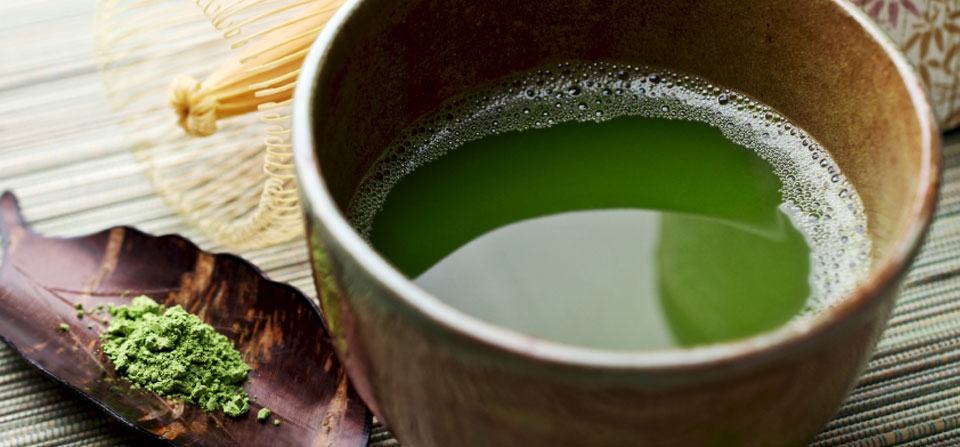
The next big breakthrough in acne treatment may be the humble bag of green tea sitting in your kitchen cupboard. A Chinese proverb says “Better to be deprived of food for three days, than tea for one.” Research done in the past two decades tells why.
A large and growing body of research shows drinking tea, and especially green tea, has countless health benefits. What we as acne patients are interested is the fact that green tea fights all the underlying causes of acne: inflammation, insulin resistance and hormones. And in this post I’ll explain why it may be one of the few true miracle solutions to acne.
Before we get started you better put water to boil. Because once you are done with this post I know you are yearning for a cup of the green stuff.
The antioxidant potential of green tea
Pretty much every article about the health effects of green tea talks about antioxidants. While in most cases hype far outruns reality, green tea has significant antioxidant potential. Green tea, like many fruits and berries, contains lot of polyphenols. Polyphenols have been studied for their antioxidant potential with promising results. In the case of green tea, lot of research attention has focus on a catechin called (–)-epigallocatechin-3-gallate (EGCG).
EGCG is the predominant antioxidant in most forms of green tea, and it’s also the most potent. For example, one review study noted:
EGCG has been shown to be 25 to 100 times more potent than vitamins C and E in terms of antioxidant activity
Green tea polyphenol epigallocatechin 3-gallate in arthritis: progress and promise
Another study (PDF) measured the antioxidant potential of various forms of green tea. The study concluded that ½ cup (100 ml) of green tea has the same antioxidant potential as 1 kg of fresh fruit. That’s pretty impressive in my books!
But we have to keep in mind that high antioxidant potential doesn’t mean anything yet. It’s just a proxy measure. What we are interested are the real health effects of green tea. Because too often what looks really promising in in vitro (test tube) studies turns out to be completely useless in living humans. What’s the use of all those antioxidants if the body doesn’t absorb them and you just pee them out?
A review paper published in 2011 examined high quality human studies on the antioxidant effects of green tea. Here’s what the study concluded:
There is limited evidence that regular consumption of GT [green tea] in amounts of at least 0.6-1.5 l/day may increase AC [antioxidant capacity] and reduce lipid peroxidation (especially oxidation of LDL). This may contribute to the protection against CVDs [cardiovascular disease] and different types of cancer. Beneficial effects seem to be more likely in participants exposed to oxidative challenge.
As expected, results from these studies are somewhat conflicting. Some studies show better antioxidant effect than others, but the overall trend in the studies was positive. In fact, 15 out of 22 studies showed a positive antioxidant effect from green tea. Epidemiological studies also shower lower levels of DNA damage and inflammatory damage in heavy green tea drinkers (6+ cups per day).
It also seems that the people with higher levels of systemic inflammation got the most benefit out of green tea. The study mentioned higher antioxidant effects in smokers and sedentary people. This makes sense since both inflammatory and anti-inflammatory effects are vital for your survival. Inflammation is one way the immune system kills pathogens. So too little inflammation is as bad as too much inflammation. Inflammation is like fire. When kept under control it’s very useful, but also very destructive when it gets out of control. So it makes sense that the body passes out the antioxidants it doesn’t need.
As I talked in one of my earlier posts, acne patients have higher than normal levels of systemic inflammation. So drinking green tea might be very helpful for people suffering from acne. Unfortunately nobody has yet published a study on the effect of drinking green tea on acne. But user reports and other anecdotal evidence looks very positive indeed.
Effect on insulin resistance and blood sugar control
High blood sugar and insulin levels are bad for acne. Very bad. Anything you can do to keep blood sugar and insulin levels stable can help your skin. That’s why going on low glycemic index and low carbohydrate diets often helps your skin. Regular consumption of green tea can also help.
A large epidemiological study from Japan showed that drinking 6 or more cups of green tea per day reduced the risk of developing type-2 diabetes by 33%. The effect was even larger in women and there was a robust dose-response relationship, i.e. the more you drink the larger the risk reduction. In women drinking 1-6 cups per week reduced risk by 21%, 1-2 cups per day reduced the risk by 34%, 3-5 cups per day by 39% and 6 or more cups by 51%.
Results from intervention (treatment) studies are not so clear. But the overall trend is fairly clear. Most studies show at least a mild positive effect to insulin resistance and blood sugar levels. As this one review study noted:
However, the majority of human epidemiological and intervention studies demonstrate beneficial effects of green tea or green tea extracts, rich in EGCG on weight management, glucose control and cardiovascular risk factors.
The potential role of green tea catechins in the prevention of the metabolic syndrome – a review.
Insulin resistance and glucose tolerance are closely linked to obesity. Fat mass is perhaps the most significant cause of insulin resistance and high blood sugar levels. Several studies have shown that regular consumption of green tea leads to weight loss by increasing metabolic rate and boosting fat burning, thought the effect is fairly small.
But weight reduction is not the only way green tea affects insulin resistance. Studies indicate it can 1) reduce carbohydrate absorption, 2) increase insulin secretion and possibly even repair the insulin secreting beta-calls in the pancreas, and 3) reduce production of glucose in the liver.
I don’t want to bore you with too many technical details and studies, so let me conclude this part with the following. There’s a very good reason to believe that regular consumption of green tea reduces insulin resistance and blood sugar levels. This in turn is really good for hormonal acne.
Hormonal effects of green tea
Studies have shown that green tea also has anti-cancer effects, particularly against breast and prostate cancers. Interestingly those cancers are connected to IGF-1 and sex hormone levels – the very same hormones that cause havoc on your skin.
Green tea increases the molecules that bind to sex hormones (called sex hormone binding globules), and thus effectively reduces levels of bioactive hormones.. As I covered in the topical use of green tea post, ECGC prevents conversion of testosterone to DHT. DHT is perhaps the most harmful hormone when it comes to prostate cancer and acne. So lower levels are definitely good for you.
So in summary, we can say that green tea appears to ‘balance’ many of the hormones that are linked to acne.
How many cups
So hopefully I’ve persuaded you of the acne-fighting benefits of green tea. So the next question is how many cups of this stuff you should drink? First I have to say that the optimal dose of ECGC in these conditions is yet to be determined. In the studies doses usually vary from 300mg to 1000mg, but to get that amount by drinking green tea can mean anything from 2 to 20 cups per day – depending on the quality of the tea you drink. For a detailed look at how different green tea qualities and brewing techniques affect ECGC content, please see the hack you tea post.
In epidemiological studies 3 to 6 cups per day seems to bring good results, so I would go with that.
An easy way to add lots of green tea into your day is to brew it in bulk and then chill it. I always have a bottle of cold green tea in my fridge and often drink it in place of water. I don’t do this anymore. See the tea hacking 2 post for why this is a really bad idea. Always consume your green tea fresh.
Conclusion and take home messages
I don’t believe in ‘silver bullet’ solutions. But every rule has an exception, and green tea makes a strong case for being it. Studies have shown it improves pretty much all the causes of acne: inflammation, insulin and hormones.
Several studies have shown that green tea is strongly anti-inflammatory. Some papers note it’s 25 to 100 times stronger antioxidant than vitamins C or E. People with high levels of systemic inflammation, such as many acne patients, will benefit the most from green tea. Regular consumption of 3 to 6 cups per day also cuts down the risk of diabetes and improves insulin resistance. Finally, green tea can treat hormonal acne by reducing the levels of potent sex hormones.
While green tea may not be a miracle solution, it’s definitely a big step towards clear skin. And, in combination with diet and lifestyle changes and smart topical treatments, can make a huge impact on your skin.

I endorse whatever Seppo Puusa has written about green tea & its effects on insulin resistance, the acne & the inflammation as I myself has tried that all. Even though I initially started drinking green tea for weight loss thing but there on after a long continuous use of it , I saw a significant difference in my overall health Alhamdulillah, my acne was gone, my hair got better than before & the inflammation was much reduced. Not only this it helped me to detoxify like anything as you know its high in anti oxidant properties.
Summing up green tea long term use does not only makes your skin clear but also will make you live a quality life .So why to wait for some other solution when there is the Allah’s Gift for all of us.Start from now on but yes be determined & consistent as its long term use is what that ensures the above all mentioned stuff.
Take Care !!!!!
Yeah but it tastes really awful, can you just take green tea tablets and be done with it?
If you don’t like it, then don’t drink it. Green tea can help, but it’s by no means a magic bullet solution that you can’t live without.
Seppo, I really appreciate your scientific-based approach to skincare. How long would you say it’s necessary to drink green tea in order to see beneficial results? I tried drinking green tea for around 2 weeks twice a day about a year ago when my skin took a downturn, and my acne just ended up getting worse. Do you have any idea why this happened?
If it helps, you should see some changes in 4 to 8 weeks. That said, even if you don’t see a change, it doesn’t mean green tea wouldn’t be good for you. It just wasn’t strong enough to, by itself, make a difference to your skin. So unless you notice negative effects, I would keep drinking it. It’s highly unlikely that your recent breakout was caused by green tea. Not impossible, just highly unlikely.
I have severe acne and was treated with isotretinoin and retino A in 2008 and had a clear skin for about 2 years from then. However the acne has still relapsed. I know Green tea really helps but the problem is Green tea also aids in weight loss and am underweight. Is there any other alternative that you can help me through.
Thanks
Green tea has, at best, very minimal effect on weight loss, and only when it’s used in conjunction with weight loss diet. Just drinking green tea won’t cause you to lose weight.
i’m having acne on my skin,chest and back,does taking this green tea regularly helps me and does this cause any side effects please reply….
It might help and probably has no side-effects.
Hi. I heard that green tea powder used as a facial helps acne. Is this true. Thanks.
See this post for more.
Green tea does help. I started taking it after I came to know about the health benefits (though not specifically for acne). I take 2 cups a day. Its been a couple of months and there have been no serious breakouts on my skin like they used to be previously! !!! Also the small blemishes that occured went away quickly
I more recently started drinking green tea, out of curiosity. within a few days my skin was alot less red, and some of my smaller acne spots had vanished.
Thanks for sharing, Morgan.
Hi is kirkland green tea ok? My sister sent us 1 box approx 150 pcs of tea. Hope it also have the same benefits.:-)
I don’t know enough about teas to say which is good and which is not. Maybe someone else knows better.
if the issue is acne, wont it be better to drink white tea since it had more anti oxident ?
Well, yes, but it’s not at all clear that white tea has more antioxidants. The studies I found showed no difference in antioxidant levels between white and green tea, white tea even had more caffeine. That said, there’s no good definition of what white tea even is, which makes it hard to study. So I’m not sure how applicable those results are.
I decided to try green tea after reading your articles but it made me feel awful. I was expecting a lot of energy but I felt like crap – really sick, headache, dizzy, a bit of a stomachache (and let’s be clear, I rarely get a stomachache or a headache). This lasted for several hours and I didn’t really feel great even after the effect had stopped, it’s true I hadn’t had enough sleep but that was more than just that. It’s not my first time either. I tried it several months ago as well and again felt sick and weak but I thought it’s just a coincidence. Now I’m sure it’s not. I Googled it and there are other people with the same complaints. I don’t know what in the tea makes me feel like this – maybe caffeine but I haven’t had coffee for years and I don’t remember how it felt at that time. But it might also be something else. Black tea has also made me feel awful in the past but then I thought it’s just nausea caused by travelling. Whatever the good effects might be they are not worth it for me. Or maybe I just need to try a different kind of green tea? No idea but I’m not eager to experiment. I think it would be good to include this in your article, maybe there are also studies? Obviously, some people just can’t tolerate green tea, I think it’s good to have that in mind.
Sorry to hear you experienced such a bad reaction to green tea. I don’t know what would cause it; could be caffeine or other stimulants in tea, or, though unlikely, fluoride and aluminium tea picks up from the ground.
I had the same, but only with supermarket bought tea bags. They seemed to have additives in them.
Once I went to a speciality Tea store and bought Japanese Sencha tea (loose green leaves), it all went away. I’m trying Gyokuro next 🙂 Hope this helps 🙂
Seppo, what are your thoughts about Green Tea supplements rather than the actual tea? Would they be just as effective?
I’m considering this one:
https://www.amazon.com/Foods-Green-Extract-400mg-Vcaps/dp/B001DNV5CA/ref=sr_1_1?s=hpc&ie=UTF8&qid=1389486108&sr=1-1&keywords=NOW+EGCG+Green+Tea+Extract
Thank You!
I think green tea can be helpful for the skin, and that’s why I recommend drinking it, but I don’t think it’s a magic drink or anything like that. I’m not sure that the benefits of green tea justify supplementation. I’m always a bit wary of supplements since you never really know what’s in the bottles. Contamination and mislabeling is worryingly common in supplements.
That said, many of the short-term studies I referred in this post were done using green tea supplements, so the supplements can work.
I’ve been using that brand for a while and I believe it’s made a difference – though I can’t be sure of course. Each tablet contains 200 mg of egcg so I’ve been taking up to 5 a day. I drink green tea as well, but always flavoured, so it would be hard to reach the necessary amounts that way 🙂
Does decaf green tea have the same benefits? My body is very sensitive to caffeine.
Decaf green tea has fewer antioxidants than caffeinated green tea. In your case it’s probably better to avoid green tea altogether. It can be helpful in acne, but I wouldn’t say it’s a miracle food by any means. You can get the same benefits by eating an overall healthy diet rich in fruits and vegetables.
i bought the harvest your health and ur book was soooooooooooooo infomative . can i put jaggery instead of sugar?
thanks!
Glad to hear you liked the book! Jaggery will probably work just as fine as normal sugar. It’s anyway just sugar with some impurities.
I ve heard caffein can cause acne breakouts and green tea has lots of caffein.
It s controversial.
Well, hearsay isn’t exactly reliable evidence.
There are more comments agains caffein tgan in favor of it.
Science and truth are not popularity contests. What people write on message boards is not an accurate reflection of reality in a complicated case like this, and if you are a doctor (as your email implies), then you should know that.
Hi,
Please check this article
https://www.happyhealthylonglife.com/happy_healthy_long_life/2010/12/shinya.html
Per dr shinya, to avoid excessive green tea drinking for healthy digestion: due to tannin and caffein. (Excuse my English).
Thanks for that article. I don’t really know what to think of that. It’s possible that tannins have a negative effect on the gut, but I wouldn’t make that conclusion based on that article. That article was filled with pseudoscientific nonsense, so I find it hard to take it seriously.
Not to mention that we have decades of observational research showing benefits of drinking green tea. For example, a review on the effect of green tea on cancers from 2013 concluded that people who drink more green tea has lower risk of gastrointestinal cancers; https://www.ncbi.nlm.nih.gov/pubmed/24172305. However, that conclusion is based on observational studies so we can’t say that green tea prevents GI cancers. Just that it doesn’t seem to increase them.
Thank u Seppo for getting so quickly. The moderation is the key I assume.
I don’t have time to read through whole article. I just want to share with the world that I fought with acne on my face for years. And whenever I start drinking green tea(pure, no aromas, decaf or something) after 2-3 days in a row they disappear. I don’t know how or why, I drink it primarily because of weight control, but there it is, another positive effect. No products, just green pure green tea, my advice for that.
I drink Lipton green tea with lemon ginseng is that still good for everything you listed and acne or should I switch to just green tea with nothing extra in it?
That should be ok.
Should I get Sencha or Matcha green tea Sep?
It appears the Sencha has more catchin than Matcha but I’m quite unsure what to get.
It probably doesn’t matter. One or the other may have somewhat more catechins, but I seriously doubt it will make any practical difference. Ingesting more catechins doesn’t necessarily mean better results. I’ve been guilty of perpetuating this thinking with my ‘tea hacking’ posts. I think the most important thing is to drink it regularly. Beyond that it probably doesn’t matter.
Well you said yourself that it was a problem how many catchins get destroyed during digestion. But fine, I’l just get a metcha tea and follow the recomendations.
Yes, I know I’ve written a few posts to that effect. In retrospect, they are the kind of nerdy stuff I enjoy but may end up confusing people more than helping. Science is clear on one thing, people who drink green tea regularly are in better health. That should be the number 1 priority. If you then want to further maximize the amount of catechins in the tea and their bioavailability, feel free to do so. It’s just not something I would stress over too much.
Oh, I thought the catchins were the things that promoted all the health benefits etc etc. Alrighty then.
Catechins are the substances responsible for health benefits. My point is that you should be able to get enough by drinking 3 to 5 cups of good quality green tea a day. If health benefits are the only reason why you drink green tea, it’s probably not worth going through stress and hassle of trying to find the absolutely highest catechin tea out there. It’s not at all clear that the extra catechins you get make a difference.
Hey Seppo, I’ve had moderate cystic acne for a few years and you’ve convinced me to try green tea. I was wondering what you thought of this product:
https://www.senchanaturals.com/our-products/greenteaplusc/green-tea-c-original.html
I’ve never been a tea drinker and I was looking for a product that tastes good to me. If you don’t think this one would do me any good, do you have any recommendations for changing the taste of green tea without destroying all its benefits?
Thanks for making this website!
As far as I understood, that product contains powdered tea. So it should give you the same benefits as brewing it yourself. If you want to make tea yourself but aren’t a fan of the taste, perhaps you could try cold water steeping. I’ve become a fan. Cold steeped tea tasted milder than hot water steeped. Perhaps worth a try?
Thanks for the advice! I really like this product so it’s good to know it has benefits similar to brewed tea. It is somewhat expensive though, so I will give cold water steeping a try!
hello seppo! i have problem of acne since last 4 to 5 years now i am 16 years and acne is still on my face and afterwards producing pimples and there is huge problem that there is lots of oil on my face when i wash my face after to 2 to 3 hours there is lots of oil and annoys me alot so its a humble request to tell a treatement regarding this
Hi Ali, I’ve written a few times about oily skin and what you can do about it. Here’s a post that gets you started.
Could you please explain that the green tea cream has any effect on acne’scars?does it make them better?pleas answer me!
Depends on what you mean by acne scars. If you mean dark spots, then it could help, but vitamin C, B3 or retinol would probably work better. If you talk about physical scars where the structure of the skin has changed, then no. There’s nothing you can do about such scars at home – please don’t even try.
The Green Tea pills have the same effect as liquid Green tea?
Yes, many of the studies on green tea were done using green tea capsules.
I couldn’t agree more – I LOVE GREEN TEA. I drink 1 huge cup every night before I sleep. I always woke up feeling pretty refreshed each morning and seeing nice noticeable changes to my skin. Been doing this drinking routine for months! On mornings though I drink Parsley leaf teas using Schefs loose leaf tea infuser. Both teas work wonders I guess that’s why 🙂
I have tried all kinds of treatment for a skin complaint on my face of the doctors for many years without any good out come so 2 weeks ago I put a green tea bag in a little cold water and left it to soak then started dabbing it on the affected areas 3 times a day now 2 weeks later my face is clear of spots a simple thing like a tea bag instead of tubes of gel I recommend this two any one hew suffers from spots and bad skin…
I just wanted to stop by and say that while I was pregnant the only thing I could drink without feeling nauseous was green tea, I drank it for 2 months every day before I saw a huge difference. I always drank the Arizona Green Tea with Ginseng and Honey(about 2-3 cans a day). I used to drink nothing but soda. Well after labor 6 weeks post partum, I stopped drinking the green tea and went back to drinking soda all day and nothing but soda. I noticed I was starting to get my acne back and felt so self-conscious of it once again so I went back to drinking the green tea and within 3 days my breakouts were clearing up and no new acne was showing up. I first thought that maybe my skin was just better during pregnancy but now after this trial and error I have found that after all the products I have tried to use and after years of wearing makeup 24/7 because of how self-conscious I was(even while I sleep and husband never saw me without my makeup) that it was the green tea and I have never felt better and more confident! It kind of gets you thinking that if this green tea is the only thing that didn’t make me feel sick during pregnancy that perhaps it is good for you otherwise the body would reject it.
Thanks for sharing your experience, Alicia!
Hi seppo, how about for body acne? How did you heal yours? Should i also put antioxidant creams? It seems to me that I can get acne from anywhere on my upper body,..and this would mean I would have to use tremendous amount of creams just to cover the body ( which can be quite expensive)…Thanks for your insights!
No body acne more or less resolved after Accutane. Well, my back cleared and the breakouts shifted to my scalp. I keep it under control by managing my gut. In your shoes I would try to get to the root cause of what’s causing your body acne. As you mentioned, antioxidant creams can be expensive and having to spread them on large area will get costly.
Hello seppo! I recently discovered this website and I love it..very informative and evidence-based! Thanks for making it! I remember in some other posts you recommended the”Madre Labs, Camellia Care, EGCG Green Tea Skin Cream, 1.7 fl oz (50 ml)” … so what do you think about this product? Did you discovered a decrease in sebum production?
I like it, and I use it myself. It hasn’t reduced my sebum production, but that could because I currently live in a hot and humid place, and the climate here just makes my skin ridiculously oily. I doubt there’s anything that can fix that.
First of all three words: MATCHA FACE MASK!!! Just do it if you have cysts and pustules. Follow with ACV/essential oil/water blend.
I really like you website! I had always read about green tea being good for acne but I never really knew why so it helps to know about the reasons behind it. I read the article about preventing sebum oxidation and that made a lot of sense to me, considering acne prone skin runs in my family (thanks a lot dad).
Background about me skin: Dad has horrible oily sensitive greek skin. He had to accutane in high school to get rid of his acne. Mom has beautiful blemish free olive skin but is very sensitive. I got a combo of the two and it’s been really hard to deal with. I never had acne in high school until the end of senior year which makes me suspicious of my hormones. Like I’m talking no makeup everyday, tons of jealous compliments etc. It was confusing for me b/c isn’t acne supposed to hit when you are preteen?? It was seriously very sudden. I do take birth control and I think it’s not effective anymore and causing my acne, but that’s another story.
As far as green tea goes, I drink it religiously and it has no effect on my hormonal breakouts as far as I know. I even drink organic high grade matcha and it doesn’t really do anything noticeable, but maybe my skin would be worse without it.
So now I’m thinking topical green tea is the best route for acne treatment and prevention. I think you should add a segment on it honestly. I put matcha face mask (just water and matcha, you can use low grade because it is expensive) on after cleansing and leave for however long I can. It doesn’t dry out skin and reduces inflammation and probably heals my skin. I’m on day 2 of it and already seeing results. When the paste dries it feels like a protective layer on the skin and it’s really doing some good work. I’m trying it overnight tonight as a spot treatment so we will see what happens. But seriously your theory is spot on.
I do agree that using green tea topically is more effective than drinking it. Though, there’s reasonable evidence to show drinking green tea does have some benefits for the skin.
To be honest, I’m not a fan of such DIY- remedies. The skin is very good at keeping water and other external stuff out of your body. And that makes me doubt that green tea, when delivered in such a DIY remedy, will get into the skin to have any real effect. Not saying it can’t work, just that I’m skeptical.
Green tea seems to be great for acne no doubt about it, but apparently I would have to sacrifice Testosterone levels in order to reap its acne benefits?
Hi Seppo – great article! What are your thoughts on drinking matcha? Do you think it will be as effective?
Yes, matcha is also green tea, just in a different form.
I totally agree with Seppo. I had mild acne with red blotches all over my cheeks. I started applying green tea topically, and also started drinking green tea thrice a day. And miraculously my red blotches started to fade and the acne were almost gone. So, I think this really works for my skin type.
Hi Seppo. Thank you for your post. I have very bad hormonal acne and after reading it im convinced to try green tea. All I got from you is that green tea should be part of my lifestyle. I will find the best tasting brand for me and drink it as often as I can.
I switched to Green Tea in February this year after 30 plus years of coffee addiction. I have cystic acne, took accutane, used everything over the counter, lots of antibiotics and prescription topicals. As an adult I’ve had more rosacea with pustules not so much the cysts anymore. I noticed my skin was better, not breaking out as badly or at all with menses. I believe all the properties mentioned in this article are really happening for me with daily green tea consumption. I drink at least 4 to 6 cups a day.